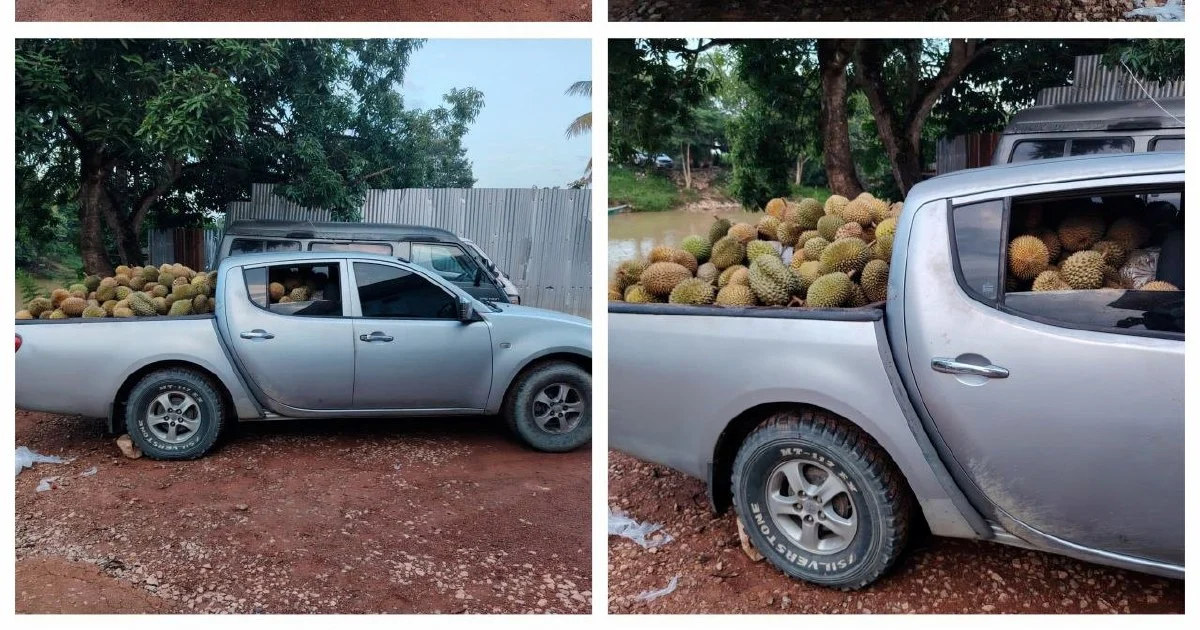
The arrest of a 22-year-old driver at Rantau Panjang serves as a sobering reminder of how organised fruit smuggling operations continue to exploit vulnerable workers in borderland regions. What began as a seemingly innocuous part-time employment opportunity, offering modest daily wages between RM60 and RM70, unravelled into a significant law enforcement bust when authorities discovered 700kg of durians suspected to have been smuggled across regional borders. The incident occurred during a nighttime operation, underscoring the sophisticated timing and logistics that underpin illicit agricultural trade networks operating in Malaysia's northern corridor.
The case illustrates a troubling employment pattern increasingly common in border communities, where economically disadvantaged individuals are recruited as couriers for smuggling operations with minimal awareness of the serious legal consequences they face. The relatively meagre compensation offered—barely sufficient for daily subsistence—suggests the young driver may have been unaware of, or deliberately kept in the dark about, the nature and illegality of his cargo. Such recruitment tactics exploit information asymmetries and economic desperation, particularly among young workers with limited job prospects in geographically isolated areas like those surrounding Rantau Panjang.
Durian smuggling represents a persistent challenge for Malaysian enforcement agencies, despite being among the most heavily monitored agricultural products at national borders. The tropical fruit commands premium prices in regional markets, particularly in neighbouring Thailand and Singapore, creating powerful economic incentives for cross-border trafficking. The 700kg seizure alone likely represented substantial black-market value, suggesting this operation was part of a larger, coordinated network rather than ad-hoc criminal activity. Such quantities typically indicate regular, systematic smuggling operations rather than isolated incidents.
Rantau Panjang, positioned at the Malaysia-Thailand border in Kelantan, has long been identified as a strategic trafficking corridor due to its complex geography and high volume of legitimate cross-border commerce. The porous nature of border communities creates enforcement challenges, as authorities must distinguish between legitimate agricultural trade and illicit smuggling while maintaining regional trade relations. Criminal organisations exploit this ambiguity, embedding contraband within seemingly ordinary commercial movements. The arrest at this location suggests intensified surveillance efforts by enforcement agencies, though the volume of smuggling continuing to flow through border areas indicates that interdiction efforts remain insufficient to deter determined traffickers.
The educational implications of such arrests cannot be overstated, particularly regarding young Malaysians' vulnerability to labour exploitation through organised crime. Employment recruitment practices that obscure the true nature of work, coupled with below-market wages, represent classic warning signs of trafficking-related activities. The driver's apprehension at age 22 carries potential long-term consequences for his employment record and legal standing, cementing a pattern whereby criminal syndicates successfully place responsibility for illegal conduct on individual, often expendable, operatives while organisational principals remain insulated.
Durian trafficking generates substantial profits for organised crime networks while simultaneously undermining legitimate agricultural producers who comply with regulatory requirements and border protocols. Local durian farmers in Malaysia face competitive disadvantages when smuggled fruit enters regional markets without incurring official tariffs or quality controls. This dynamic degrades the profitability of legitimate cultivation, particularly for smallholders and cooperative ventures dependent on steady market access. The cumulative effect of systematic smuggling creates economic distortions that ripple through agricultural communities.
Regulatory responses to fruit smuggling remain challenged by resource limitations and the sheer volume of agricultural commerce flowing through border checkpoints daily. Enforcement agencies must employ intelligence-led policing strategies to identify high-risk movements while avoiding the indiscriminate disruption of legitimate trade. The success of this particular interception suggests intelligence gathering and strategic checkpoint operations are bearing results, yet the continued volume of smuggling activity indicates that criminal networks possess sufficient adaptability and alternative routes to maintain operations despite law enforcement pressure.
International cooperation presents another critical dimension to addressing agricultural smuggling across Southeast Asian borders. Thailand, as a primary destination market for smuggled durians, maintains distinct regulatory frameworks and pricing structures that create market incentives for cross-border trafficking. Coordination between Malaysian and Thai enforcement authorities, alongside Singaporean agencies that also combat fruit smuggling, remains essential for disrupting logistics networks and intelligence gathering. Regional cooperation mechanisms, however, frequently encounter jurisdictional complications and resource disparities that limit effectiveness.
The case underscores the necessity for targeted awareness campaigns directed at vulnerable employment seekers in border communities, equipping young Malaysians with knowledge to identify labour exploitation schemes and trafficking situations. Complementary efforts must simultaneously target recruitment networks and organisational structures that orchestrate smuggling operations, moving beyond the conviction of individual couriers to pursue the financiers and coordinators behind such schemes. Enhanced penalties for organisers versus operatives would create appropriate legal differentiation while encouraging whistleblowing by lower-level participants incentivised to cooperate with authorities.

