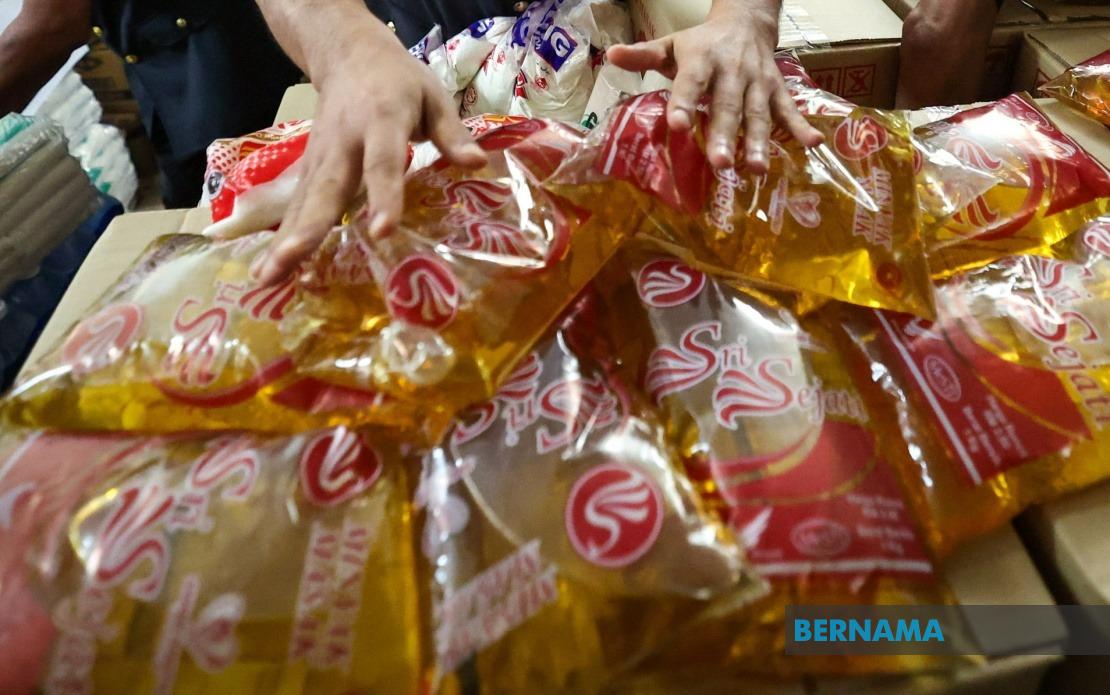
Parliament's watchdog body has called for fundamental changes to how Malaysia manages its cooking oil price controls and subsidies, citing substantial evidence of wasteful spending and ineffective distribution. The Public Accounts Committee presented eight formal recommendations following a comprehensive investigation that examined how the Cooking Oil Price Stabilisation Scheme has functioned over recent years. Teresa Kok, the PAC's deputy chairperson, outlined these proposals at a parliamentary press conference, underscoring concerns that billions of ringgit in subsidies have failed to reach their intended beneficiaries.
The investigation, which spanned ten separate proceedings conducted between August 2024 and October 2024, drew testimony from officials at the Ministry of Domestic Trade and Cost of Living, the Malaysian Islamic Development Department, and the Home Ministry. This inquiry was triggered by findings in the Auditor-General's Report 2/2025, which determined that the cooking oil subsidy framework was being managed unsatisfactorily. The committee's examination revealed a significant mismatch between the quantities being subsidised and what Malaysians actually require for domestic consumption.
At the heart of the PAC's concerns is an inflated quota system that has created substantial room for diversion and waste. The scheme currently permits the distribution of 60,000 metric tonnes of cooking oil monthly at subsidised rates, yet actual household demand across Malaysia ranges between just 19,000 and 30,000 metric tonnes per month. This vast oversupply, coupled with the absence of any mechanism to target subsidies exclusively toward eligible households, has allowed government resources totalling RM10.879 billion between 2019 and February 2025 to be misappropriated. One-kilogramme packets, the standard subsidised unit, have been acquired and resold by foreign nationals and commercial food businesses that should never have accessed subsidised supplies in the first place.
The committee identified serious governance gaps in how packaging companies have been compensated and monitored. Nine firms currently handle the repackaging of cooking oil for retail distribution, yet two of these companies lack halal certification from JAKIM despite government insistence on such credentials. More troubling still, the profit margins these repackers receive—subsidised at RM600 per metric tonne—appear substantially inflated relative to their actual operating and processing costs. The committee concluded that these payments lack adequate justification and represent an unnecessary expansion of the government's financial burden without corresponding benefits to the supply chain's efficiency.
Management of spoiled and damaged inventory presents another critical vulnerability identified by the investigators. Packaging companies lack standardised operating procedures for handling cooking oil that has deteriorated or become unfit for consumption. Consequently, the government continues paying subsidies on stocks that never reach store shelves or consumers' kitchens. This represents pure fiscal loss. The committee recommended that future subsidy payments to repackers should be contingent on deliveries of undamaged product only, fundamentally altering how the scheme compensates private operators.
Retailer-level enforcement has proven insufficient to maintain price discipline and prevent hoarding. Despite the official retail price ceiling of RM2.50 per kilogramme, market monitoring has been too lax to deter merchants from charging above-ceiling prices, stockpiling supplies to create artificial scarcity, or imposing conditional sales that tie subsidised cooking oil to the purchase of other goods. These practices have become increasingly common, suggesting that existing compliance mechanisms are either inadequately resourced or poorly enforced. The PAC indicated that strengthening oversight at the point of sale is essential to the scheme's integrity.
Market concentration among international suppliers threatens Malaysia's domestic food security interests and perpetuates dependence on foreign operators. Analysis of refining capacity reveals that foreign-owned companies control 67 per cent of the subsidised quota, while government-linked companies such as FGV and Sime Darby Guthrie command only 10.6 per cent, with the remainder held by local private enterprises. This heavily skewed distribution suggests that the subsidy programme has inadvertently strengthened overseas competitors at the expense of developing domestic refining capacity. The PAC proposed that policymakers should examine whether quota reallocation favouring competitive local firms might gradually shift market share and reduce foreign market dominance.
The committee's most forward-looking recommendation centres on accelerating Malaysia's transition toward digitally targeted subsidies through the eCOSS system. Rather than allowing any consumer to purchase subsidised cooking oil at retail stores, a digital approach would restrict access to verified eligible citizens using identity verification and transaction tracking. This technological shift would fundamentally close pathways for abuse while ensuring that government assistance flows only to intended recipients. The committee emphasised the urgency of this transition, noting that continuing to distribute bulk subsidies without targeting mechanisms is unsustainable.
The PAC also advised restructuring the subsidy rate payable to packaging companies to reflect genuine market conditions and realistic operating expenses. The current RM600 per metric tonne rate was characterised as excessive and uncompetitive, suggesting that genuinely competitive bidding processes might identify more reasonable compensation levels aligned with actual costs. This adjustment alone could free substantial government resources for reallocation toward other priorities.
These recommendations carry significant implications for Malaysia's fiscal management. Food subsidies consume substantial portions of the annual budget, and the cooking oil scheme exemplifies how well-intentioned price supports can metastasize into inefficient wealth transfers that benefit ineligible groups and private operators rather than consumers. For ordinary Malaysians, the findings suggest that current subsidy structures are doing considerably less to alleviate household costs than policymakers intend. Foreign nationals and commercial businesses capturing subsidised supplies means fewer resources reach the citizen households the programme was designed to support.
The committee's work also reflects broader governance challenges facing developing economies attempting to sustain consumer price caps while managing fiscal constraints. The cooking oil scheme illustrates how the absence of robust digital systems, monitoring infrastructure, and enforcement mechanisms can transform redistributive programmes into vehicles for leakage and waste. Malaysia's experience demonstrates that good intentions alone are insufficient; subsidy schemes require sophisticated operational architecture and continuous oversight to function as intended.
Implementing the PAC's recommendations would represent a significant reorientation of how Malaysia approaches food price stabilisation. Moving toward digital targeting, reducing inflated quotas, rebalancing the quota distribution toward domestic operators, and tightening reimbursement rates would require coordinated action across multiple government agencies. The Ministry of Domestic Trade and Cost of Living would face the most substantial implementation burden, requiring staff expertise, technological investment, and potentially contentious renegotiations with existing private sector partners. However, the PAC's findings suggest that postponing these changes would perpetuate the wasteful status quo at considerable cost to national finances.

