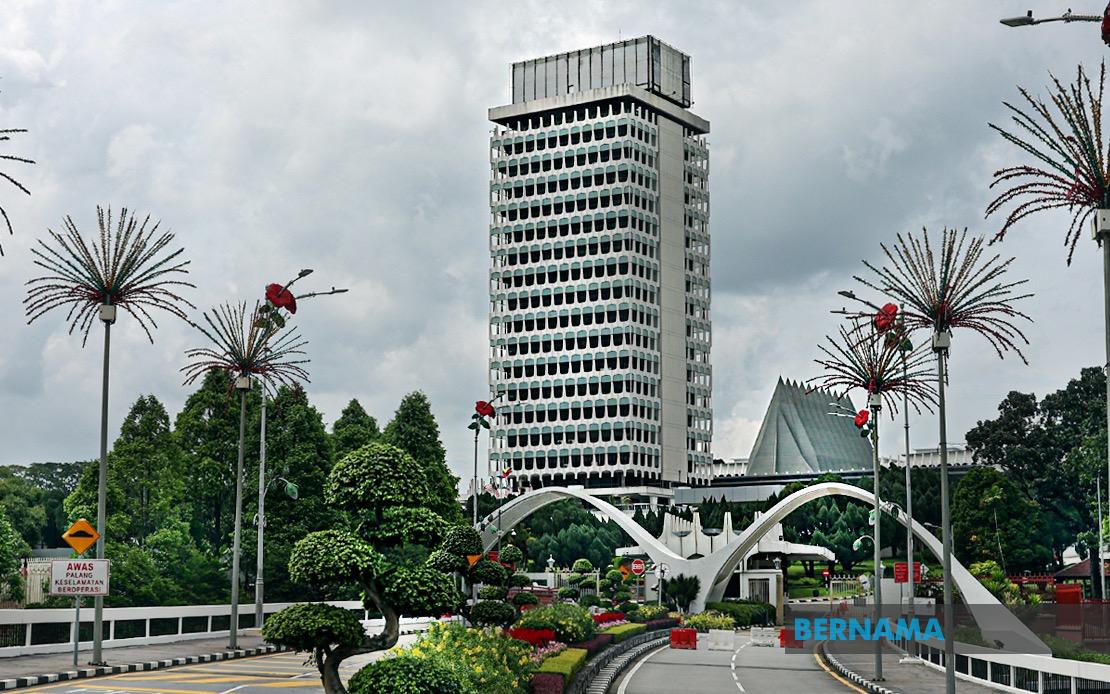
Parliament's third week of sitting concluded with the passage of pivotal legislation aimed at modernising Malaysia's economic framework, even as lawmakers grappled with pressing governance questions spanning national security, media regulation, and fiscal accountability. The period reinforced Parliament's dual role as a legislative engine and a platform for scrutinising the executive across multiple policy domains that directly affect Malaysian households and businesses.
Two amendments to Malaysia's competition law emerged as the centrepiece of the week's legislative work. The Competition (Amendment) Bill 2026 and the Competition Commission (Amendment) Bill 2026 both secured passage after deliberation, their purpose clear: to sharpen enforcement tools against anti-competitive behaviour in an increasingly digital marketplace. The bills represent a deliberate pivot toward safeguarding market fairness at a moment when e-commerce, fintech, and platform economies are reshaping how Malaysians transact. By updating competition statutes to address digital-era challenges, lawmakers signalled recognition that legacy regulatory frameworks struggle to contain modern forms of market manipulation and exclusionary conduct.
Equally significant was Parliament's first reading of the Control of Padi and Rice (Amendment) Bill 2026 on Tuesday, a measure targeting long-standing dysfunction in Malaysia's rice supply chain. The amendment proposes punitive teeth through escalated financial penalties, including a cap of RM1 million per violation, coupled with tighter oversight of padi and rice sector operations. For a nation that imports roughly one-third of its rice consumption, strengthening domestic production standards and policing the middlemen who broker paddy sales carries profound implications for food inflation and rural farmer income. The legislative push reflects government determination to eliminate speculative practices and quality degradation that have historically squeezed small producers and jeopardised food security.
Prime Minister Datuk Seri Anwar Ibrahim's performance during Tuesday's ministerial question session underscored the government's anxiety regarding Malaysia's micro, small and medium enterprise ecosystem, which collectively employ millions and anchor rural and urban economies. Anwar fielded questions on whether financial institutions were processing MSME lending applications with sufficient speed and rigour, offering reassurance that the administration would push banks to maintain both efficiency and prudent underwriting standards. The government's focus here is defensive—Malaysia's MSME sector, though substantial, faces persistent challenges in accessing affordable credit, competing globally, and modernising operations. Parliamentary questioning on this front hints at backbench concern that access to capital remains uneven and that some lending criteria may screen out deserving borrowers.
Press freedom emerged as an unexpectedly contentious theme when lawmakers raised Malaysia's falling score in the 2024 World Press Freedom Index, a metric that carries diplomatic and soft-power implications across Southeast Asia and the Commonwealth. Anwar acknowledged the decline but contextualised it by invoking enforcement action against several media outlets, framing such intervention not as censorship but as targeted action against coverage of religion, race, and the monarchy—the traditional constitutional red lines, or 3R—as well as content posing national security risks. His calibration of this defence revealed a government attempting to balance internal security imperatives against international reputational costs. The Prime Minister further signalled a procedural shift whereby complaints against journalists would henceforth require vetting by the Malaysian Media Council before triggering enforcement, a small but meaningful institutional gate intended to depoliticise complaint handling.
Parliament's attention also fastened upon two substantive reports from special select committees examining organ donation and transplantation protocols, and the alarming trajectory of abuse and violence cases across Malaysia from 2020 onwards. The six-year surge in documented violence, particularly against women and children, suggests either improved reporting or genuine deterioration in social cohesion—or both. Parliamentary debates on these topics allow backbenchers to highlight constituent suffering and press ministries for coordinated intervention, serving Parliament's function as an intermediary between citizens and an often-siloed bureaucracy.
Defence procurement and public health infrastructure also warranted parliamentary time. The selection of a replacement missile system for the Littoral Combat Ships, a cornerstone of Malaysia's naval modernisation, involves substantial capital outlay and long-term operational commitments. Lawmakers scrutinised whether the succession from the Naval Strike Missile system to its proposed replacement reflected sound strategic reasoning or merely deferred a capability gap. Separately, parliamentary debate on digitising healthcare facilities nationwide addressed a structural weakness endemic across Southeast Asia: the persistence of paper-based, fragmented patient records that impede care coordination and complicate pandemic response. Malaysia's health ministry faces pressure to harmonise IT systems across hundreds of clinics and hospitals, a costly and technically demanding endeavour.
Vape regulation surfaced as a discrete parliamentary concern when lawmakers debated enforcement actions against vape products suspected of containing prohibited synthetic drugs. This issue touches Malaysia's broader struggle with substance abuse and the regulatory arbitrage created when products marketed as nicotine delivery devices are covertly doped with fentanyl, synthetic cannabinoids, or amphetamine analogues. Police seizures of such contraband underscore the challenge of monitoring supply chains and protecting youth from deceptive marketing.
A sobering fiscal reckoning came when Deputy Finance Minister Liew Chin Tong disclosed that 1Malaysia Development Berhad, the sovereign wealth fund whose collapse triggered the nation's gravest financial scandal, continues to saddle Malaysian taxpayers with RM51.4 billion in aggregate liabilities. This figure encompasses both settled claims and outstanding obligations, a burden that constrains the fiscal space available for education, infrastructure, and welfare. The disclosure, while expected given 1MDB's notoriety, underscores the long tail of the scandal and reminds lawmakers and the public of the imperative to rebuild institutional integrity in sovereign wealth management and mega-project governance.
Finally, Dewan Rakyat Speaker Tan Sri Dr Johari Abdul inserted a timely public health reminder when a lawmaker required admission to the National Heart Institute, using the incident to encourage MPs to prioritise regular health screening. This pastoral moment underscored Parliament's function not merely as a forum for legislative combat but as a community of individuals whose wellbeing ultimately enables the body politic to function.
With one week of sitting remaining before the Second Meeting of the Fifth Session concludes on July 16, Parliament faces a compressed schedule to resolve outstanding business. The third week's agenda—spanning competition law, agricultural regulation, fiscal transparency, press freedom, and healthcare—illustrated the breadth of issues competing for parliamentary attention in a complex, plural society navigating economic transition, security pressures, and democratic governance simultaneously.

