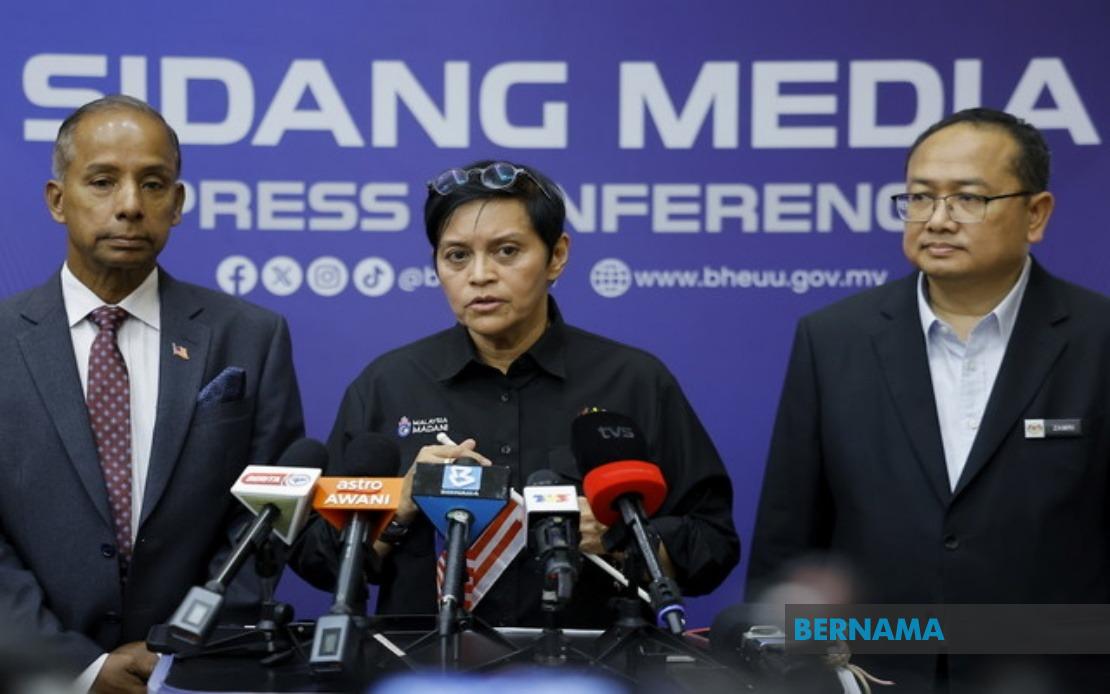
Malaysia's landmark Freedom of Information Bill 2026 enters a critical examination phase tomorrow when a Parliamentary Select Committee convenes for the first time to assess the proposed legislation. Minister in the Prime Minister's Department (Law and Institutional Reform) Datuk Seri Azalina Othman Said will chair the committee, which marks an important step toward transparency reform in the country's governance framework. The inaugural session will concentrate on establishing the committee's terms of reference, laying the groundwork for a comprehensive evaluation that stakeholders across the political spectrum anticipate will shape the final form of this significant legislation.
The decision to route the Bill through a Select Committee rather than proceeding directly to parliamentary debate reflects the government's acknowledgment that the proposed legislation touches on complex constitutional questions about information access, national security, and governmental accountability. By convening a bipartisan committee, Parliament signals an intention to build broader consensus around what remains a contentious piece of legislation in Malaysian politics. Azalina indicated that the committee expects to complete its recommendations and submit findings before the subsequent parliamentary sitting, establishing a timeline that suggests the government intends to advance this reform without protracted delays.
The Freedom of Information Bill 2026 represents a structured attempt to formalize citizens' rights to access information held by public authorities. The legislation establishes a procedural framework permitting any Malaysian citizen aged 18 and above to lodge written applications for access to official documents. This foundational principle aligns Malaysia with numerous democracies that have adopted freedom of information regimes as mechanisms for democratic accountability and governmental transparency. However, the Malaysian version remains tightly circumscribed by existing legal architecture, a limitation that has already generated considerable pushback from civil society organizations advocating for more expansive transparency protections.
A fundamental tension embedded within the Bill has become apparent during preliminary consultations with stakeholder groups. The proposed legislation explicitly preserves the application of existing secrecy laws, maintaining exemptions for information classified under the Official Secrets Act 1972 and other documents whose disclosure remains prohibited or protected under any applicable written law. This approach essentially ensures that the Bill's transparency provisions operate only within spaces where secrecy legislation does not already prevent disclosure, creating what critics characterize as a severely limited mechanism for genuine information access. Non-governmental organisations and professional bodies have consistently urged the committee to expand the Bill's scope, contending that narrowing information access protections through cross-references to existing secrecy legislation fundamentally undermines the transparency objectives that freedom of information regimes purport to advance.
The committee's work will require navigating competing imperatives that have long complicated Malaysia's approach to information governance. National security considerations, particularly given the country's history and ongoing counterterrorism operations, create legitimate demands for protecting sensitive governmental information from public disclosure. Simultaneously, democratic governance principles require adequate transparency mechanisms enabling citizens to hold public authorities accountable and to access information necessary for informed participation in civic life. The Select Committee must fashion recommendations that balance these tensions while remaining cognizant that overly restrictive approaches may render the legislation largely symbolic rather than functionally transformative.
Stakeholder engagement will prove central to the committee's deliberations over coming weeks. The variety of submissions already received from NGOs, professional bodies, and other interested parties demonstrates widespread recognition that this legislation potentially reshapes the relationship between government and citizen regarding information access. Some organisations have advocated for removing exemptions under the Official Secrets Act, arguing that national security invocations have historically served to conceal information relating to administrative inefficiency, corruption, or political embarrassment rather than genuinely sensitive national defence matters. Other voices emphasize the importance of maintaining robust protections for sensitive information, creating a spectrum of perspectives the committee must evaluate seriously.
The Malaysian context renders this legislative exercise particularly significant for the broader Southeast Asian region. Singapore, with which Malaysia shares certain historical and legal traditions, maintains one of Asia's most restrictive information access regimes. Thailand and Indonesia, by contrast, have adopted relatively expansive freedom of information frameworks despite various security challenges. Malaysia's approach will consequently influence how comparable democracies in the region conceptualise the appropriate balance between transparency and security. A legislative framework that successfully accommodates legitimate disclosure while protecting genuinely sensitive information could establish a useful model for regional peers grappling with identical questions.
From a practical standpoint, the implementation mechanisms contemplated by the Bill will determine whether the legislation produces tangible changes in governmental transparency or remains largely aspirational. The current draft envisions a procedural system through which citizens submit written applications and authorities respond within specified timeframes. Without clear deadlines, penalties for non-compliance, and accessible appeal mechanisms, however, such procedures often devolve into tools through which officials delay or effectively deny disclosure requests. The Select Committee will need to scrutinise whether the proposed implementation architecture possesses sufficient enforcement capacity to render the legislation operationally meaningful rather than ceremonial.
The bipartisan composition that Azalina highlighted carries significance for the Bill's prospects of enactment and subsequent effectiveness. Legislation addressing transparency fundamentally involves questions of political accountability and governmental power that divide ruling coalitions from opposition parties. By establishing a committee structure that incorporates opposition representatives, the government creates opportunity for broader parliamentary buy-in while simultaneously exposing its freedom of information approach to constructive criticism from legislators with distinct perspectives. This committee structure may facilitate development of legislation commanding broader acceptance and thus greater practical resilience across subsequent parliamentary sessions and potential changes in governmental composition.
The official portal publication of the Bill's draft signifies that preliminary governmental position on information access has crystallized into formal legislative language. However, the Select Committee's role explicitly contemplates revision and refinement of this initial framework based on stakeholder feedback and committee members' analysis. The distinction between the Bill as currently drafted and the Bill as ultimately tabled in Parliament may prove considerable, depending on whether committee deliberations produce material amendments responding to concerns raised by NGOs, professional bodies, and political figures across the parliamentary spectrum. This possibility underscores that the legislative process remains genuinely open to influence by external advocacy, even at relatively late stages.
Timeline pressures attending the committee's work deserve recognition, as the government's expectation of findings before the next parliamentary sitting creates real constraints on deliberative capacity. Comprehensive evaluation of freedom of information legislation requires consideration of comparative international experience, detailed legal analysis of interaction between proposed provisions and existing statutory frameworks, and extensive consultation with diverse stakeholders holding legitimate interests in the outcome. Abbreviated timeframes may constrain the depth of such evaluation, potentially resulting in legislation that satisfies immediate political imperatives without adequately addressing underlying structural tensions between transparency and security that informed observers have identified.
The committee meeting scheduled for tomorrow consequently represents more than mere procedural formality. It constitutes a critical juncture at which Malaysia's formal commitment to information access will be either meaningfully developed or substantially constrained through selection of terms of reference that guide subsequent deliberations. The committee's foundational decisions regarding scope, exemptions, implementation mechanisms, and enforcement provisions will substantially determine whether the Freedom of Information Bill 2026 ultimately transforms Malaysian governance or remains largely symbolic. Malaysian citizens, civil society organisations, and regional observers will likely scrutinise the committee's emerging recommendations as indicators of the government's genuine commitment to transparency governance.

