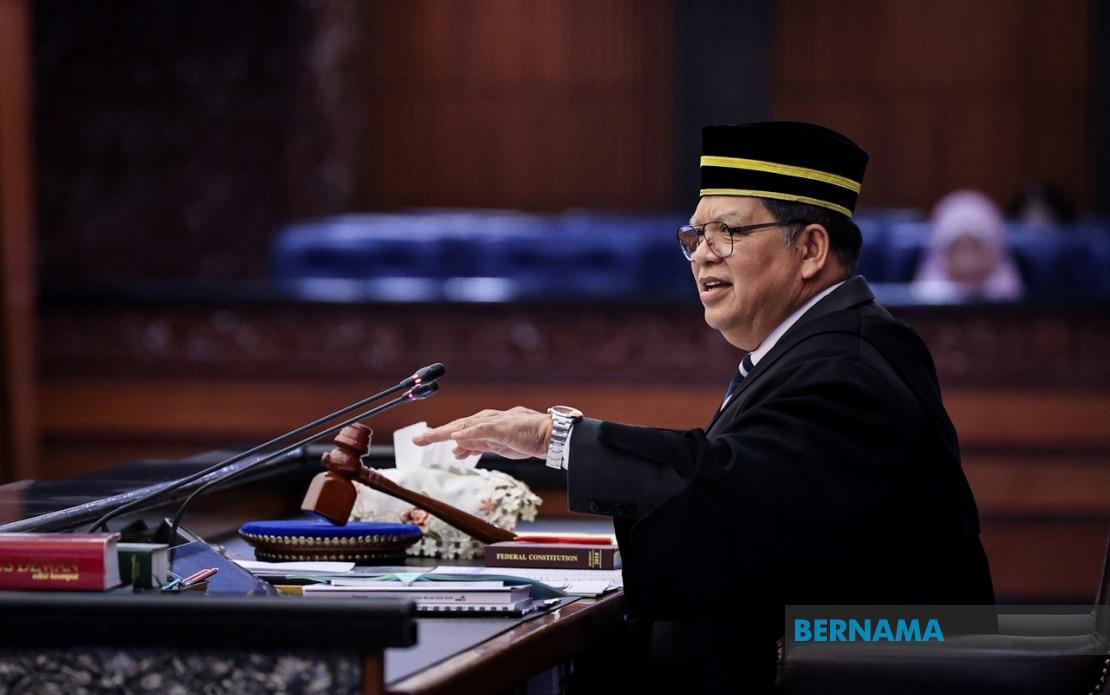
The Second Meeting of the Fifth Term of the 15th Parliament came to a close on July 16 following a 16-day legislative sitting that began on June 22, during which lawmakers passed 13 bills and deliberated several key motions. Dewan Rakyat Speaker Tan Sri Dr Johari Abdul presided over the adjournment, highlighting the parliament's productive session as Malaysia approaches what is widely anticipated to be a general election call within the coming months.
The legislative agenda reflected government priorities across multiple policy domains. Road transport received modernization attention through the Road Transport (Amendment) Bill 2026, signalling ongoing efforts to tighten vehicle safety and mobility standards. Child protection and online safety emerged as twin concerns, with both the Sexual Offences Against Children (Amendment) Bill 2026 and the Cybercrimes Bill 2026 advancing through the legislative process. These measures address growing societal anxieties over digital crime and child exploitation, issues increasingly prominent across Southeast Asia as internet penetration and digital commerce accelerate.
Commercial and economic regulation underwent substantial refinement during the sitting. Two complementary bills—the Competition (Amendment) Bill 2026 and the Competition Commission (Amendment) Bill 2026—were enacted to strengthen Malaysia's competition framework, likely enhancing enforcement mechanisms and regulatory clarity for businesses navigating the domestic market. This legislative activity suggests the government's commitment to maintaining healthy market competition as the economy confronts post-pandemic structural shifts.
Agricultural and food security policy also received parliamentary attention. The Control of Padi and Rice (Amendment) Bill 2026 progressed through the chamber, underscoring government focus on rice production and self-sufficiency at a time when global food systems remain volatile and Southeast Asian nations increasingly prioritize domestic food security independent of international supply chain disruptions. Such measures carry particular resonance in Malaysia, where rice cultivation represents both an economic sector and a culturally significant agricultural foundation.
Justice and criminal procedure improvements featured prominently among the bills enacted. The Witness Protection (Amendment) Bill 2026 aims to strengthen safeguards for individuals testifying in sensitive cases, potentially enhancing public confidence in the judicial system and encouraging cooperation with law enforcement in high-risk prosecutions. Similarly, the Social Work Profession Bill 2026 appears designed to professionalize and regulate social work practice, establishing standards and qualifications for practitioners across Malaysia's social service sector.
Communications and digital infrastructure policy occupied substantial parliamentary space, with both the Communications and Multimedia (Amendment) Bill 2026 and the Malaysian Communications and Multimedia Commission (Amendment) Bill 2026 receiving approval. These legislative tools likely equip regulators with updated enforcement powers and modernize regulatory frameworks for digital telecommunications, reflecting the accelerating pace of technological change that often outstrips existing legislative architecture.
Two additional bills—the National Trust Fund Bill 2026 and the Statistics Bill 2026—rounded out the legislative tally, suggesting parliament's engagement with public financial management and data governance. The statistics bill carries particular importance for policy formulation and evidence-based governance, enabling better collection and utilization of demographic and economic data.
Beyond bill passage, the sitting incorporated substantial oversight and deliberative mechanisms. Three ministerial briefings, one minister's briefing in the Special Chamber, and six Select Committee chair presentations on various reports provided lawmakers opportunities to scrutinize executive performance and evaluate parliamentary committee work. This combination of legislative and scrutiny functions demonstrates parliament's multifaceted role beyond simply enacting laws.
Dewan Rakyat Speaker Johari used the adjournment occasion to address administrative matters affecting members' welfare. He reminded all parliamentarians to complete mandatory health screenings by October 30 and deposit health records with parliament, a practical step that acknowledges the physical and mental demands of political campaigning. His exhortation for members to prioritize wellbeing during the anticipated election campaign period proved timely, as intensive campaign schedules often tax even seasoned politicians.
The speaker also referenced parliamentary hosting of an unspecified programme—the original source text appears incomplete—extending invitations to MPs, parliamentary staff, Malaysian Youth Parliament participants, and members of the general public. This opening to civil society participation reflects evolving parliamentary practice toward greater public engagement and democratic accessibility.
Johari's closing remarks emphasized collective achievement, extending gratitude to fellow MPs for sustained cooperation, government officials, parliamentary support staff, media representatives, and all others instrumental in managing the session's proceedings. Such acknowledgments, while ceremonial, reinforce the institutional interdependencies that enable parliament to function effectively as Malaysia's supreme legislative body.
The adjournment came without specification of reconvening dates, a standard practice when parliament adjourns between sittings. However, the timing carries political significance given expectations of an imminent dissolution and general election call. Malaysian lawmakers and observers will scrutinize whether the government utilizes the parliamentary recess for election preparations or summons parliament for additional sittings before the electoral process commences. The 13-bill legislative harvest reflects solid parliamentary productivity even as the political landscape tilts toward electoral competition.

