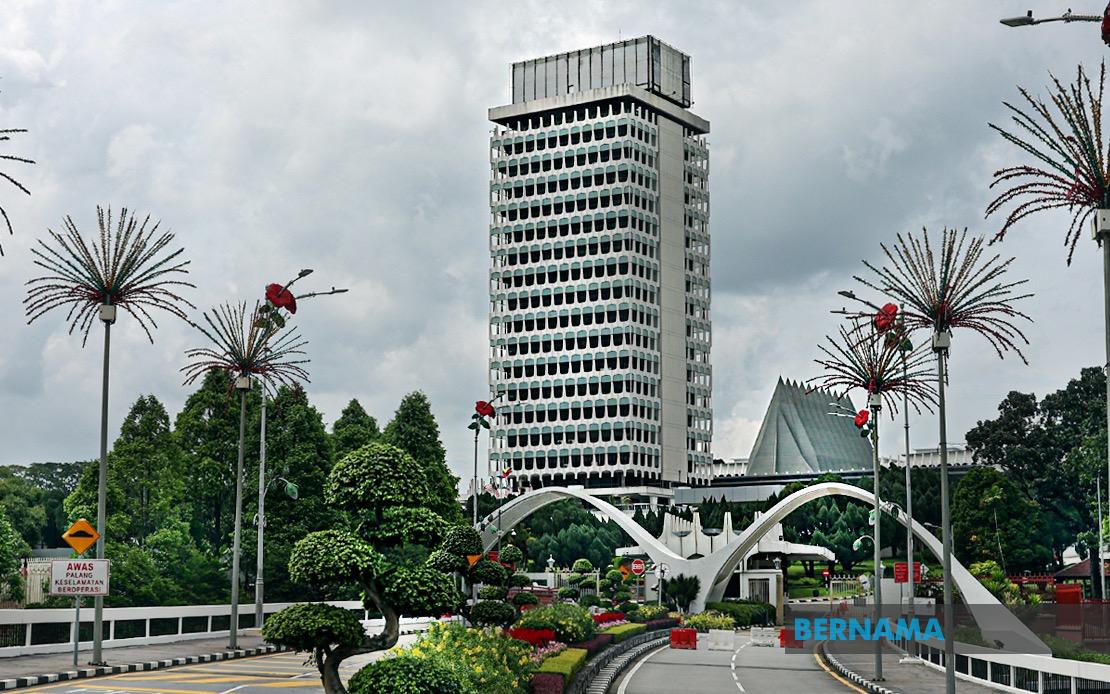
The Dewan Rakyat convenes today for what promises to be a substantive sitting that encompasses critical questions spanning energy transition, geopolitical positioning, and the delicate balance between economic modernisation and national security. The chamber's agenda reflects the interconnected challenges facing Malaysia as it navigates the post-pandemic global economy while advancing its long-term development aspirations. Queries from opposition and government-aligned lawmakers will probe the implementation of flagship schemes, the government's response to regional instability, and the infrastructure prerequisites for digital advancement.
At the forefront of today's proceedings will be scrutiny of the Corporate Renewable Energy Supply Scheme (CRESS), a centrepiece initiative designed to facilitate private sector participation in Malaysia's renewable energy transition. Rodziah Ismail, representing Ampang under the Pakatan Harapan banner, will press the Minister of Energy Transition and Water Transformation for specifics on uptake rates among industrial participants and the progress of the System Access Charge (SAC) rate review. This line of questioning carries particular weight given Malaysia's stated ambition to position itself as a regional data centre hub—a sector increasingly dependent on stable, affordable green power. The SAC rate, which determines the cost for companies accessing the electrical transmission network, directly influences operating expenses for energy-intensive facilities such as data centres. Any unfavourable adjustment could undermine Malaysia's competitiveness relative to rival hubs in Singapore, Thailand, and Indonesia. Rodziah will also probe the efficacy of complementary programmes including the Corporate Green Power Programme (CGPP) and Battery Energy Storage Systems (BESS), which are integral to the reliability and cost-effectiveness of renewable adoption.
The global energy crisis has reverberated through Malaysian economic structures with mounting job losses and business stress. Mohd Syahir Che Sulaiman, a Perikatan Nasional member from Bachok, will interrogate the National Economic Action Council on the mitigation measures deployed to cushion these shocks and what tangible results have materialised. This questioning reflects genuine anxiety among rural and manufacturing constituencies that energy volatility and economic uncertainty could displace workers and compress profit margins. The government faces pressure to demonstrate that strategic interventions—whether through fiscal stimulus, targeted support, or structural reforms—are delivering measurable relief rather than merely postponing adjustment costs. The credibility of the economic policymaking apparatus hinges partly on transparent communication of achievements and trade-offs.
Fuel subsidy reform will also command parliamentary attention. Datuk Seri Hasni Mohammad, a Barisan Nasional figure from Simpang Renggam, will ask the Finance Minister to justify the methodology underpinning standardised fuel subsidy targeting, particularly the reliance on MyKad verification for diesel allocation and whether the 200-litre entitlement for both petrol and diesel adequately serves consumers. This touches on equity and practicality—rural residents, commercial fishermen, and agricultural operators often consume fuel beyond urban norms, yet the subsidy architecture may not account for such differentiation. The question implicitly challenges whether cost-containment measures inadvertently penalise specific demographic groups or economic activities.
Malaysia's foreign policy posture towards Myanmar emerges as a significant diplomatic concern. William Leong Jee Keen of Selayang, a Pakatan Harapan member, will question the Foreign Minister on how Malaysia's approach to the Myanmar government aligns with the broader Five-Point Consensus (5PC)—a regional framework that ostensibly guides ASEAN engagement with the crisis-stricken nation. This inquiry probes whether Malaysia's bilateral relations and diplomatic messaging genuinely reflect the tenets of the 5PC or whether competing national interests and security considerations diverge from the collective regional position. For Malaysian readers, this question underscores the tension between upholding ASEAN solidarity and protecting Malaysia's immediate security and economic interests, particularly given cross-border concerns and regional stability implications.
Data sovereignty has emerged as a paramount concern for Malaysia's technological ambitions. Datuk Seri Amirudin Shari, representing Gombak, will raise questions with the Digital Minister regarding alignment between state-level digital infrastructure initiatives—such as the Selangor Dark Fiber Network—and the broader national objective of ensuring data sovereignty and safeguarding national security. Amirudin will also seek assurances that data sovereignty considerations are embedded within Malaysia's aspirational target of becoming an AI-ready nation by 2030. This line of questioning reflects a nuanced understanding that rapid digital advancement, while economically desirable, must not inadvertently create dependencies on foreign infrastructure or expose sensitive national data to geopolitical risks. The interrogation implicitly challenges whether digital strategy formulation adequately reconciles innovation ambitions with sovereignty and security imperatives.
Islamic education curriculum effectiveness constitutes another parliamentary focus. Datuk Idris Ahmad, a Perikatan Nasional member from Bagan Serai, will ask the Prime Minister to assess how well the Islamic Education curriculum contributes to holistic student development and what coordination mechanisms exist between federal authorities and state Islamic Religious Councils to maintain consistent standards nationwide. This question addresses governance fragmentation and educational quality assurance across Malaysia's federated system, where religious education falls partly under state jurisdiction. The underlying concern is whether decentralisation creates uneven educational outcomes or inadequate pedagogical standards.
The Malaysia Agreement 1963 (MA63) implementation timeline will also feature prominently. Isnaraissah Munirah Majilis, representing Kota Belud for Warisan, will press the Prime Minister on progress towards increasing parliamentary representation for Sabah and Sarawak to 35 per cent of total nationwide seats. This constitutional reform, promised to East Malaysian states as a cornerstone of the 2020 Sheraton Move coalition, remains politically sensitive and symbolically important for federal-state relations. Delays or perceived backtracking carry reputational costs and risk fracturing the stability of coalition arrangements.
Parliament will subsequently receive a briefing from the Public Accounts Committee (PAC) chairman examining escalating private health insurance premiums and private hospital charges, along with their ramifications for public health outcomes. This session implicates the Ministry of Finance, Ministry of Health, and Bank Negara Malaysia, signalling that the rising healthcare costs are understood as multidimensional policy challenges spanning financial regulation, subsidy frameworks, and health provisioning architecture. The PAC's examination likely carries recommendations for legislative or administrative action.
The chamber will continue its deliberation on the Prisons (Amendment) Bill 2026, legislation addressing corrections and penal policy. The current second meeting of the fifth session of Parliament is scheduled to run for 16 days through July 16, suggesting an ambitious legislative calendar. This extended sitting reflects the government's intent to advance substantive policy reforms across multiple domains—from energy and digital infrastructure through to criminal justice and healthcare equity—while balancing the need for parliamentary scrutiny and opposition input. The range of questions tabled today encapsulates Malaysia's plural political landscape and the diverse constituencies and interests competing for policy attention and resource allocation.

