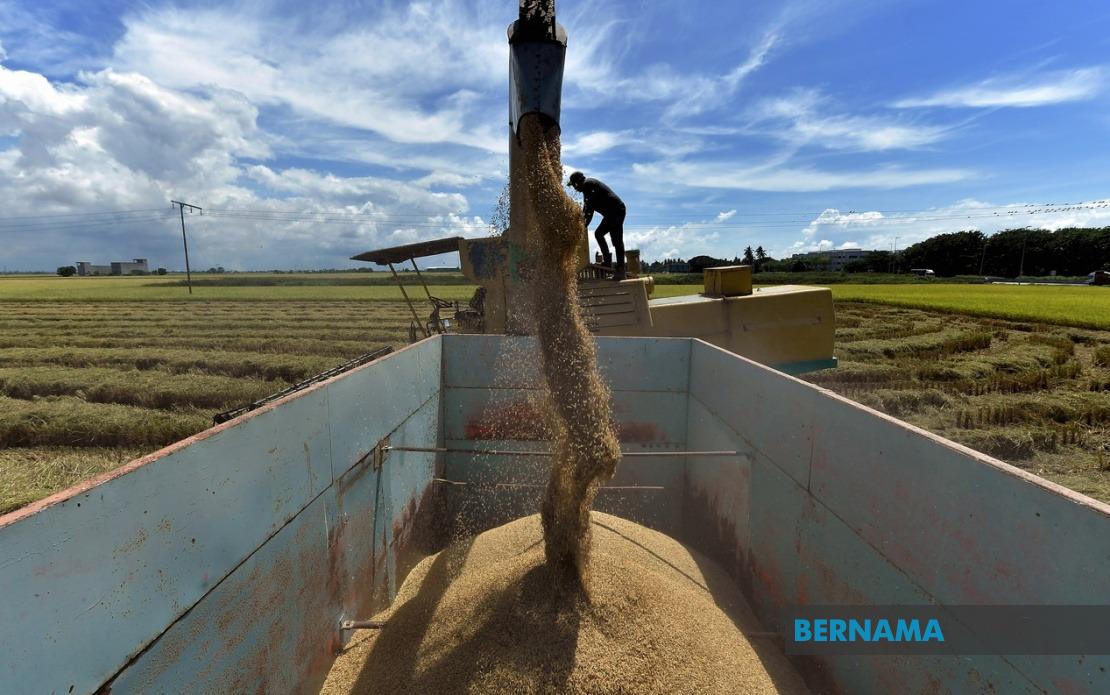
Parliament has taken a decisive step to fortify the nation's rice industry by approving the Control of Padi and Rice (Amendment) Bill 2026, a legislative overhaul designed to modernise enforcement mechanisms and protect domestic food security. Passed by the Dewan Rakyat on July 13 through a voice vote that commanded support from both government and opposition lawmakers, the Bill represents a significant recalibration of penalties that have remained largely static since the original Act entered the books three decades ago.
The centrepiece of the amendments involves a dramatic escalation in financial penalties that legislators and enforcement officials argue are long overdue. Section 22 of the principal Act, formerly known as Act 522, now imposes a maximum fine of RM250,000 on individuals found in breach of rice industry regulations, whilst corporate entities face potential penalties reaching RM1 million. This represents a substantial jump from the previous penalty regime, which enforcement authorities have publicly acknowledged failed to deter sophisticated operators within the multi-billion-ringgit sector.
Deputy Minister of Agriculture and Food Security Datuk Chan Foong Hin articulated the rationale behind the enhancement during parliamentary debate, emphasising that the 1994 Act had never undergone meaningful penalty revision despite the passage of three decades and the dramatic evolution of agricultural commerce. Official seizure data presented during deliberations illustrated the tangible impact of enforcement challenges: the cumulative value of contraband rice and illegally diverted domestic supplies seized by authorities has been substantial, yet the modest penalties applied previously did little to reflect the magnitude of these infractions or the profits accrued by violators.
The enforcement dilemma is particularly acute given the scale and profitability of illicit activities within the sector. Chan characterised the previous penalty structure as fundamentally misaligned with contemporary realities, noting that offenders operating within the padi and rice industry have been reaped enormous returns that far exceed the deterrent effect of older fines. By recalibrating penalties to RM250,000 and RM1 million respectively, policymakers have sought to restore proportionality between sanctions and the seriousness of breaches, thereby creating credible disincentives against smuggling, mislabelling, and other forms of market manipulation that destabilise domestic supply chains.
The amendments also serve a secondary but critical function: protecting the economic interests and market stability for rice farmers across Malaysia. Market manipulation, whether through artificial supply constraints, price-fixing arrangements, or the diversion of rice stocks destined for domestic consumption, directly undermines farm-gate prices and the income security of padi producers. By elevating enforcement capacity and penalties, the legislation aims to create a more level playing field within the industry and prevent unscrupulous actors from distorting market dynamics in ways that disadvantage smallholder farmers.
During parliamentary debate, opposition and government lawmakers alike identified implementation challenges and proposed complementary measures to maximise the Bill's effectiveness. Datuk Idris Ahmad, representing Bagan Serai under the Perikatan Nasional banner, stressed the necessity of pairing enhanced penalties with prosecutorial infrastructure, specifically calling for comprehensive prosecution guidelines and specialised training programmes for prosecutors. His intervention underscored a recognition that elevated penalties alone cannot deliver results without corresponding improvements in investigative rigour and courtroom advocacy.
Parallel concerns emerged from the opposition benches regarding oversight mechanisms and the performance of state institutions tasked with regulating the sector. Tan Hong Pin, the Bakri representative from Pakatan Harapan, urged the ministry to scrutinise the penalty levels further and advocated for the establishment of an independent committee with periodic review mandates over Padiberas Nasional Berhad, the state-linked entity responsible for managing much of Malaysia's rice operations and addressing cartel-related misconduct. His proposal reflected broader parliamentary anxiety about ensuring that institutional actors themselves operate with sufficient transparency and accountability.
Technological innovation emerged as another focal point in legislative deliberations, with several lawmakers proposing supply-chain solutions to complement the enhanced penalties. Azli Yusof from Shah Alam advocated for comprehensive digital traceability systems capable of tracking padi and rice movements throughout the entire supply chain, enabling real-time detection of leakages and disruptions. Similarly, Manndzri Nasib from Tenggara suggested implementing QR code systems on individual rice bags, a mechanism that would empower both consumers and enforcement authorities to monitor stock movement, identify mislabelled products, and detect hoarding activities with minimal friction.
These technological proposals underscore a recognition that penalties and prosecution, while necessary, must be supplemented by systems that make non-compliance difficult and detection swift. Digital traceability solutions create an audit trail that complicates the concealment of illicit activities, whilst QR codes democratise verification by allowing retail consumers to authenticate product authenticity and origin. Together, these mechanisms shift the burden of compliance from enforcement officers alone to distributed stakeholders across the supply chain.
For Malaysian consumers and regional observers, the legislative action carries multiple implications. Food security, particularly in rice, remains strategically sensitive across Southeast Asia, where population growth and climate variability create periodic supply anxieties. Malaysia's domesticated rice sector has long been vulnerable to price shocks and supply disruptions stemming from global market fluctuations and domestic misconduct. By tightening regulatory frameworks and penalties, the government is signalling commitment to stabilising this foundational staple, though success ultimately depends on execution quality and institutional capacity.
The broader context involves Malaysia's evolving approach to agricultural regulation amid competing pressures to boost productivity, protect farmer incomes, and ensure affordable domestic supplies. The 2026 amendments reflect legislative recognition that the existing institutional architecture, designed for a different era, has become inadequate. Whether the enhanced penalties, combined with technological innovations and prosecutorial improvements, will prove sufficient to discipline industry actors remains an empirical question that will unfold over coming years as enforcement data accumulates.
The passage of this Bill also demonstrates functional parliamentary oversight of sectoral regulation, with backbenchers from multiple political blocs identifying genuine implementation challenges and proposing concrete refinements. This iterative legislative engagement, where amendments provoke substantive debate and counter-proposals, suggests a parliament engaged in genuine policy deliberation rather than ceremonial vote-counting. As the legislation takes effect, observers will be watching whether it delivers meaningful changes in market conduct or merely reshuffles enforcement tools without fundamental impact on industry behaviour.

