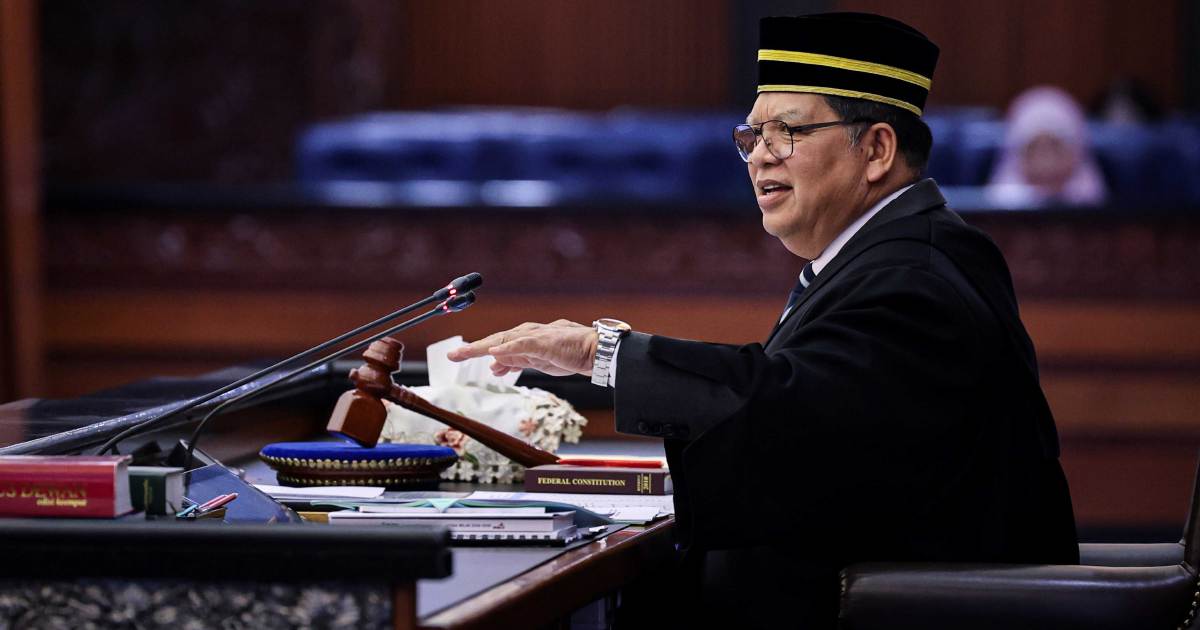
The Speaker of Dewan Rakyat, Tan Sri Johari Abdul, has issued a direct warning to parliamentarians regarding their presence during legislative sessions, stressing the importance of regular attendance and holding members accountable for unexplained absences. The reminder signals mounting concerns about inconsistent participation in parliamentary proceedings, an issue that carries implications for legislative effectiveness and public accountability in Malaysia's democratic institutions.
Parliamentary attendance operates as a foundational principle of representative democracy, and the Speaker's intervention reflects the seriousness with which institutional leadership views fluctuating member participation. When legislators routinely absent themselves without substantive justification, it undermines the body's capacity to function effectively and diminishes the legitimacy of legislative processes in the eyes of the electorate. The reminder serves as a formal acknowledgment that attendance challenges have reached a level warranting explicit guidance from the chamber's highest authority.
The distinction between excused and unexcused absences remains legally and ethically significant in parliamentary practice. Members typically possess legitimate grounds for non-attendance including official government duties, health emergencies, bereavement, or other documented circumstances that genuinely prevent their participation. The Speaker's emphasis on valid reasons demonstrates that while flexibility exists for unavoidable situations, casual or deliberate skipping of sessions falls outside acceptable conduct for elected representatives entrusted with legislative responsibilities.
This directive becomes particularly relevant within the Malaysian context, where the composition of Parliament has grown increasingly fluid in recent years. Political realignments, coalition shifts, and changing party allegiances have created volatility in attendance patterns as members navigate institutional pressures and political calculations. The Speaker's clarification serves to establish clear expectations during a period when parliamentary norms require reinforcement and reaffirmation.
Regular parliamentary attendance directly impacts legislative productivity and government accountability. When members are consistently present, debates proceed more substantially, questions directed at ministers receive fuller scrutiny, and the legislative record reflects genuine engagement with policy matters. Conversely, depleted attendance during sittings creates a perception that parliamentary work lacks urgency or importance, potentially eroding public confidence in elected institutions at a moment when trust in governance structures remains contested.
Enforcement mechanisms within parliamentary systems typically include formal warnings, suspension of sitting allowances, or other administrative consequences for habitual absenteeism. By issuing this reminder, Tan Sri Johari Abdul has signalled that the Speaker's office will likely move toward more stringent measures if voluntary compliance with attendance expectations does not improve. This represents a calibrated escalation designed to address the problem without immediately implementing punitive action.
The timing of this announcement may also reflect specific patterns observed during recent parliamentary sessions. Malaysia's legislative calendar includes regular sittings, and periodic attendance assessments allow institutional leadership to identify trends and intervene when necessary. The Speaker's public reminder transforms an administrative concern into a matter of explicit parliamentary record, ensuring that all members receive equal notice regarding performance expectations.
Beyond individual compliance, this directive touches on broader questions about parliamentary culture and institutional discipline. When legislative bodies struggle with attendance, it often signals deeper challenges involving member engagement, workload management, or alignment between formal parliamentary structures and actual political power dynamics. The Speaker's intervention, therefore, functions not merely as rule enforcement but as a statement about institutional values and the seriousness with which Parliament views its constitutional role.
For Malaysian citizens and observers of democratic governance, speaker reminders about attendance requirements underscore the ongoing tensions between formal institutional requirements and practical political realities. While Parliament operates according to established procedures and norms, real-world factors—including coalition pressures, ministerial appointments, and contested political alignments—constantly test these frameworks. When leadership must explicitly remind elected officials about fundamental obligations like attendance, it indicates that informal consensus around institutional norms has weakened and requires formal reinforcement.
The practical implications extend to committee work and legislative oversight as well. Members who frequently miss sittings likely also miss committee sessions, reducing scrutiny of government programmes and limiting the depth of legislative engagement across multiple institutional structures. This cascading effect makes attendance patterns consequential for the entire parliamentary ecosystem, not merely for individual sittings.
Moving forward, the Speaker's reminder establishes a baseline of expectation that enables subsequent enforcement actions if voluntary compliance does not materialize. Should absenteeism persist despite this formal notice, Tan Sri Johari Abdul would possess clearer justification for implementing administrative measures. The announcement therefore functions as both a gentle corrective and a warning that institutional mechanisms exist to address persistent non-compliance.
This intervention by the Dewan Rakyat Speaker ultimately reflects the ongoing work required to maintain parliamentary institutions in functioning condition. While such reminders might appear routine, they indicate that institutional health requires constant vigilance and periodic reaffirmation of core principles. For a legislature operating amid volatile political conditions and competing pressures, explicit clarity about attendance expectations represents an investment in institutional resilience and democratic credibility.