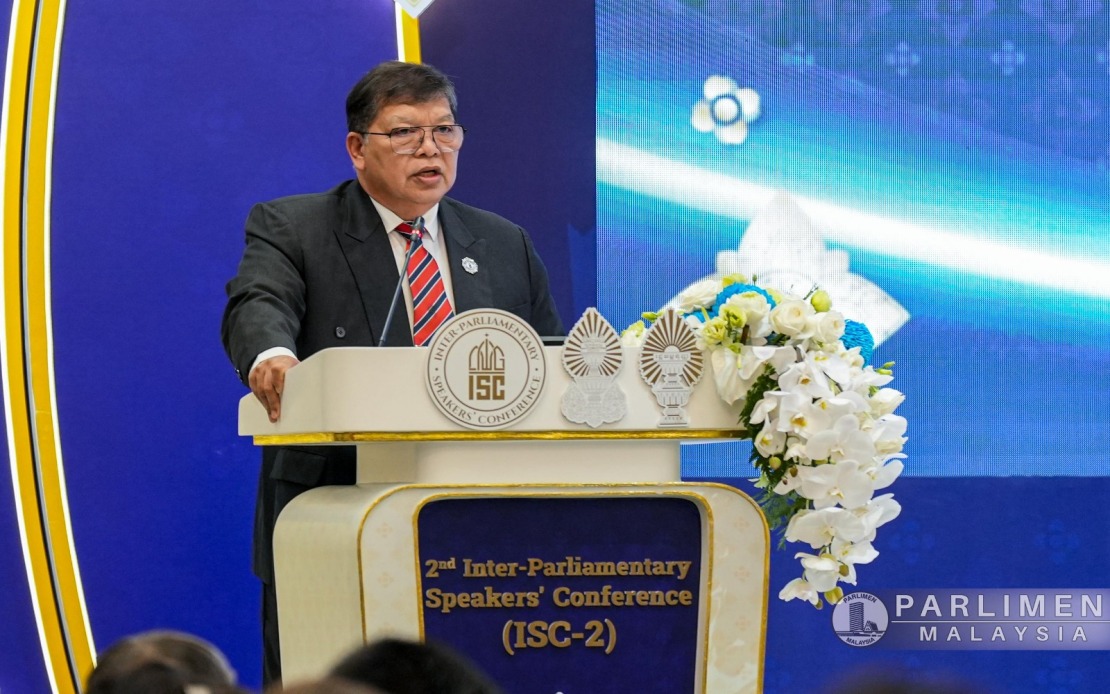
The escalating devastation wrought by climate-related disasters across Asia has prompted Dewan Rakyat Speaker Tan Sri Dr Johari Abdul to issue an urgent plea for global action, framing the crisis not merely as an environmental concern but as a multifaceted threat to economic stability, public health, and food security. Speaking at the Second Inter-Parliamentary Speakers' Conference (ISC-2) in Phnom Penh on Friday, Johari underscored the interconnected nature of contemporary climate challenges and the imperative for coordinated policy responses among world leaders and legislators.
The timing of Johari's remarks reflects the grim reality facing Southeast Asia and its neighbours. Recent catastrophic flooding in Nepal, triggered by a glacial collapse in the Himalayas, has claimed 469 confirmed lives with 2,381 people reported missing as of Friday, according to The Himalayan Times. Among the missing are 644 foreign nationals, including several Malaysians, illustrating how climate disasters transcend borders and affect regional populations indiscriminately. The disaster laid bare the fragility of mountain communities dependent on stable water systems and the cascading effects that originate in one nation's geography but ripple across entire sub-regions.
Yet Nepal's tragedy represents merely one chapter in a broader narrative of climate vulnerability engulfing the region. From the Philippines enduring approximately 20 typhoons annually to Laos confronting unpredictable rainfall patterns, populations across South and Southeast Asia face recurring threats from flash floods, landslides, storms, and tropical cyclones. These hazards disproportionately strike rural communities whose livelihoods depend on agriculture and whose infrastructure offers minimal protection against extreme weather. The cumulative toll—destroyed farmland, damaged roads and bridges, displaced populations—creates a drag on economic development that compounds poverty and inequality.
Cambodian Prime Minister Hun Manet amplified these concerns just days before the parliamentary conference, warning of rising water levels in the Mekong River and advising riverside inhabitants to maintain heightened vigilance. His remarks underscore that regional leaders recognize the present and projected impacts of climate change; the challenge lies in translating recognition into substantive action. Hun Manet acknowledged that natural disasters cannot be prevented entirely but stressed the necessity of building resilience through responsive systems that mitigate risks, a framework that demands significant investment and institutional capacity.
Johari's critique extends beyond passive acknowledgment of the crisis to an indictment of political leadership. He expressed frustration that senior policymakers rarely prioritize climate discourse and that many legislators lack foundational knowledge on the subject. This knowledge gap translates into poor decision-making—such as ongoing deforestation and continued reliance on coal-fired power generation despite mounting evidence of cleaner alternatives. The Speaker posed provocative questions about why renewable energy sources, including solar, wind, and wave power, remain underexploited despite rapid technological advancement and declining costs. His observations highlight a gap between scientific evidence and political behaviour that affects Malaysia and the broader region alike.
The Speaker advocated for a systemic reorientation of policy priorities centred on three pillars: climate education in schools, expanded research and development funding, and strategic investment in clean technology. This framework acknowledges that knowledge dissemination is foundational—legislators and policymakers cannot champion solutions they do not understand. Early education programmes that build scientific literacy regarding climate mechanisms and mitigation strategies prepare younger generations to inherit and advance these agendas. Simultaneously, robust R&D ecosystems drive innovation, reducing the cost and improving the efficiency of renewable energy systems and climate adaptation technologies.
Johari drew particular attention to China's long-term commitment to green technology promotion, citing the nation's emphasis on eco-friendly manufacturing, electric vehicle expansion, and green space development. This example illustrates that large-scale climate mitigation is achievable when governments align policy, investment, and industrial strategy. China's approach, though motivated partly by domestic air quality concerns, demonstrates how environmental objectives can align with economic opportunity and technological leadership. For Malaysia and other regional economies, such models offer templates for balancing development imperatives with climate responsibility.
The Speaker emphasized that addressing climate change requires more than rhetorical commitment; it demands genuine political will and visionary leadership willing to navigate complex trade-offs. He also identified a critical moral dimension: the growing chasm between wealthy nations with resources to adapt and vulnerable populations lacking such capacity. This disparity means that developing nations in Southeast Asia and South Asia bear disproportionate climate risks despite contributing less to historical emissions. The inequity extends to climate finance, technology transfer, and support for adaptation measures, issues that require engagement at international forums and bilateral negotiations.
The Second Inter-Parliamentary Speakers' Conference, held from August 26 to 28, provided a platform for such dialogue among legislative leaders from multiple nations. By elevating climate discourse at this level, parliamentary speakers can influence domestic legislative agendas and coordinate positions on international climate negotiations. Malaysia's participation in such forums is crucial given the nation's exposure to sea-level rise, shifting monsoon patterns, and increased storm intensity. Johari's statements reflect an awareness that parliamentary leadership must transcend ceremonial roles and actively shape policy responses to existential threats.
The convergence of unprecedented climate impacts—from glacial collapses to intensifying typhoons—with fragmented policy responses suggests that the window for meaningful mitigation is narrowing. While individual nations implement adaptation measures, the absence of coordinated international action perpetuates the crisis. Johari's call to action resonates particularly for Malaysia, where rising sea levels threaten coastal infrastructure and economic assets, and where growing populations in urban centres require resilient systems. The investment in education and technology he advocates represents not expenditure but insurance against far costlier future disasters.
Ultimately, the Speaker's message underscores that climate action is inseparable from good governance, equitable development, and intergenerational responsibility. As disasters in Nepal and threats in the Mekong continue to mount, the rhetoric of parliamentary leaders must translate into legislative action, budget allocations, and institutional reforms. For Malaysia and Southeast Asia, the path forward requires acknowledging that climate change is not peripheral to national agendas but central to them, shaping possibilities for growth, stability, and prosperity in the decades ahead.

