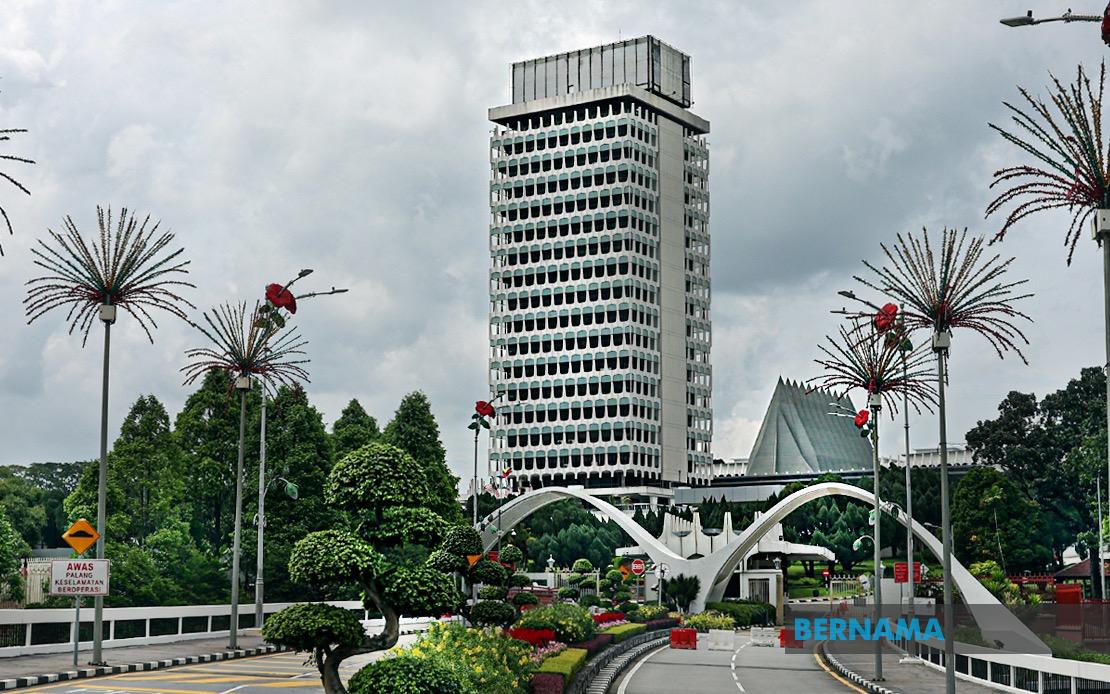
Parliament reconvenes today for what promises to be a substantive sitting on issues affecting Malaysian households and market competition, with lawmakers set to examine the government's approach to three critical governance areas: water infrastructure, consumer protection, and digital safety. The 16-day session, running through July 16, will tackle questions about Johor's long-term water security, the effectiveness of the Malaysia Competition Commission (MyCC) in policing housing markets, and how age verification systems on social media platforms balance child safety against privacy rights. These three distinct topics reflect broader anxieties among Malaysian constituencies about resource scarcity, housing affordability, and the regulatory framework governing digital spaces that increasingly shape daily life.
The water infrastructure debate represents perhaps the most tangible concern for voters in Johor, a state that has grappled with supply shortages during dry seasons and population expansion. Suhaizan Kaiat, the Pulai representative from Pakatan Harapan, will press the Energy Transition and Water Transformation Minister during Question Time to elaborate on plans for expanding the state's water resource capacity. The question signals parliamentary interest in whether the government has mapped out a coherent strategy encompassing not just conventional infrastructure like dams and treatment plants, but also alternative sources such as recycled water systems. For Malaysia's northeast seaboard region, where water stress is becoming endemic, the specificity of such plans matters considerably. The parliament's scrutiny could either validate ongoing projects or expose gaps in long-term thinking, with implications extending across the southern economic corridor that depends on reliable water availability for both residential and industrial purposes.
Parallel to infrastructure concerns, Datuk Seri Ismail Abd. Muttalib from Perikatan Nasional's Maran constituency will focus parliamentary attention on the MyCC's capacity to police anti-competitive behaviour in the housing sector. His questions target both the breadth and depth of the commission's monitoring capabilities, asking specifically how it observes housing price offers and packaging strategies. More pointedly, he seeks clarity on the investigation methodology applied to suspected cartels or market manipulation schemes within the property market. This line of inquiry reflects growing unease among middle-income Malaysians over housing affordability, particularly in key development areas. The MyCC's teeth—or perceived lack thereof—in pursuing price-fixing allegations has become a proxy for broader frustrations about whether regulatory bodies can meaningfully constrain corporate behaviour that inflates housing costs beyond reach of ordinary families.
The housing market angle carries particular weight for the broader Southeast Asian context, where rapid urbanisation and foreign investment have pressurised prices across major cities including Kuala Lumpur, George Town, and Johor Bahru. If the MyCC lacks sufficient investigative resources or enforcement authority, Malaysian regulators may struggle to maintain fair market conditions even as developer lobbies argue their margins are already compressed. Parliament's scrutiny today could precipitate calls for enhanced MyCC funding or expanded powers, signalling to investors that Malaysia intends to maintain competitive discipline in its property sector. Such signals matter for both domestic confidence and foreign direct investment patterns, as international players monitor how emerging economies manage market regulation.
The third significant item on today's agenda concerns social media age verification—a question raised by Syahredzan Johan of Bangi, Pakatan Harapan. His focus is narrower but more technically intricate than the infrastructure and competition questions. He wants the Communications Minister to clarify both the rationale for age verification requirements and the safeguards protecting personal data collected during verification processes. Specifically, he is asking whether service providers are restricted to gathering only the minimum data necessary, and whether there are mandatory deletion timelines once verification is complete. This line of questioning touches on emerging global tensions between child protection advocates who support age gates and privacy advocates who worry about surveillance capitalism targeting minors.
Malaysia's approach to social media regulation sits at the intersection of several policy streams: child welfare, digital rights, and the government's broader efforts to manage online speech and misinformation. By asking about data proportionality and deletion requirements, Syahredzan is essentially probing whether Malaysia intends to adopt a privacy-conscious model of age verification, rather than allowing platforms to harvest extensive personal information under the guise of child protection. For Malaysian parents and civil society groups watching digital governance closely, the answer will signal whether the government views age verification as a genuine safeguard or as an opportunity for further data collection normalisation.
The parliament sitting itself carries procedural weight beyond today's questions. The 16-day session represents a full legislative window during which standing committees can advance bills and motions. The three questions scheduled for today's Question Time will almost certainly spawn follow-up discussions in broader debates and committee work. Government ministers fielding these questions will need to articulate coherent policy frameworks rather than dismiss concerns as partisan gripes. The Johor water question, in particular, transcends party lines—all constituencies depend on reliable supplies, making cross-party consensus possible.
For Malaysian policymakers and the business community monitoring parliamentary developments, today's sitting signals that legislators are increasingly willing to probe regulatory performance and to demand specificity about long-term planning. The water, competition, and digital privacy questions collectively suggest that parliament is moving beyond performative debate toward substantive scrutiny of whether regulatory institutions are equipped and empowered to deliver on their mandates. That orientation bodes well for legislative accountability, though it also places pressure on ministers to come prepared with data-driven responses rather than rhetorical flourishes.
The broader regional context also matters. Other Southeast Asian legislatures are similarly grappling with water security, housing affordability, and digital regulation. Malaysia's parliamentary handling of these issues—particularly whether legislators demand rigorous answers and whether government responds with detailed, measurable commitments—may influence how neighbouring countries structure their own legislative oversight. If the Dewan Rakyat establishes a precedent of detailed questioning on infrastructure and regulation, that could subtly shift governance standards across the region toward greater accountability and specificity.
Today's parliamentary sitting is thus a microcosm of how mature democracies in the region are evolving. Rather than treating parliament primarily as a stage for political theatre, Malaysian legislators are increasingly treating it as an accountability mechanism through which public concerns about basic services, consumer protection, and digital rights can be systematically ventilated and examined. The energy and specificity with which questions are posed will partly determine whether parliament translates public anxiety into actual policy change.