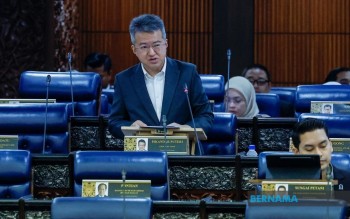
Malaysia's parliament has endorsed the National Trust Fund (KWAN) Bill 2026, marking a significant reform of the country's intergenerational savings mechanism. The legislation, presented by Deputy Finance Minister Liew Chin Tong, secured majority backing after extensive deliberation involving 15 Members of Parliament during today's sitting. The passage represents a watershed moment for a fund that has operated with considerable discretion for nearly four decades, requiring fundamental restructuring to meet contemporary standards of financial discipline and transparency.
The National Trust Fund's trajectory illuminates why parliamentary action became necessary. Since its establishment in 1988, KWAN has accumulated assets valued at RM22.43 billion as of end-2024. Yet this substantial corpus masks structural vulnerabilities that have repeatedly invited scrutiny. Petronas stands as the sole contributor to the fund across its lifespan, channelling RM13.5 billion over the decades. This singular reliance on voluntary corporate participation underscores the fund's original architecture's limitations—a framework designed in an era before contemporary governance expectations took hold.
A pivotal moment in KWAN's recent history crystallized the need for legislative reform. The 2021 withdrawal of RM5 billion triggered widespread public discussion about the fund's purpose, controls, and oversight mechanisms. That episode exposed fundamental gaps: contributions operated on a purely discretionary basis, no statutory caps existed on withdrawals, and the fund's permitted uses remained broadly defined. These characteristics rendered KWAN vulnerable to fiscal pressures and competing policy priorities, undermining its foundational objective of preserving resources for future generations. Without legislative anchors, successive governments could treat the fund as an accessible reserve rather than a protected, intergenerational asset.
The 2026 bill fundamentally recalibrates KWAN's operational parameters. Rather than depending on voluntary corporate generosity, the new framework establishes statutory contribution obligations. The legislation prescribes a minimum contribution rate of 0.1 per cent, transforming funding from discretionary to mandatory across the economy. This shift reflects international best practice in sovereign wealth funds and pension schemes, ensuring predictable, sustained inflows regardless of corporate profitability cycles or government budgetary pressures. By legislating contributions, parliament signals that intergenerational stewardship transcends individual fiscal years or administrative preferences.
Enhanced withdrawal discipline constitutes another pillar of the reform. The existing framework's absence of withdrawal limits created moral hazard, inviting successive administrations to tap KWAN during budget constraints. The 2026 bill institutes clearer parameters governing drawdowns, though parliamentary debate did not elaborate specific thresholds. This disciplinary architecture prevents the fund from devolving into a shadow reserve account for current spending, instead preserving it as genuine intergenerational capital. The contrast with the 2021 withdrawal—undertaken under the previous framework's permissiveness—underscores the reform's significance.
Modern governance structures represent the bill's third reform dimension. The existing framework's general-purpose language permitted flexibility but enabled mission drift. Enhanced governance provisions, though not detailed in parliamentary statements, presumably establish clearer stewardship standards, reporting requirements, and accountability mechanisms. For Malaysian policymakers and taxpayers, such transparency improvements address legitimate concerns about whether state-controlled funds serve public interests or become vehicles for discretionary spending beyond parliamentary scrutiny. The governance enhancement particularly matters given KWAN's scale—at RM22.43 billion, the fund represents meaningful national wealth requiring robust oversight.
Liew's emphasis on parliamentary sovereignty over contribution rates deserves close attention. By stipulating that only parliament itself, through formal amendment legislation, can modify the 0.1 per cent minimum rate, the bill insulates KWAN from executive adjustment or budgetary manoeuvre. Governments seeking to alter contribution obligations must return to the Dewan Rakyat, inviting public debate and legislative scrutiny. This constitutional lock ensures that intergenerational savings obligations remain binding across fiscal cycles and successive administrations. It transforms KWAN from a fund dependent on political whim into one with legislated permanence.
The regional context amplifies the reform's significance. Southeast Asian economies face demographic pressures and fiscal sustainability challenges increasingly recognised in neighbouring countries. Indonesia's sovereign wealth fund, Singapore's Temasek and GIC, and Thailand's various state savings mechanisms operate with stronger governance frameworks and more robust funding mechanisms than Malaysia's pre-2026 KWAN architecture. By strengthening KWAN, Malaysia aligns with regional peers in recognising that modern intergenerational stewardship requires statutory discipline rather than voluntary compliance. This legislative recalibration positions KWAN as a more credible vehicle for long-term national savings.
Implementation will test the bill's effectiveness. The transition from discretionary to mandatory contributions will affect participating companies and government budgeting processes. Establishing robust governance infrastructure requires institutional development and technical capacity. Parliamentary oversight mechanisms must be clarified to ensure that the 0.1 per cent rate and withdrawal discipline remain enforceable across future budget cycles when fiscal pressures may mount. The bill represents legislative intent, but genuine transformation depends on administrative execution and political will to resist pressures for exception or exemption.
The passage carries implications for Malaysia's fiscal credibility internationally. Sovereign wealth funds signal long-term commitment to financial stewardship, reassuring international investors about government stability and economic management. A stronger, more disciplined KWAN contributes to this confidence narrative. The fund becomes evidence that Malaysia institutionalises fiscal prudence through legislation rather than merely aspiring to it through policy statements. For Malaysian citizens, KWAN reform offers modest assurance that current resource wealth will transition to future generations rather than being consumed by present spending preferences.
Beyond KWAN itself, the bill establishes a template for reforming other Malaysian state entities and savings mechanisms. It demonstrates parliament's capacity to impose discipline on executive fund management and to prioritise intergenerational equity over short-term fiscal flexibility. As Malaysia confronts long-term fiscal challenges including ageing populations and evolving revenue sources, such legislative frameworks for protecting future interests gain importance. The 2026 bill thus represents not merely a financial adjustment but a reorientation toward sustained, institutionalised stewardship of national resources across generations.

