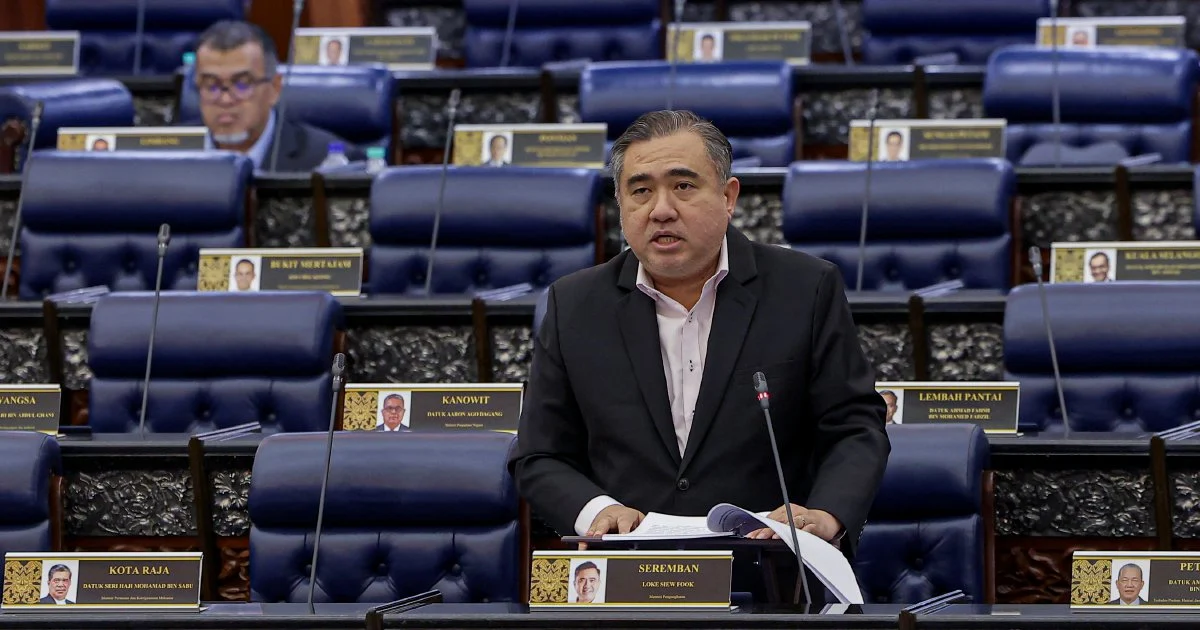
Malaysia's Parliament has taken a significant step toward modernising the country's road transport regulatory framework by approving the Road Transport (Amendment) Act 2026 in the Dewan Rakyat. The legislative development represents a comprehensive overhaul of enforcement and regulatory mechanisms that have governed Malaysia's roads and commercial transport sector since the original Road Transport Act came into force in 1987. This amendment reflects mounting pressure to address persistent road safety challenges and adapt regulations to contemporary transport demands across the nation.
The passage of this amendment signals recognition among lawmakers that existing legal instruments require substantial strengthening to cope with evolving challenges in Malaysia's transport landscape. The 1987 Act, while foundational, has faced limitations in addressing modern issues including ride-hailing services, autonomous vehicle technology, fleet management practices, and increasingly sophisticated commercial transport operations. By expanding regulatory and enforcement authority, authorities gain the necessary tools to implement more rigorous standards that reflect current road conditions, vehicle technologies, and safety expectations.
Enhanced enforcement powers are particularly significant for Malaysia, where road fatalities and serious traffic incidents remain concerning public health indicators. Stronger regulatory mechanisms enable transport authorities to impose penalties more effectively against violations, maintain vehicle standards through rigorous inspection protocols, and address unsafe driving behaviours with greater consistency across states. The amendment creates a more cohesive framework for managing the thousands of vehicles that traverse Malaysian highways daily, from private motorcycles to heavy commercial trucks.
The legislative change holds particular relevance for commercial transport operators and logistics companies, whose operations form the backbone of Malaysia's regional economic connectivity. Clearer regulatory parameters allow businesses to understand compliance requirements more precisely while reducing ambiguity in how authorities interpret and enforce transport regulations. This predictability benefits legitimate operators by creating fairer competitive conditions and establishing transparent standards that apply uniformly across different jurisdictions.
Southeast Asian context adds another dimension to this legislative development. Malaysia serves as a key transit corridor for regional trade and passenger movement, particularly given its position in the ASEAN transportation network. Modernised road transport regulations improve Malaysia's ability to harmonise standards with neighbouring countries and facilitate safer cross-border movement of goods and people. This alignment becomes increasingly important as regional cooperation frameworks expand and trade volumes intensify along established logistics corridors.
The amendment also addresses gaps in authority coordination between federal and state-level transport agencies. Malaysia's federal structure creates complexity in enforcing uniform standards across thirteen states and three federal territories. By clarifying regulatory powers and enforcement mechanisms, the amendment provides a stronger legal foundation for coordinated action between the Road Transport Department, state authorities, and local enforcement bodies. This coordination becomes essential when addressing serious violations or managing transport safety in major metropolitan areas.
Digitalisation of enforcement presents another dimension where enhanced regulatory powers prove valuable. Modern vehicle management increasingly relies on electronic monitoring systems, digital licensing platforms, and data-driven enforcement strategies. The amendment creates legal pathways for implementing these technologies while ensuring appropriate oversight and accountability. Malaysian authorities can now establish more sophisticated systems for tracking commercial vehicles, monitoring driver compliance, and responding quickly to emerging safety threats.
Public safety advocates have long advocated for strengthened legal frameworks addressing commercial transport practices. Bus operators, lorry drivers, and taxi services operate under frameworks that sometimes lag behind contemporary safety science and best practices observed in more developed transport systems. Enhanced regulatory powers enable authorities to mandate driver training standards, vehicle maintenance schedules, and operational hours aligned with international safety benchmarks, potentially reducing accident rates and fatalities.
The amendment also carries implications for Malaysia's broader regulatory modernisation agenda. Transport regulation serves as a model for sectoral oversight across the economy. Successful implementation of strengthened road transport regulations could inform similar reforms in aviation, maritime, and rail sectors. Conversely, challenges encountered in rolling out these expanded powers might inform how authorities approach regulatory strengthening in other areas, creating valuable institutional learning.
Implementation challenges should not be underestimated. Translating enhanced regulatory authority into effective real-world outcomes requires adequate staffing, funding, and training for enforcement agencies. State-level cooperation becomes critical since enforcement often occurs at the municipal and district level. The transport ministry must establish implementation guidelines clarifying how different regulatory bodies interpret and apply expanded powers, preventing inconsistent enforcement that undermines the amendment's objectives.
The amendment reflects broader global trends toward tightening transport regulation in response to safety concerns and environmental imperatives. Countries across the region and beyond have strengthened road transport frameworks, recognising that older legislation proves inadequate for contemporary challenges. Malaysia's approach aligns with international expectations while acknowledging local context and needs, positioning the country as a regional leader in systematic transport governance improvement.