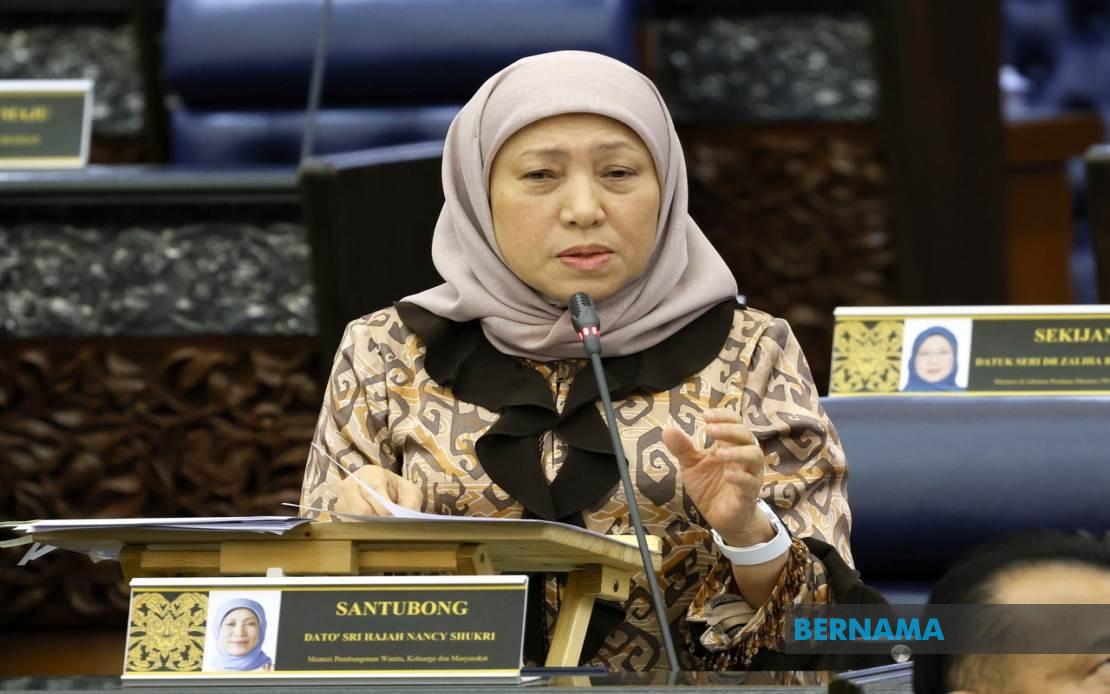
Parliament has taken a significant step toward professionalising social work in Malaysia by approving the Social Work Profession Bill 2026, establishing a dedicated regulatory body to oversee the field. The Dewan Rakyat passed the legislation following deliberations involving 23 Members of Parliament across the political spectrum, with Minister of the Women, Family and Community Development Ministry Datuk Seri Nancy Shukri steering the measure through its final stage. The approval represents the culmination of a decade-long campaign to accord formal recognition and oversight to a profession that has long operated without unified professional standards or a centralised regulatory mechanism.
The creation of the Malaysian Social Work Profession Council constitutes the cornerstone of this reform, tasked with establishing the benchmarks, guidelines, and professional frameworks necessary to elevate standards across the sector. The Council will undertake several critical functions, including formulating qualification and competency requirements, establishing complaint mechanisms, developing safety and welfare protocols for practitioners, and exploring potential reciprocity arrangements for social workers operating across different jurisdictions. This institutional approach reflects international best practice in professionalising social work, bringing Malaysia into alignment with regulatory models adopted elsewhere in the region and globally.
Implementation will proceed in carefully sequenced phases, beginning with the registration of private sector practitioners before extending oversight to government employees. This graduated approach acknowledges the structural complexities inherent in regulating public sector social workers, who already operate under established supervision systems, codes of ethics, and standard operating procedures within their respective agencies. Nancy indicated that public officers will only require registration if they engage in social work activities outside their official government roles, a pragmatic recognition of the overlapping jurisdictional and administrative considerations that would accompany immediate full-sector regulation.
The initial phase will therefore focus on registering social workers employed by non-governmental organisations, community-based entities, corporate institutions, and independent practitioners. This cohort, which has historically lacked any formalised professional verification or standardised competency assessment, stands to benefit substantially from the Council's regulatory oversight. The decision to prioritise private and NGO sector registration enables the Council to establish its institutional capacity and develop coherent regulatory frameworks before addressing the more intricate challenge of integrating public sector workers into the system.
The bill's scope deliberately excludes volunteers and informal caregivers, targeting instead professionally qualified practitioners who undertake social work as a vocation. This definitional clarity prevents the legislation from imposing compliance burdens on the substantial volunteer workforce that supplements formal social work delivery across Malaysia. Importantly, the measure does not extend to wage determination, leaving compensation questions to be addressed through existing labour law mechanisms rather than professional regulation—a distinction that sidesteps potential complications arising from wage-setting powers granted to regulatory bodies.
Operational funding for the Council will derive from government budget allocations, ensuring that regulatory capacity does not depend on practitioner fees alone, which could create affordability barriers to registration. This commitment of public resources underscores the government's intention to establish a functional, well-resourced regulatory institution rather than a nominal body lacking practical authority or enforcement capacity. The allocation model also reduces the risk that the Council becomes financially beholden to larger employers or organised practitioner interests.
During parliamentary debate, several members highlighted gaps and opportunities within the legislation's framework. Howard Lee, representing Ipoh Timor, questioned the rationale for exempting government social workers from practice certificate requirements, noting that they routinely handle high-risk cases involving child protection, persons with disabilities, elderly individuals, and vulnerable families. His argument that the public deserves equivalent professional standards regardless of service provider—government, NGO, or private sector—resonates with concerns that partial regulation could create uneven quality and accountability. This tension between phased implementation and comprehensive protection remains unresolved, leaving scope for future legislative refinement.
Other parliamentarians proposed complementary measures to maximise the legislation's effectiveness. Dr. Halimah Ali advocated for enhanced support mechanisms, including dedicated grants for NGOs, scholarship programmes, and incentive schemes targeting rural deployment where social work capacity chronically lags demand. Datuk Siti Aminah Aching emphasised the need for competitive career development pathways extending across all regions, explicitly including Sabah and Sarawak, underscoring rural and East Malaysian concerns about professionalisation benefiting only urban practitioners. These interventions reflect recognition that legislative frameworks require supporting infrastructure—financial resources, human capital development, and equitable geographic distribution—to translate statutory authority into substantive outcomes.
Lim Lip Eng stressed that professionalisation must genuinely elevate standards through independent governance, transparent enforcement, and proportionate disciplinary mechanisms. This emphasis on institutional integrity acknowledges the risk that regulatory bodies can become corrupted or captured by organised interests, potentially undermining rather than advancing professional standards. The parliamentary discussion thus extended beyond legislative mechanics to encompass the broader institutional culture necessary for effective professional regulation.
The timing of this legislation reflects Malaysia's evolving recognition of social work's critical role in addressing contemporary challenges spanning child welfare, family stability, disability support, and community resilience. As urbanisation intensifies, traditional kinship-based support networks fragment, and welfare demand increases, professionalised social work becomes increasingly indispensable. The bill positions the sector to transition from ad-hoc, personality-dependent service delivery toward systematic, standards-based practice underpinned by verifiable competencies and ethical accountability.
The regional context further illuminates the significance of Malaysia's action. Several Southeast Asian jurisdictions have undertaken similar professionalisation initiatives, and Malaysia's framework will likely influence standards discussions across ASEAN. The establishment of the Malaysian Social Work Profession Council offers an institutional model that smaller nations or those with limited regulatory capacity might adapt, potentially advancing social work standards throughout the region. Conversely, Malaysia's experience—particularly any implementation challenges or gaps that emerge—will provide valuable lessons for neighbouring countries considering regulatory reform.
Looking forward, the Council's success will hinge on several critical factors: securing adequate government funding, attracting capable leadership willing to develop coherent professional standards, managing the complex politics of extending regulation to the public sector, and maintaining enforcement credibility against practitioner resistance or organisational inertia. The measure's long-term impact will ultimately be measured not in legislative approval but in whether regulated practitioners demonstrate observable improvements in competency, ethical conduct, and client outcomes. Nancy's assertion that this bill concludes a decade-long advocacy campaign should be understood as marking a beginning rather than conclusion—the commencement of the more demanding work of building effective professional institutions.

