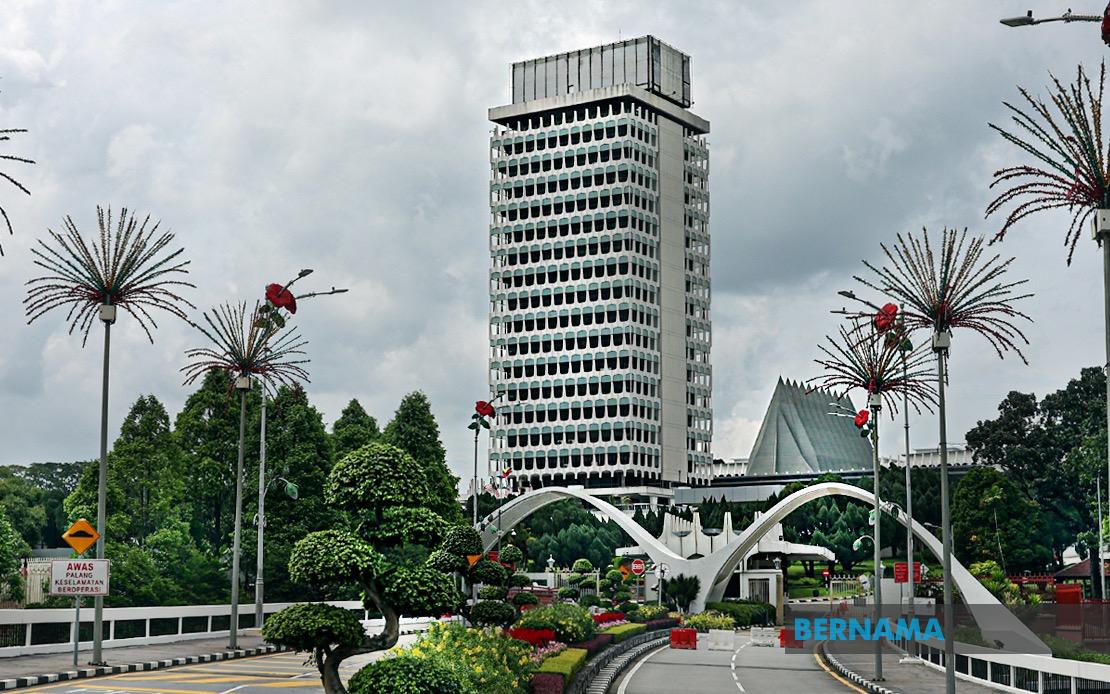
Prime Minister Datuk Seri Anwar Ibrahim used this week's parliamentary session to address longstanding concerns about the fairness of federal budget distribution across Malaysia's states, asserting that the vast majority of regional governments already receive more in development funding than they contribute through tax revenues. Speaking during Ministers' Question Time on Tuesday, Anwar framed the allocation methodology as responding to genuine development needs and public welfare priorities rather than favouritism, directly countering suggestions that certain states face systematic disadvantage in accessing central government resources. This clarification carries particular significance for state leaders from opposition-held territories, who frequently allege discriminatory treatment in federal disbursements.
The Prime Minister elaborated on procedural requirements governing additional state funding requests, particularly those involving project modifications through Notice of Change documents. Anwar explained that any alterations to existing arrangements necessitate formal renegotiation before the federal government can approve supplementary allocations or loan facilities, establishing clear bureaucratic boundaries that protect against ad-hoc or politically motivated adjustments. This procedural transparency aims to distinguish legitimate development adjustments from electoral considerations, a distinction Anwar reinforced by invoking campaign spending restrictions.
Anwar additionally reminded lawmakers of constitutional constraints on government announcements during election periods, citing Section 24B of the Election Offences Act 1954. This intervention appears designed to prevent campaign-period announcements of new projects or policies that might constitute impermissible electoral inducements, signalling the administration's commitment to maintaining institutional guardrails around election administration. For Malaysian political observers, such reminders underscore the ongoing tension between electoral competition and administrative propriety.
Parliament this week approved three significant pieces of legislation addressing contemporary social and technological challenges. The Sexual Offences Against Children (Amendment) Bill 2026 strengthens protections for vulnerable minors, while concurrent passage of Employment Insurance System amendments broadens coverage mechanisms for Malaysian workers. Most notably, the Cybercrime Bill 2026 introduces criminal offences and penalties specifically targeting digital forgery, commonly known as deepfake technology, alongside provisions criminalizing the distribution of non-consensual intimate imagery through digital networks. These provisions acknowledge the growing sophistication of digital harm and the legal system's need to adapt accordingly, particularly relevant to Southeast Asian nations grappling with rapid technological adoption.
The Cybercrime Bill represents a watershed moment in Malaysian digital governance, establishing that manipulated visual content created through artificial intelligence or sophisticated computer systems constitutes a prosecutable offence. This legislative development positions Malaysia among jurisdictions taking concrete steps to regulate AI-generated fraudulent content, addressing anxieties that deepfake technology could undermine democratic processes, personal reputation and social stability. The emphasis on complex computer systems suggests lawmakers recognize that technological capability will continue evolving, necessitating legislation sufficiently broad to encompass future innovations.
Minister in the Prime Minister's Department Datuk Seri Azalina Othman Said announced that government legal experts have completed a comprehensive study on contract law reform, including detailed policy recommendations and draft legislative provisions. The initiative recognizes that Malaysia's commercial legal framework, particularly regarding third-party contract rights and agency arrangements, requires modernization to accommodate contemporary business practices. Most significantly, the reform process explicitly incorporates considerations of artificial intelligence integration within commercial relationships, indicating that policymakers are proactively addressing how AI systems should be regulated within contractual arrangements rather than attempting retrospective legal accommodation.
Economy Minister Akmal Nasrullah Mohd Nasir detailed the administration's approach to managing consumer inflation and supply chain stability, emphasizing daily government monitoring of essential commodity prices and availability. Coordination between federal authorities, Petronas, and private sector participants aims to maintain steady energy supplies while protecting household purchasing power and ensuring critical economic sectors maintain operational efficiency. For Malaysian households struggling with cost-of-living pressures, this interagency coordination represents a direct government response to inflationary concerns that dominated recent electoral campaigning and continue shaping public sentiment toward the administration.
The MADANI Book Voucher programme 2026, overseen by Deputy Education Minister Wong Kah Woh, exemplifies targeted educational investment with substantial scope. The initiative allocates RM221.6 million to distribute RM100 electronic vouchers to more than 2.2 million students enrolled in Ministry of Education institutions, enabling young people to purchase reading materials through participating retailers. Beginning redemptions last week, the programme runs until October 31, providing a three-month window for students and families to utilize allocated credits. This expenditure signals continued government prioritization of educational access and literacy development despite broader fiscal constraints.
Communications Minister Datuk Fahmi Fadzil reported that regulatory frameworks underpinning the Online Safety Act 2025 remain under finalization, with particular attention to private messaging platforms' obligations in detecting and removing harmful content. The regulatory approach increasingly embraces artificial intelligence as an administrative tool, with the Malaysian Communications and Multimedia Commission exploring "agentic AI" technology to improve complaint processing efficiency and reduce administrative burden on human officers. Simultaneously, Fahmi encouraged social media platforms themselves to deploy AI-driven content moderation systems capable of identifying and removing policy-violating material more rapidly than traditional human review processes. This dual reliance on governmental and private sector AI implementation suggests a pragmatic acknowledgement that the volume of digital content exceeds human reviewing capacity.
The framework emerging around digital regulation balances innovation encouragement with harm prevention through shared responsibility between state institutions and technology companies. By positioning regulatory agencies as AI users rather than purely prescriptive rule-makers, Malaysian authorities attempt to modernize governance approaches for digital environments. However, the approach raises questions about algorithmic transparency, potential bias in AI-driven content decisions, and the adequacy of human oversight when artificial systems make determinations affecting speech rights—considerations particularly salient across Southeast Asia where regulatory capacity varies significantly.
The current Dewan Rakyat session extends for sixteen consecutive sitting days from June 22 through July 16, providing sustained parliamentary engagement with substantial legislative agendas. The breadth of issues addressed during the second week—spanning federal finance, child protection, employment law, cybercrime, contract modernization, consumer economics, educational investment and digital regulation—reflects the multifaceted governance challenges contemporary Malaysian administrations navigate. Legislators' willingness to tackle emerging technological concerns through deliberate legal frameworks, rather than administrative improvisation, suggests institutional capacity to address rapidly evolving policy domains that transcend traditional governmental categories.

