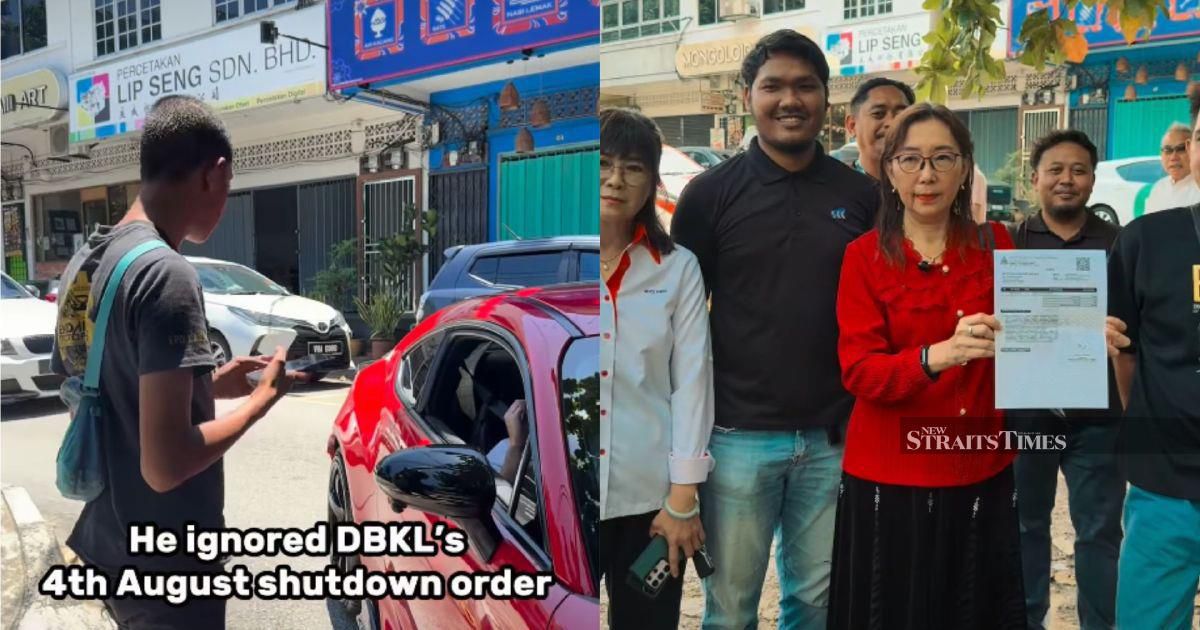
An enforcement operation in Kuala Lumpur's established residential neighbourhood of Taman OUG resulted in the arrest of a man accused of collecting parking fees without authorisation along Jalan Hujan. The suspect had persisted in the unauthorised activity despite repeated official notices instructing him to cease operations, prompting city authorities to escalate their intervention. The situation culminated in an alleged physical confrontation involving an enforcement officer, leading to the arrest.
The incident underscores an ongoing challenge facing Kuala Lumpur City Hall and municipal authorities across Malaysia's urban centres: the persistence of informal parking collection schemes that operate outside official regulatory frameworks. These unauthorised collectors occupy a grey zone between minor street commerce and petty crime, extracting fees from residents and visitors while contributing nothing to proper municipal infrastructure or services. The Taman OUG case reflects how such operations can deteriorate from simple non-compliance into more serious matters when enforcement attempts are resisted.
Jalan Hujan in Taman OUG is a established middle-class residential area that has long attracted informal economic activity. The presence of unlicensed parking collectors in such neighbourhoods creates multiple problems for residents and local authorities alike. Beyond the obvious illegality, these operations undermine the credibility of legitimate parking management systems and create uncertainty about where collected revenues actually flow. Residents are frequently uncertain whether payments constitute legitimate taxes or constitute harassment by individuals claiming false authority.
The enforcement action reflects a broader strategy by Kuala Lumpur authorities to maintain order and regulate informal economic actors within municipal boundaries. City Hall faces constant pressure to demonstrate that it can effectively police violations ranging from minor administrative infractions to more serious criminal conduct. The escalation of this particular case—from parking collection to alleged assault—indicates both the frustration of enforcement officials when their instructions are ignored and the determination of authorities to establish that their directives carry real consequences.
The alleged assault component transforms what might otherwise have been a straightforward administrative matter into a more serious criminal investigation. When enforcement officers encounter resistance or violence during routine operations, it raises the legal stakes for the suspect and sends a clear message to others engaged in similar activities that non-compliance will result in escalated law enforcement action. Malaysian courts have generally supported enforcement officers' authority to perform their duties and take appropriate action when that authority is challenged physically.
The incident also highlights tensions inherent in Kuala Lumpur's informal economy. Many individuals operating as unauthorized parking collectors come from economically vulnerable backgrounds and view this activity as a survival strategy rather than criminal enterprise. However, authorities must balance sympathy for their circumstances against the need to maintain municipal order and prevent the proliferation of unregulated fee-collection schemes. Without consistent enforcement, such operations can multiply rapidly, eventually creating parallel systems of authority that undermine formal governance structures.
Residents in affected neighbourhoods like Taman OUG often express frustration about their inability to distinguish between legitimate and illegitimate parking fees. The presence of unauthorised collectors creates an atmosphere of uncertainty and potential victimisation, particularly for newcomers or visitors unfamiliar with local arrangements. Some residents feel compelled to pay such collectors despite knowing the payments are not official, simply to avoid confrontation or vehicle damage. This dynamic shifts the issue from simple regulatory violation to something approaching extortion.
City Hall's enforcement response must navigate practical constraints in Malaysian urban policing. Resources are limited, and officers cannot be permanently stationed at every location where unauthorised activities occur. This creates opportunities for persistent offenders to resume operations shortly after warnings are issued. The escalation to arrest in this case may reflect both the suspect's repeated defiance and the officer's assessment that warnings had reached diminishing returns. Documenting patterns of non-compliance strengthens any subsequent prosecution.
The case also carries implications for how Kuala Lumpur manages parking generally. If demand for parking in Taman OUG genuinely exceeds formal supply, residents may be vulnerable to approaches by unauthorised collectors who position themselves as solving a practical problem. Addressing the root cause might require city authorities to evaluate whether official parking provisions in the area are adequate or whether regulated private parking schemes could fill gaps that currently leave openings for informal operators.
Moving forward, this arrest may deter similar activity in Taman OUG and signal to other would-be unauthorised parking collectors that City Hall is willing to escalate enforcement to criminal charges rather than settling for warnings. However, long-term solutions likely require addressing both the economic incentives that draw individuals into such work and the demand conditions that make residents willing to pay unauthorised collectors. Malaysian cities continue experimenting with approaches ranging from stricter enforcement to community engagement programmes designed to formalise and regulate informal economies.

