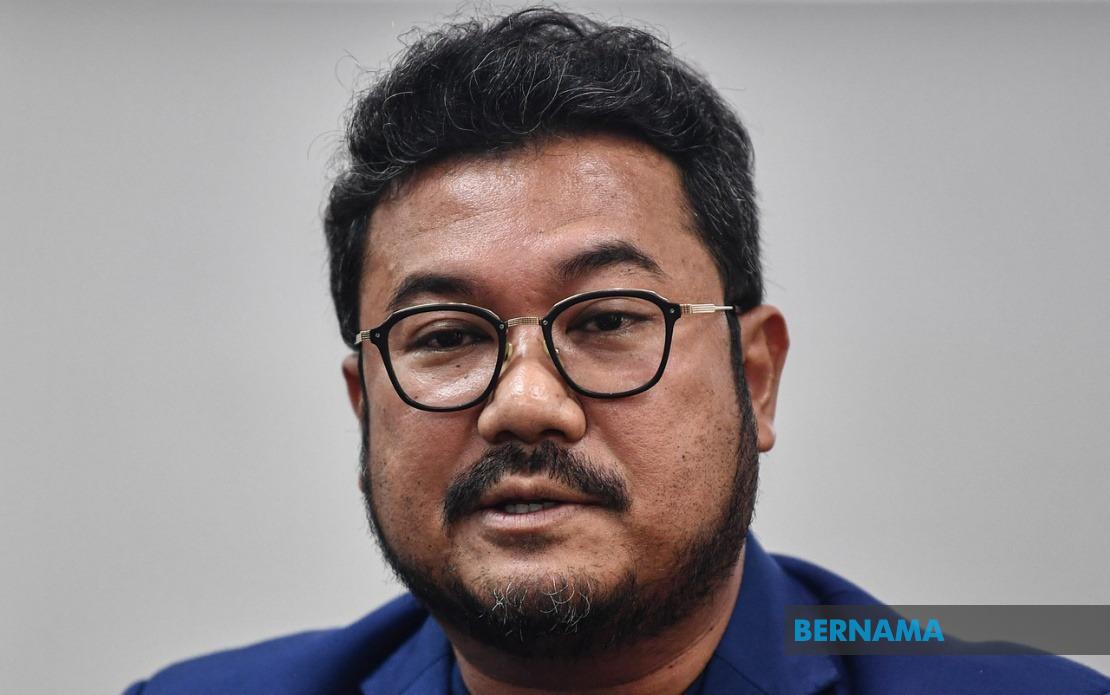
Datuk Seri Megat D Shahriman Zaharudin, president of the Malaysian Paralympics Council, will stand as a Parti Peribumi Bersatu Malaysia (Bersatu) candidate in the upcoming Negeri Sembilan state election, marking a significant political entry for the sports administrator. Bersatu president Tan Sri Muhyiddin Yassin made the announcement at a candidate declaration ceremony in Nilai on July 17, positioning Zaharudin to contest the Seri Menanti seat as part of the coalition's 24-strong slate for the 16th Negeri Sembilan state poll.
Zaharudin brings a diverse portfolio of leadership experience to his political candidacy. In addition to his role leading Malaysia's Paralympic movement, he serves as president of the Negeri Sembilan Canoe Association, demonstrating a commitment to grassroots sports development across multiple disciplines. His involvement in both disability sports advocacy and recreational water sports positions him as a candidate with genuine community engagement credentials, a factor that may resonate with voters seeking candidates with tangible track records beyond purely political backgrounds.
The timing of his nomination reflects Bersatu's strategy to field candidates with established institutional credibility and specialist expertise. The party, which split from the United Malays National Organisation (UMNO) in 2020 and has fluctuated in its political fortunes, appears intent on bolstering its electoral prospects by recruiting figures from respected non-governmental sectors. This approach aims to demonstrate that the coalition can offer governance beyond traditional party machinery, appealing to voters who may view established sports and community leaders as more trustworthy representatives of local interests.
Negeri Sembilan's 16th state election arrives at a critical juncture for Malaysian politics. State elections have gained prominence as testing grounds for national coalitions, with results frequently interpreted as barometers of support for federal governments and opposition blocs. The Bersatu-led coalition's performance in Negeri Sembilan will carry implications for perceptions of stability within the Malay-Muslim dominated component parties and their ability to galvanise base support independently of UMNO's traditional machinery.
The electoral schedule has been tightened considerably for candidates and voters. The Election Commission designated July 20 as nomination day, allowing only a narrow window for parties to finalise their rosters and campaigns to gain momentum. Early voting will occur on July 28, providing convenience for civil servants, essential workers, and persons with mobility constraints, while the official polling day on August 1 concludes the process. This compressed timeline places premium value on candidates' existing public profiles and community networks, potentially advantaging figures like Zaharudin who already maintain institutional platforms and visibility.
For Negeri Sembilan voters, particularly those in the Seri Menanti constituency, the emergence of sports administrators as political candidates reflects broader changes in Malaysia's electoral landscape. The traditional emphasis on party machinery and patronage networks faces increasing competition from candidates whose credentials derive from professional achievement and sectoral expertise. Whether voters respond favourably to such candidates or prefer experienced political operators remains an open question that this election will partly illuminate.
Zaharudin's candidacy also underscores the growing convergence between Malaysia's sports establishment and political structures. The Malaysian Paralympics Council holds significant responsibility for representing the nation's disabled athletes internationally and securing government funding for their training and competition. His potential entry into state politics raises questions about potential conflicts of interest or, conversely, whether his political position might enhance parliamentary advocacy for disability sports funding—a perennially underfunded area relative to able-bodied athletics.
Bersatu's coalition framework in Negeri Sembilan encompasses multiple Malay-based parties and partners, though the detailed composition of its electoral alliance remains subject to ongoing negotiations in Malaysia's fluid political environment. The party's performance in 2023 general elections demonstrated that its base remains significant but concentrated in specific geographic pockets, making seat selection crucial for maximising returns. The choice to field Zaharudin in Seri Menanti suggests Bersatu's assessment that the constituency presents a competitive opportunity, likely based on demographic analysis and local groundswell assessments.
Regional political observers will monitor Negeri Sembilan's results closely given the state's position as a swing territory within the Klang Valley economic corridor. Its proximity to Selangor and Kuala Lumpur means that state-level governance decisions carry spillover effects for one of Malaysia's most economically productive zones. An election result that strengthens either the ruling coalition or opposition could influence calculations about national-level stability and coalition sustainability heading into the next general election cycle.
For candidates like Zaharudin, the August 1 polling day represents both opportunity and uncertainty. While established public stature provides obvious advantages, first-time political candidates often face voter scepticism about their understanding of local governance priorities and their commitment to representing constituency interests over partisan or personal advancement. The weeks preceding polling day will reveal whether his sports administration background translates into effective political communication with Seri Menanti voters or whether they ultimately prefer candidates with deeper existing political networks and demonstrated legislative experience.

