The Palestinian Foreign Ministry has mounted a spirited defence of the United Nations Relief and Works Agency for Palestine Refugees in the Near East (UNRWA), declaring the organization indispensable to the survival and welfare of Palestinians scattered across multiple territories and regions. In a statement released Wednesday, officials in Ramallah rejected what they characterize as coordinated attempts to undermine the agency's authority and operational capacity, warning that such efforts ignore the deeper humanitarian and legal foundations upon which Palestinian refugee support rests.
UNRWA operates as a lifeline across a fragmented Palestinian landscape, functioning in the occupied territories of the West Bank and Gaza Strip, including East Jerusalem, while simultaneously managing refugee camps in neighbouring host countries that border the occupied Palestinian territories. The ministry emphasized that the agency's mandate extends beyond simple material assistance, encompassing educational programmes that have educated generations of Palestinian children, healthcare services that reach vulnerable populations, and social protection mechanisms that stabilize communities facing extraordinary pressures. These operations represent the backbone of basic service delivery in areas where Palestinian self-governance remains constrained and international humanitarian coordination proves essential.
The Palestinian position rests on the assertion that UNRWA's authority derives from a formal United Nations mandate and operates strictly within the parameters established by international law. This legal foundation underpins all operations the agency conducts across its field of work. The Foreign Ministry characterized the organization as irreplaceable and a key pillar maintaining stability across Palestinian communities, arguing that dismantling or weakening UNRWA would create devastating humanitarian vacuums that no alternative mechanism could adequately fill. The statement stressed that the State of Palestine actively welcomes UNRWA's continued operations and considers their continuation essential to Palestinian welfare and dignity.
The Palestinian government's response directly challenges the framing offered by the Trump administration's Board of Peace, which issued a stark declaration Wednesday asserting that UNRWA has no viable role in a reconstructed Gaza. The Board's statement, posted on social media, suggested that humanitarian aid delivery through UNRWA perpetuates dependency cycles that prevent Gaza's development and dignity. This rhetorical positioning frames the agency's work as counterproductive, arguing instead that Gazans deserve alternative pathways that break patterns of aid reliance and conflict. The Board of Peace, established in January following Trump's initiative to broker a Gaza settlement, has positioned itself as the architectural force behind reimagining post-conflict Palestinian governance and development.
Palestinian officials rejected the underlying logic of this argument, distinguishing between legitimate humanitarian assistance and fundamental refugee rights that extend beyond material aid. The Foreign Ministry asserted that humanitarian support cannot substitute for what it characterizes as the inalienable rights of Palestinian refugees, particularly those protections established under United Nations General Assembly Resolution 194, which affirms refugees' right to return to their homes. By this reasoning, dismantling UNRWA does not resolve the Palestinian refugee question but merely removes institutional mechanisms through which the international community fulfills its humanitarian obligations. The statement reframed the debate as one concerning whether international law and UN commitments remain binding or whether humanitarian necessity can be simply erased through institutional restructuring.
The Palestinian statement also rejected specific terminology used in international discussions about Palestinian territories, viewing certain formulations as deliberately fragmenting Palestinian geography and identity. This linguistic concern reflects broader anxiety about how international powers discuss Palestinian political space. The ministry reaffirmed that Gaza constitutes an integral part of the occupied State of Palestine rather than a separate entity or humanitarian problem zone disconnected from Palestinian national aspirations. This positioning asserts that Palestinians remain one unified people regardless of geographic separation, bound by shared national identity across the Gaza Strip, the West Bank encompassing East Jerusalem, and diaspora communities throughout the region and beyond.
The Palestinian government's statement concluded by appealing to the international community to respect UNRWA's established status under international law, including its privileges and immunities as a UN agency. The ministry called upon all states, institutions, and international organizations to guarantee protection for the agency, its personnel, and its facilities. This protection, the statement argued, must persist until the international community achieves a just and lasting solution to the Palestinian refugee question in compliance with international law and relevant UN resolutions. The framing positions UNRWA's operational security as inseparable from broader efforts to achieve a sustainable Palestinian settlement.
For Malaysia and Southeast Asian observers, this dispute carries significant implications. The push to dismantle UNRWA represents an attempt by the Trump administration to reshape Middle Eastern humanitarian frameworks according to its particular political vision, potentially setting precedents for how international organizations operate in other conflict zones. The Palestinian resistance to these pressures demonstrates how states and populations resist external pressure to abandon institutional protections, even when facing asymmetrical power dynamics. Malaysia's own substantial Palestinian diaspora and long-standing advocacy for Palestinian rights means that UNRWA's fate carries particular resonance for Malaysian policymakers and civil society.
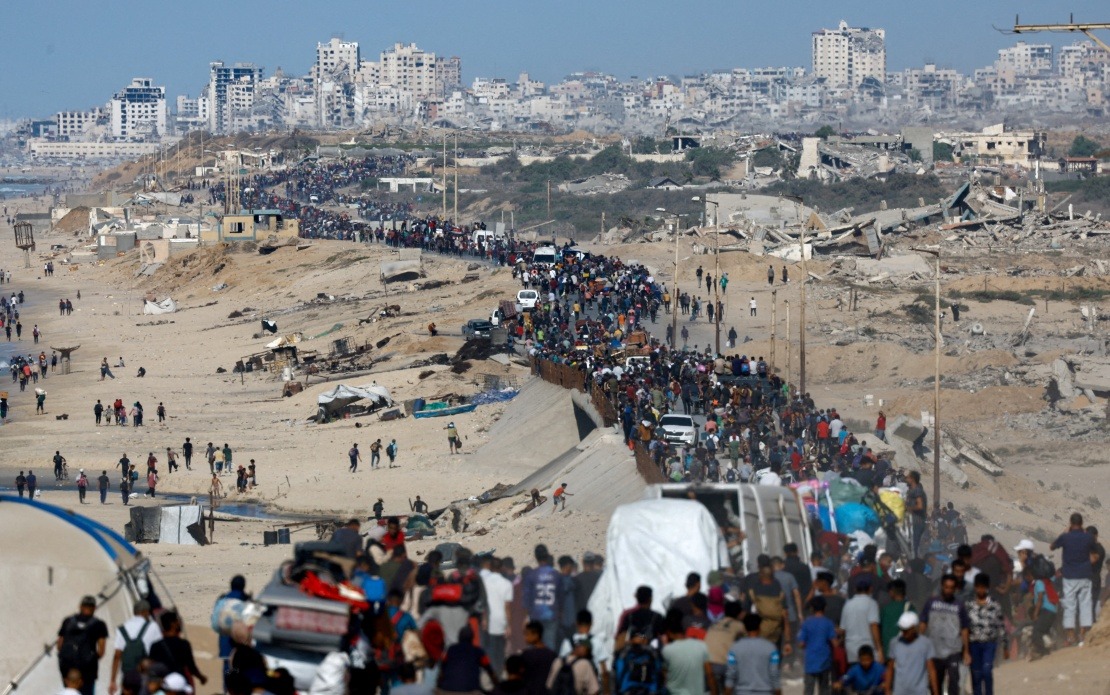
The conflict over UNRWA's future also illustrates broader tensions concerning the responsibility of wealthy nations toward displaced populations. The Trump Board of Peace's emphasis on ending aid dependency while pursuing military approaches has displaced roughly 1.7 million Gazans, according to UN figures, creating humanitarian crises that UNRWA has actively managed. The assertion that humanitarian assistance perpetuates conflict stands in stark contrast to the observable reality that Gaza faces acute shortages of educational infrastructure, medical capacity, and basic services that UNRWA alone provides across multiple sites. This contradiction between stated development aspirations and actual humanitarian realities forms the crux of Palestinian objections.
The political context amplifies the stakes surrounding this institutional conflict. The Trump administration's initiative emerged following its January establishment of the Board of Peace, with the February 2024 inaugural meeting in Washington signaling the administration's active role in shaping post-Gaza reconstruction. The board's position connects to Trump's broader 20-point plan for ending the Gaza conflict, which secured backing from a UN Security Council resolution from November 2023. Yet the administration's approach reflects fundamentally different assumptions about how Palestinian territories should be reconstructed and governed compared to Palestinian preferences and international humanitarian law frameworks.

