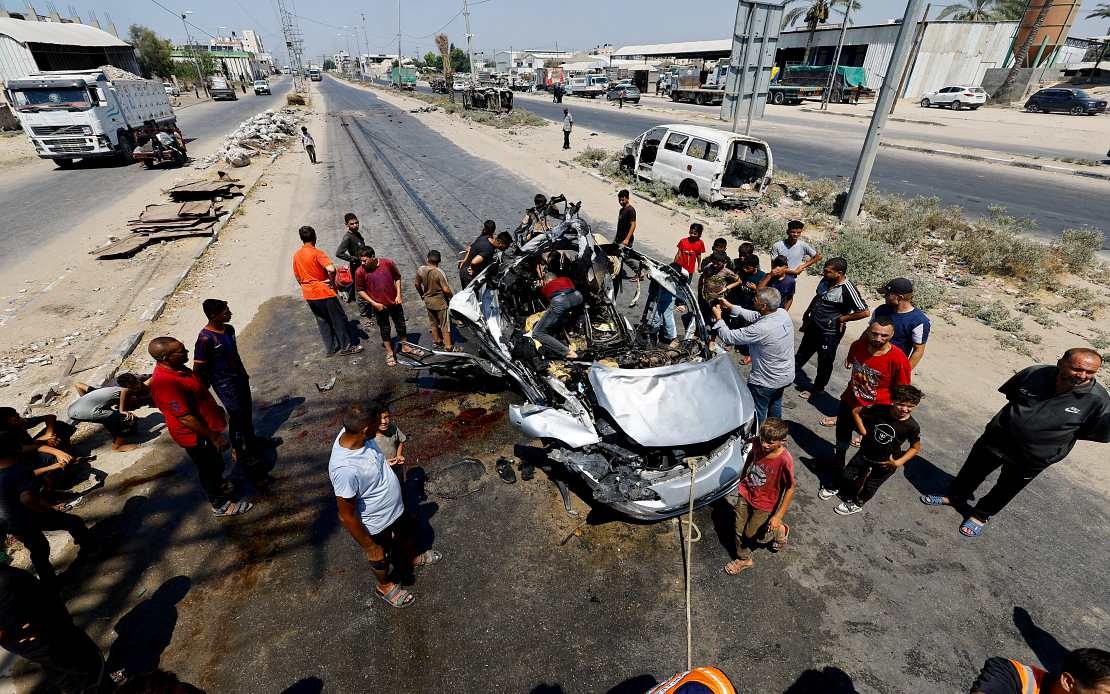
Palestinian presidential spokesperson Nabil Abu Rudeineh delivered a scathing critique on Monday of what he characterised as Israel's failure to honour the recently announced ceasefire arrangement for Gaza, asserting that military operations have continued unabated despite the formal agreement to move toward a second phase of de-escalation. Speaking through the Palestine News and Information Agency (WAFA), Abu Rudeineh articulated a growing frustration within Palestinian leadership that diplomatic accords have yielded no tangible relief for civilians caught in the conflict.
The Palestinian official's stark formulation—describing the agreement as "an agreement on paper and death on the ground"—captures the widening gap between what was negotiated at the diplomatic table and the realities experienced by Palestinians in affected areas. This characterisation signals that Palestinian authorities view the ceasefire as fundamentally hollow, lacking the enforcement mechanisms or political will to translate written commitments into actual cessation of hostilities. For regional observers watching the Israeli-Palestinian cycle, such statements underscore the persistent challenge of implementing durable agreements without robust verification and enforcement frameworks.
Abu Rudeineh's remarks emphasised that the purported ceasefire has failed on two critical fronts: it has neither achieved comprehensive hostilities cessation nor provided meaningful protection for the Palestinian population. This dual failure reflects Palestinian concerns that the agreement addresses only certain aspects of the conflict while leaving vast populations vulnerable. The assertion carries implications for how future negotiated settlements might be structured, suggesting Palestinian negotiators may demand stronger guarantees and international oversight mechanisms before accepting similar arrangements.
A significant dimension of Palestinian grievances centres on what officials describe as systematic operations targeting refugee camps and villages. Abu Rudeineh characterised these operations as deliberate efforts to undermine Palestinian demographic presence and forestall resolution of the refugee question—issues that remain foundational to any permanent settlement. For neighbouring states like Malaysia and other Southeast Asian nations with significant Palestinian diaspora communities, such allegations prompt scrutiny of international humanitarian standards and the durability of conflict resolution processes in the Middle East.
Palestinian leadership has escalated its appeals to the international community, specifically directing calls toward the UN Security Council. Abu Rudeineh emphasised that this body bears responsibility for compelling Israeli compliance with the ceasefire's second phase while halting what Palestinians characterise as aggression across Gaza, the West Bank, and occupied East Jerusalem. This diplomatic manoeuvre reflects Palestinian strategy to internationalise the conflict and seek enforcement through multilateral mechanisms when bilateral negotiations or bilateral understandings prove insufficient.
The spokesperson attributed the continuation of hostilities to what he termed "impunity" enjoyed by Israeli occupation authorities—a reference to Palestinian perceptions that international accountability mechanisms have proven ineffective or insufficient. This narrative positions violations of international law and humanitarian conventions as consequences of weak enforcement structures. For developing nations engaged with UN bodies, such critiques raise broader questions about the Security Council's capacity and willingness to enforce compliance with international norms consistently across global conflicts.
Palestinian officials have articulated a comprehensive vision for conflict resolution that extends beyond immediate ceasefire implementation. Abu Rudeineh reiterated foundational Palestinian positions: that sustainable regional security and stability depend on ending the occupation, ceasing military aggression, and establishing an independent Palestinian state with East Jerusalem as capital. These demands align with longstanding Palestinian negotiating positions rooted in UN resolutions and the Arab Peace Initiative, demonstrating consistency in strategic objectives even as tactical frustrations mount.
The invocation of the Arab Peace Initiative in Palestinian official statements carries significance for regional dynamics. This 2002 Saudi-led framework conditions normalisation of Arab-Israeli relations on Palestinian statehood, territorial withdrawal, and refugee return. By reasserting this framework, Palestinian leadership signals alignment with broader Arab diplomatic architecture while potentially positioning itself to leverage Arab states' interests in regional stability and normalisation discussions.
For Southeast Asian observers, Palestinian accusations regarding ceasefire violations illuminate persistent challenges in Middle Eastern conflict resolution. The gap between negotiated agreements and ground-level implementation suggests that diplomatic processes, however exhaustive, may require more robust international verification, enforcement capacity, and political consensus among major powers before producing durable peace. This dynamic has implications for how regional frameworks address other protracted conflicts throughout Asia.
The Palestinian critique also reflects internal political calculations within Palestinian leadership. Maintaining public postures of resistance to perceived violations and continued advocacy for international intervention serves important domestic constituencies while potentially influencing donor states and international opinion. For countries with complex diplomatic relationships across Middle Eastern parties, Palestinian official statements represent important signals regarding leadership commitment to particular negotiating positions and red lines.
Moving forward, Palestinian officials appear intent on maintaining pressure through multilateral channels rather than relying solely on bilateral mechanisms that have repeatedly failed to produce stable outcomes. This approach suggests Palestinian leadership's assessment that direct Israeli-Palestinian negotiations, at least in their current configuration, lack sufficient leverage to secure compliance with agreements or advance toward the comprehensive settlement Palestinian leadership considers necessary and legitimate.

