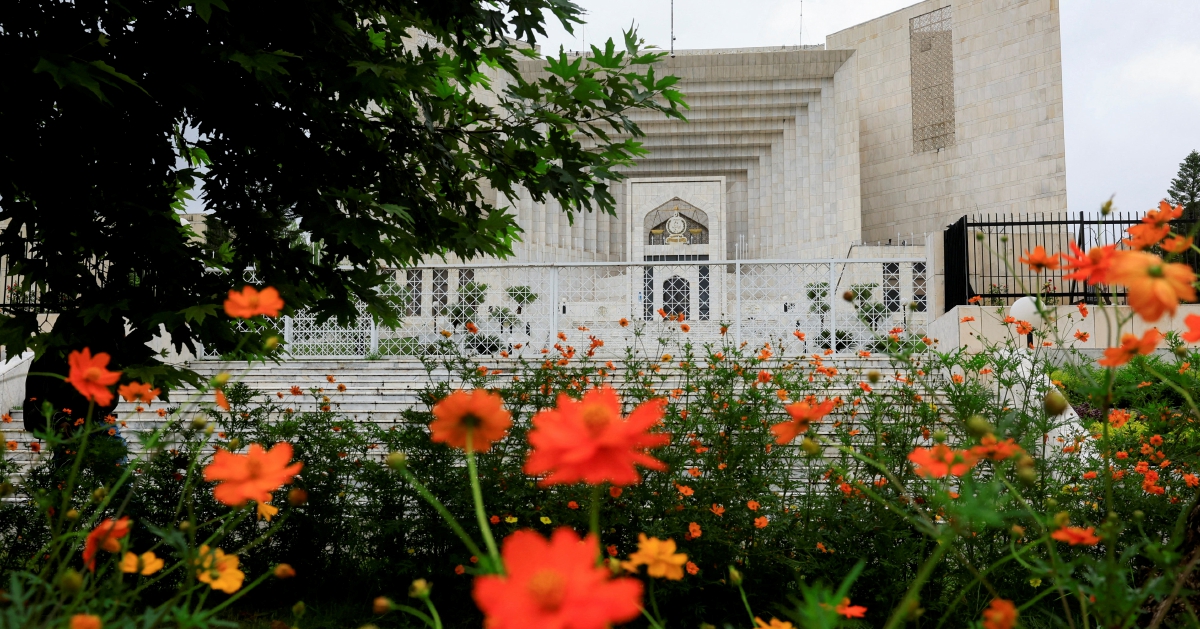
Pakistan's jailed former prime minister Imran Khan has been transferred to hospital on Friday following a Supreme Court directive requiring him to undergo medical assessments. The decision to relocate the country's most prominent political figure represents a significant development in his detention, with his party announcing the move in the early hours of the morning after the apex court's intervention. The transfer underscores the continued legal and political complexities surrounding Khan's incarceration, which has generated substantial domestic and international scrutiny.
The Supreme Court's order for Khan's hospitalisation suggests concerns about his physical wellbeing during custody. Medical examinations typically occur when detainees' health raises questions, though the precise nature of Khan's condition was not immediately disclosed. The move also reflects the ongoing tension between Pakistan's judiciary and executive authorities regarding the treatment of high-profile detainees, with the Supreme Court appearing willing to intervene when it perceives potential violations of detainee rights.
Imran Khan's detention has been a defining political issue in Pakistan since his arrest, with supporters and opposition figures maintaining that his prosecution is politically motivated. His party has consistently raised concerns about his treatment in custody, arguing that his continued imprisonment undermines democratic norms and represents a selective application of the law. The hospital transfer represents a concrete acknowledgment from the highest court that Khan's welfare during detention is a matter warranting judicial oversight.
The timing of the Supreme Court order, coming early Friday morning, suggests urgency surrounding Khan's medical condition. Hospital transfers of high-profile political prisoners in Pakistan often become focal points for public attention and international commentary. Khan's status as the nation's most popular politician means his movements and treatment carry symbolic weight beyond mere legal proceedings, representing broader questions about rule of law and institutional independence in the country.
Khan's political significance stems from his leadership of the Pakistan Tehreek-e-Insaf (PTI) party, which has cultivated a substantial grassroots following across urban and rural areas. His popularity, built initially through sporting fame before transitioning to political activism, has made him a formidable challenger to Pakistan's traditional power structures. The circumstances of his detention and the ongoing legal cases against him have polarised Pakistani society, with supporters viewing his prosecution as authoritarian and critics pointing to substantive legal allegations.
The Supreme Court's intervention in ordering medical tests represents an important check on executive power, demonstrating judicial willingness to scrutinise custody conditions. This action carries implications for how Pakistan's institutional arrangements function in practice, particularly regarding protections afforded to detained political figures. The court's decision signals that even high-profile detainees retain certain fundamental rights that transcend their legal status, a principle that resonates throughout the South Asian region.
For Malaysian observers, Khan's situation illustrates the complex interplay between political prosecution and institutional oversight in neighbouring democracies. Pakistan's struggles to maintain separation of powers amid allegations of selective justice reflect challenges faced across South Asia, where political figures sometimes weaponise legal systems against opponents. The Supreme Court's willingness to intervene demonstrates that even in contested environments, judicial institutions can assert independence, though such interventions remain subject to political interpretation and contestation.
International observers, including regional governments and human rights organisations, have expressed concerns about Khan's detention and the broader context of political prosecutions in Pakistan. His case has become emblematic of debates surrounding democratic governance, institutional autonomy, and the proper bounds of legal accountability for political figures. The hospital transfer, while seemingly routine medically, carries political significance as evidence of continued court engagement with his case and the conditions of his detention.
Khan's supporters have mobilised to highlight what they characterise as unfair treatment, organising demonstrations and international advocacy campaigns. These efforts have drawn attention from diaspora communities and international media outlets, amplifying scrutiny of Pakistan's judicial and detention systems. The Supreme Court's order for medical assessment may partly reflect this broader pressure, suggesting that domestic courts respond to demonstrated public concern and international attention alongside purely legal considerations.
The unfolding situation with Khan remains fluid, with multiple legal cases against him progressing through the system simultaneously. His potential release or conviction carries profound implications for Pakistan's political trajectory, potentially reshaping alignments among major parties and affecting electoral dynamics. The hospital transfer represents a temporary but symbolically significant development in a saga that will likely continue dominating Pakistani public discourse for the foreseeable future.

