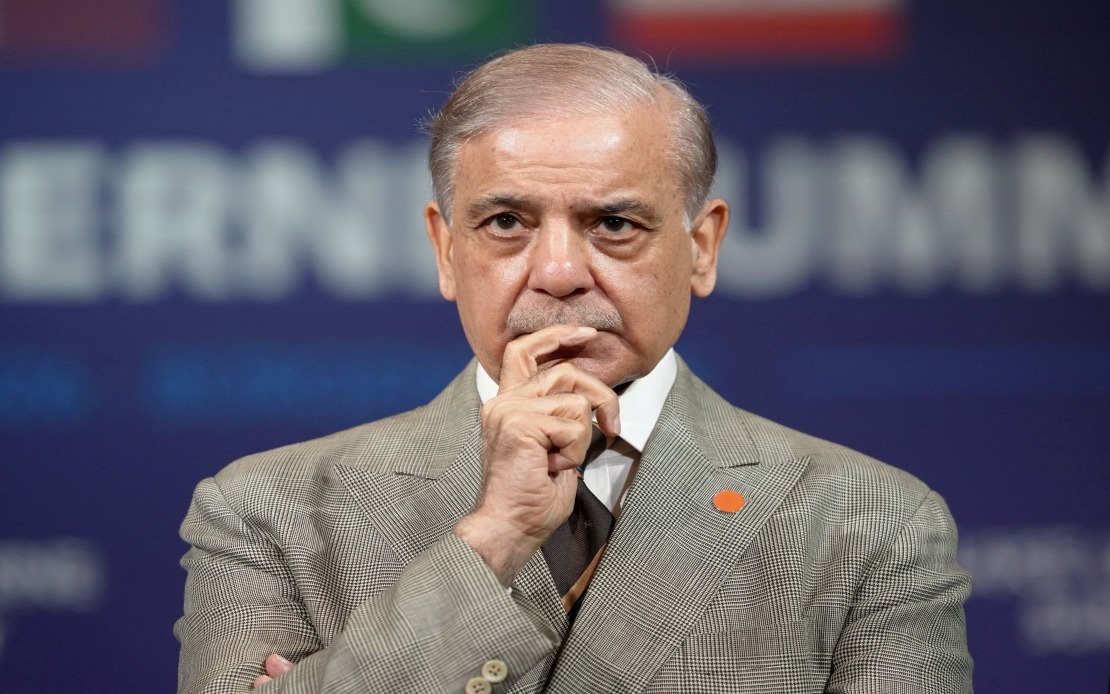
Pakistan and Türkiye have committed to forging a strengthened economic partnership, with Prime Minister Shehbaz Sharif meeting President Recep Tayyip Erdogan in Istanbul on Saturday to chart a course for expanded bilateral commerce and investment. The discussions underscore both nations' determination to leverage their geographic positions and complementary economic strengths as they navigate regional geopolitical challenges and seek to attract capital flows in critical sectors.
The centrepiece of the talks centred on an ambitious target of reaching $5 billion in annual bilateral trade, a figure that would represent significant growth from current levels and reflect the scale of opportunity both governments see in deepening economic integration. This goal was affirmed during direct negotiations between the two leaders, signalling political commitment at the highest level to remove obstacles and create an enabling environment for business activity across multiple sectors.
Shehbaz's address to the Pakistan-Türkiye business conference in Istanbul brought together major Turkish industrial and commercial enterprises to explore concrete investment prospects. The forum functioned as both a networking platform and a confidence-building exercise, allowing executives from leading conglomerates including Koc Holding, appliance manufacturer Arcelik, gas distribution specialist Aygaz, and export-focused Demir Export to engage directly with Pakistani government officials responsible for key portfolio areas.
Among the most forward-looking initiatives discussed was the establishment of a Pakistan-Türkiye digital corridor, a project that reflects both nations' recognition of the transformative potential of digital infrastructure in the 21st-century economy. During separate engagement with Turkcell chief executive officer Ali Taha Koc, Shehbaz articulated his administration's vision for this corridor as a mechanism to strengthen digital connectivity across South Asia and Central Asia, facilitate secure data flows that protect user privacy and intellectual property, and accelerate the integration of advanced digital infrastructure across borders. This initiative carries particular significance for Malaysia and the wider Southeast Asian region, as it demonstrates how regional powers are responding to digital transformation imperatives and may influence broader patterns of technology infrastructure development in Asia.
Pakistan's Deputy Prime Minister and Foreign Minister Ishaq Dar played a central role in the business engagement, joining ministerial colleagues overseeing maritime affairs, power generation, petroleum resources, privatisation, information technology, and telecommunications. This broad ministerial representation underscored the comprehensive nature of the economic exploration, touching sectors critical to both nations' development trajectories. The involvement of multiple portfolio holders created opportunities for Turkish firms to assess investment prospects across the full spectrum of Pakistan's economy, from legacy industries requiring modernisation to emerging digital domains.
Energy cooperation emerged as a primary area of focus, reflecting Pakistan's persistent demand for reliable power supplies and Türkiye's experience in energy infrastructure development and distribution technologies. Transportation and logistics featured prominently in discussions, acknowledging both the physical corridors connecting the two nations and the inefficiencies that currently hamper trade flows. Critical minerals extraction and processing also commanded substantial attention, as supply chain diversification away from concentrated sources has become a priority for industrialised and industrialising nations alike in recent years.
The manufacturing and industrial investment themes that dominated sidebar discussions suggest Turkish companies see opportunities to establish or expand production facilities in Pakistan, potentially leveraging lower labour costs and geographic proximity to South Asian markets. For Pakistani policymakers, this represents a chance to attract foreign direct investment, technology transfer, and employment generation in sectors that have long relied on aging infrastructure and limited innovation. The privatisation portfolio's involvement indicates that Turkish entities may be evaluating participation in Pakistan's ongoing divestment programme, particularly in strategic sectors where foreign expertise and capital could enhance operational efficiency.
From a regional perspective, the Pakistan-Türkiye economic deepening occurs within a context where both nations seek to enhance their influence and economic resilience. For Malaysia and ASEAN, the development bears watching as it may influence competitive dynamics in sectors such as digital technology and energy, while also potentially creating new opportunities for trilateral or multilateral cooperation frameworks. Türkiye's engagement with South Asia reflects its broader strategic pivot toward diversifying partnerships beyond traditional Atlantic-focused relationships, a geopolitical repositioning that has implications for how regional powers engage across Eurasia.
The business conference format reflected contemporary diplomatic practice in which government-to-government commitments are reinforced through direct engagement between political leaders and commercial actors. This approach generates momentum that can translate into concrete transactions and long-term partnerships, as corporate executives return to their home offices with renewed confidence in market potential and political backing for their initiatives. The presence of Türkiye's largest conglomerate and several major industrial concerns signalled that Istanbul views Pakistan as a serious economic prospect rather than a peripheral engagement.
Implementation of the ambitious $5 billion trade target will require sustained attention to structural barriers that have historically constrained Pakistan-Türkiye commerce, including logistics bottlenecks, regulatory harmonisation, financing mechanisms, and tariff arrangements. Both nations have established track records of using bilateral economic commissions and joint working groups to monitor progress and troubleshoot obstacles, mechanisms that will be essential as these initiatives advance from the announcement stage toward concrete realisation.
The digital corridor initiative deserves particular attention as a forward-looking initiative with potential spillover benefits for the broader region. If successfully operationalised, such infrastructure could enhance data flows not only between Pakistan and Türkiye but potentially facilitate participation by other regional actors, creating a template for digital integration that might be adapted across South Asia and Central Asia. For technology companies and digital service providers in Malaysia and Southeast Asia, such developments create both competitive challenges and partnership opportunities as regional digital infrastructure matures.

