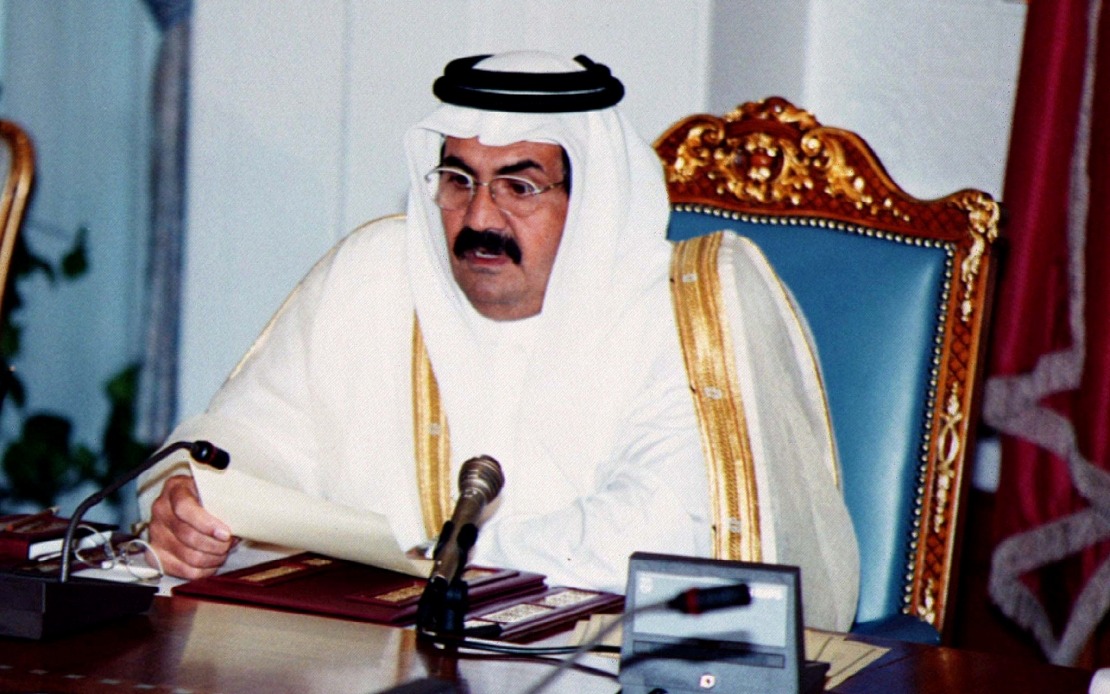
Pakistan's Prime Minister Shehbaz Sharif and Maldives President Mohamed Muizzu travelled to Qatar on Monday to convey their sympathies to Qatari Emir Sheikh Tamim Bin Hamad Al Thani and members of the ruling family following the death of former Emir Sheikh Hamad Bin Khalifa Al Thani. The high-profile visits underscore the diplomatic significance of Sheikh Hamad's influence across the Islamic and South Asian regions, with multiple world leaders offering tributes to his legacy during the period of mourning.
Shehbaz Sharif's delegation to Doha comprised several senior Pakistani officials tasked with representing the nation during this solemn occasion. His brother and former Prime Minister Nawaz Sharif accompanied him, alongside Deputy Prime Minister and Foreign Minister Senator Ishaq Dar and Information Minister Attaullah Tarar. The composition of the Pakistani contingent reflected the importance placed on the visit, with representation spanning both the executive branch and key ministerial portfolios responsible for foreign affairs and communications.
Sheikh Hamad, who departed from active governance in 2013 after leading Qatar for eighteen years beginning in 1995, passed away at the age of 74 on Sunday. During his tenure, he oversaw the nation's transformation into a major economic and political player in the Middle East, a period marked by substantial investments in infrastructure, education, and diplomatic engagement. His decision to step aside in 2013 in favour of his son, the current Emir Sheikh Tamim, was characterised as voluntary and dignified, a rare occurrence in the region's political landscape.
The international response to his passing has been marked by widespread acknowledgment of his contributions to Qatar's modernisation and his role in strengthening ties across the Muslim world and beyond. World leaders have consistently praised the late emir's vision in charting Qatar's development trajectory, recognising the country's emergence as a centre of regional influence and economic prosperity during his leadership. These accolades provide context for why nations across South Asia and the Middle East felt compelled to send high-level delegations to pay their final respects.
Maldivian President Mohamed Muizzu's statement highlighted how Sheikh Hamad's accomplishments extended beyond Qatar's borders, noting that his endeavours on behalf of the Arab and Islamic nations would endure as a source of inspiration. The Maldivian leader specifically referenced the former emir's legacy as one that transcended national boundaries, resonating with the values and aspirations of multiple Islamic societies. This characterisation underscores the pan-Islamic dimensions of Sheikh Hamad's political career and the respect he commanded across diverse Muslim-majority nations.
Bangladesh's Prime Minister Sheikh Hasina Wazed articulated a comprehensive assessment of Sheikh Hamad's achievements, emphasising his investments in regional stability, economic advancement, educational infrastructure, and mechanisms for international cooperation. These remarks, conveyed directly to the current Emir Sheikh Tamim, reflected a broader consensus among regional leaders regarding the multifaceted nature of the former emir's contributions. The specific mention of education and international cooperation underscores areas where Qatar made particularly substantial progress during his stewardship, initiatives that had ripple effects throughout the Islamic world.
Both Pakistan and India declared Monday as a day of national mourning as a formal gesture of respect toward Sheikh Hamad and his family. This joint declaration by two traditionally rival South Asian nations demonstrates the unifying effect of his reputation and the widespread regard in which he was held across the subcontinent. Such expressions of shared mourning, though ceremonial in nature, carry symbolic weight in international relations and reflect the depth of diplomatic bonds that Sheikh Hamad cultivated during his nearly two decades in power.
The timing of these high-level visits underscores the centrality of state funerary practices in Islamic diplomatic protocol, where physical presence and personal representation by senior officials constitute important gestures of respect and solidarity. For Pakistan and the Maldives, sending delegations headed by their chief executives signified the significance they attributed to maintaining and reinforcing bilateral relationships with Qatar during a period of transition within the Gulf state's leadership structure. The presence of Nawaz Sharif, Pakistan's former prime minister, alongside the current premier added an additional layer of institutional continuity and bipartisan recognition to the Pakistani tribute.
Sheikh Hamad's abdication in 2013, though presented as a voluntary decision, represented a pivotal moment in Gulf monarchical politics, establishing precedent for orderly succession and generational transition. His peaceful relinquishment of power to his son paved the way for the younger emir to pursue his own agenda whilst the elder statesman maintained a position of elder respect within the royal family structure. This arrangement, relatively uncommon in the region's political traditions, contributed to the international perception of Qatar as a nation capable of managing institutional change with stability.
For Malaysian observers and policymakers, Sheikh Hamad's death marks the conclusion of an era for a key strategic partner and influential voice within the Organisation of Islamic Cooperation. Qatar's evolution under his leadership influenced regional geopolitics, investment patterns, and the broader trajectory of Islamic-Western relations. The transition to full consolidation of power under Sheikh Tamim, who has already spent over a decade establishing his own policies and priorities, represents a continuation of this influence rather than a departure from existing frameworks of cooperation and engagement across Southeast Asia and the Islamic world.

