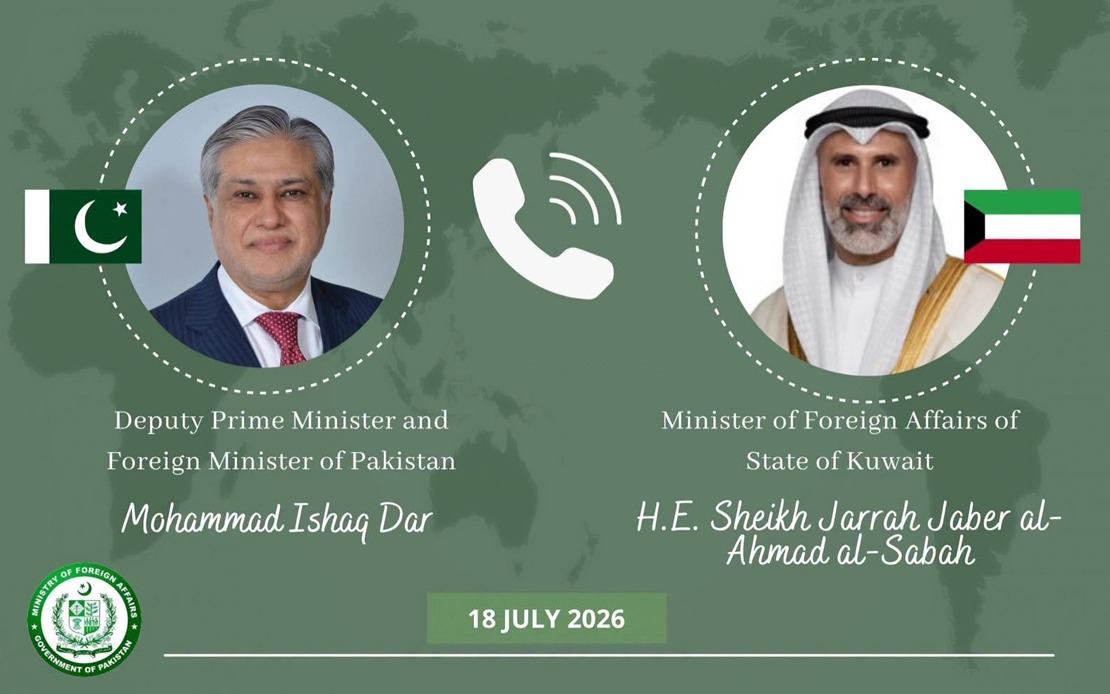
Diplomatic alarm bells are ringing across the Arabian Peninsula as Pakistan and Kuwait jointly expressed deep concern over the reignited military tensions between Iran and the United States, a development that threatens to unravel fragile regional stability. The two countries raised their apprehensions during a high-level telephone conversation on Saturday between Pakistan's Deputy Prime Minister and Foreign Minister Ishaq Dar and Kuwait Foreign Minister Sheikh Jarrah Jaber Al Ahmad Al Sabah, signalling that the escalation has already begun reverberating beyond the immediate combatants to affect neighbouring states watching nervously from the sidelines.
The diplomatic exchange underscores a critical moment in West Asian geopolitics, where military actions are spiralling beyond previous understanding and threatening established agreements. Kuwait, positioned strategically along the Persian Gulf, finds itself particularly vulnerable to the intensifying conflict. The Gulf nation reported that Iranian military operations had damaged another of its critical power and water desalination plants on Saturday, marking the second such assault in consecutive days. For a country heavily dependent on desalination infrastructure to provide drinking water to its population, these attacks represent not merely symbolic hostility but tangible threats to essential services and civilian welfare.
The broader context of this escalation traces back to the Islamabad Memorandum of Understanding, which Iran and the United States formally signed on June 17 in what was interpreted as a tentative step toward reducing bilateral tensions. Yet the recent resumption of hostilities suggests that agreement has proven insufficient to constrain military impulses on either side. Pakistan's foreign minister explicitly appealed to both Iran and the United States to uphold their ceasefire commitments under this accord, stressing that abandoning restraint would only deepen an already precarious situation. His intervention reflects Islamabad's position as a significant regional player with interests in preventing West Asian conflict from spilling across borders or destabilising the broader South Asian landscape.
The nature of the renewed fighting reveals a concerning pattern of tit-for-tat military operations that threatens to become self-perpetuating. The United States military's Central Command has conducted extensive strikes against Iranian infrastructure facilities, while Tehran has countered with warnings that it will respond with similar intensity against American-aligned regional nations. This reciprocal escalation cycle creates a dangerous dynamic where each side's defensive actions become justification for the other's offensive response, making de-escalation increasingly difficult as pride, credibility, and perceived national interest become entangled.
Sea and air corridors vital to global commerce have become contested zones in this renewed conflict. Iran has moved to restrict shipping through the Strait of Hormuz, one of the world's most critical chokepoints through which roughly one-fifth of global oil passes, while the United States has imposed a naval blockade on Iran. These measures have implications extending far beyond West Asia itself. For Southeast Asian economies including Malaysia that depend heavily on stable energy supplies and uninterrupted shipping lanes, any prolonged disruption to the Strait of Hormuz represents a genuine economic threat that could ripple through regional supply chains and energy markets.
Kuwait's explicit concerns about continued attacks on its territory carry particular weight, as the small Gulf state has historically sought to position itself as a neutral mediator and commercial hub rather than a frontline combatant. When Kuwait emphasizes the importance of restraint and the full implementation of the Islamabad Memorandum, it speaks from a position of vulnerability and growing frustration at becoming collateral damage in a conflict not of its making. The targeting of dual-use infrastructure like desalination plants blurs the line between military and civilian objectives, raising questions about the scope and nature of Iranian operations.
Pakistan's diplomatic intervention carries significance beyond mere mediation. As a nation with complex relationships with both Iran and the United States, Islamabad occupies a unique position where it must balance strategic partnerships while advocating for regional stability. By calling for respect for the sovereignty and territorial integrity of all states, Pakistan articulates a principle that resonates with concerns shared across the developing world about powerful nations using military force to settle disputes. For Southeast Asian nations watching from afar, Pakistan's emphasis on this principle reflects anxiety about great power competition that may overwhelm smaller nations' interests.
The deterioration from the June agreement to July hostilities illuminates the fragility of diplomatic breakthroughs in the Middle East when underlying strategic competition remains unresolved. Both Iran and the United States appear to have fundamentally different interpretations of what the Islamabad Memorandum was intended to accomplish. Meanwhile, intermediate parties like Kuwait and Pakistan find themselves caught between competing imperatives: maintaining relations with both sides while protecting their own national interests and preventing regional descent into broader conflict.
For Malaysia and other Southeast Asian economies, this escalation carries indirect but real consequences. Disruptions to West Asian stability historically trigger energy price volatility, shipping insurance increases, and reduced investor appetite for the broader region. Malaysian companies with operations in the Gulf, whether in energy, shipping, or financial services, face heightened operational risks. Furthermore, if the conflict expands to draw in additional regional actors, the humanitarian implications could trigger migration and refugee pressures affecting neighbouring countries and the broader region.
The calls from Pakistan and Kuwait for de-escalation and strict adherence to the Islamabad Memorandum represent the beginning of what may become sustained diplomatic efforts to prevent the conflict from widening. However, without addressing the underlying strategic grievances and military ambitions of both Iran and the United States, such appeals risk remaining symbolic gestures rather than substantive interventions. The coming weeks will reveal whether regional diplomatic pressure can arrest the current trajectory toward deeper militarisation or whether the escalation will continue accelerating beyond anyone's ability to control.

