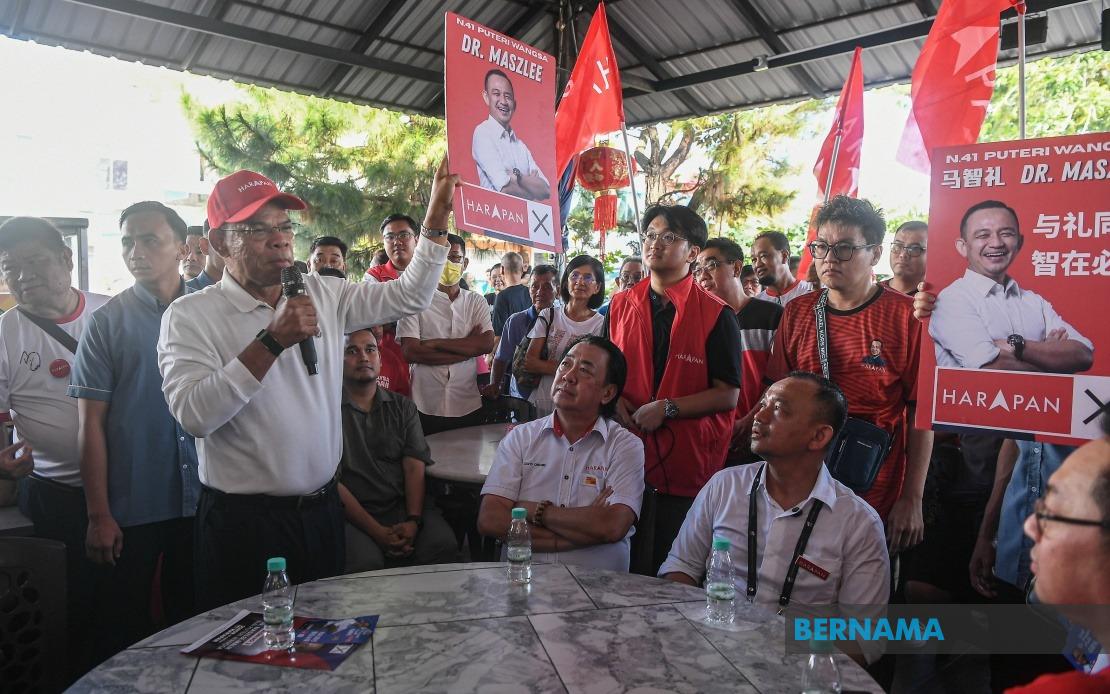
Pakatan Harapan's campaign machine is capitalising on what its senior leadership describes as a carefully calibrated approach to the 56 state seats up for grabs in Johor, with the coalition reporting tangible momentum as polling day approaches. Secretary-general Datuk Seri Saifuddin Nasution Ismail attributed the coalition's strengthening position to a strategic framework that classifies constituencies into priority tiers according to on-the-ground support patterns, allowing the three-party alliance to concentrate resources where they are most likely to yield results.
The methodology underlying PH's campaign reflects an evolution in Malaysian electoral tactics. Rather than deploying identical messaging and resources across all seats, the coalition has undertaken a granular assessment of each of the 56 constituencies, recognising that a predominantly Malay-Muslim rural seat demands fundamentally different outreach than an urban area with diverse communities. Saifuddin Nasution illustrated this point by noting the contrast between constituencies such as Puteri Wangsa and Johor Lama, or between Larkin and Endau—each presenting distinct demographic compositions and policy priorities that require tailored campaign strategies. This cluster-based system enables PH to allocate campaign staff, messaging frameworks, and candidate visibility in proportion to realistic winning prospects rather than spreading efforts thinly across all seats.
The coalition's internal composition reflects careful negotiation among its three constituent parties. Pakatan Rakyat is fielding 20 candidates, with Amanah contributing 19 and DAP 17 across the total slate of 56 seats. This distribution has been publicly disclosed in detail, marking what PH strategists characterise as an act of transparency intended to contrast with approaches taken by competing alliances. The strategic logic underlying this transparency appears multifaceted: it demonstrates internal party cohesion and fair seat allocation to grassroots members, potentially reducing defection risks and internal grievances while simultaneously presenting an image of accountable governance to the electorate.
Saifuddin Nasution identified opposition missteps as a secondary factor amplifying PH's advantages. The Islamic Party of Malaysia's decision to contest only 11 of the 56 seats while directing supporters to back Barisan Nasional in remaining constituencies has created dynamics that some PH strategists view as beneficial to the coalition. This approach by PAS appears to have compressed the competitive landscape in several constituencies, potentially consolidating opposition votes in ways that inadvertently benefit PH in multipolarity contests. Meanwhile, Barisan Nasional's own internal challenges and shifting alliances have created openings for a coalition offering clearer messaging and policy commitments.
The addition of prominent defectors to the PH campaign narrative has provided symbolic weight to the coalition's momentum narrative. The recent appearances of former UMNO Supreme Council member Datuk Dr Mohd Puad Zarkashi alongside Prime Minister Datuk Seri Anwar Ibrahim at Felda Ulu Tiram have been framed internally as reinforcement of PH's appeal across traditional UMNO support bases. Such crossovers carry particular significance in Johor, where UMNO has historically maintained deep organisational roots and substantial community networks. When senior UMNO figures publicly align with PH, it sends signals to rank-and-file party members and sympathisers that defection carries legitimacy and carries endorsement from respected figures.
The Johor election represents the sixteenth state-level poll held under Malaysia's current constitutional and electoral framework, making it a significant benchmark for assessing coalition performance and shifting voter preferences across Southeast Asia's more urbanised and industrialised states. The contest involves 172 candidates competing across 56 seats, with early voting scheduled for July 7 and main polling day on July 11. The scale of competition underscores the strategic importance both coalitions attach to retaining or capturing this economically significant state, which generates substantial federal tax revenue and serves as a gateway to Singapore.
PH's manifesto strategy has been positioned as emphasising implementation feasibility rather than aspirational promises. Saifuddin Nasution asserted that the coalition has deliberately crafted policy commitments deemed realistic to deliver within a state government's fiscal and administrative constraints. This approach represents a deliberate differentiation from past electoral campaigns where promises of extensive social spending or rapid infrastructure transformation featured prominently despite limited state-level resources. By emphasising deliverable commitments, PH appears to be attempting to build voter confidence in its governance competence—a critical factor given Malaysian voters' growing skepticism toward electoral pledges following experiences with previous administrations.
The campaign dynamics in Johor carry implications extending beyond the state itself. Success or setback here will signal to federal political actors whether the current PH-led coalition government maintains sufficient grassroots momentum to weather anticipated challenges in subsequent elections. Conversely, a strong showing by Barisan Nasional or other opposition forces would suggest vulnerability in PH's coalition cohesion or voter confidence. For Southeast Asian observers, the Johor outcome provides a window into Malaysian electoral behaviour during a period of significant political realignment and fluid party allegiances.
Candidate quality and local credibility have emerged as secondary themes in PH's campaign messaging. Saifuddin Nasution specifically commended Puteri Wangsa candidate Dr Maszlee Malik as exemplifying the calibre of PH's slate—highlighting relevant professional credentials and community standing. This emphasis on candidate-level attributes reflects recognition that state elections frequently turn on local factors and individual representative performance rather than purely national political currents. A doctor or engineer or educator with genuine community roots often outperforms a party apparatchik parachuted into a constituency, and PH strategists clearly recognise this reality.
The geographical and demographic diversity within Johor's 56 constituencies demands sophisticated campaign execution. Urban seats in Johor Bahru, Kota Tinggi, and Batu Pahat present different electoral calculus than rural constituencies in Endau, Kluang, or Pekan Nenas. Chinese-majority areas like Puteri Wangsa and Tanjung Pining require policy emphasis on education, business licensing, and cultural recognition, whereas Malay-Muslim majority constituencies prioritise Islam-related policies, agricultural support, and Islamic institution funding. PH's grading system acknowledges these realities explicitly, moving beyond the one-size-fits-all approach that has historically constrained Malaysian coalition campaigns.
The timeline toward July 11 polling day creates intensity around campaign messaging and ground organisation. Both major coalitions are mobilising volunteer networks, conducting door-to-door outreach, and saturating local media channels with competing visions for Johor's future. Early voting on July 7 will provide early indicators of turnout patterns and potential outcomes, though such data historically proves imperfect for predicting final results. The Johor election ultimately tests whether PH's articulated strategic sophistication translates into electoral success or remains merely tactical innovation without decisive impact at the ballot box.

