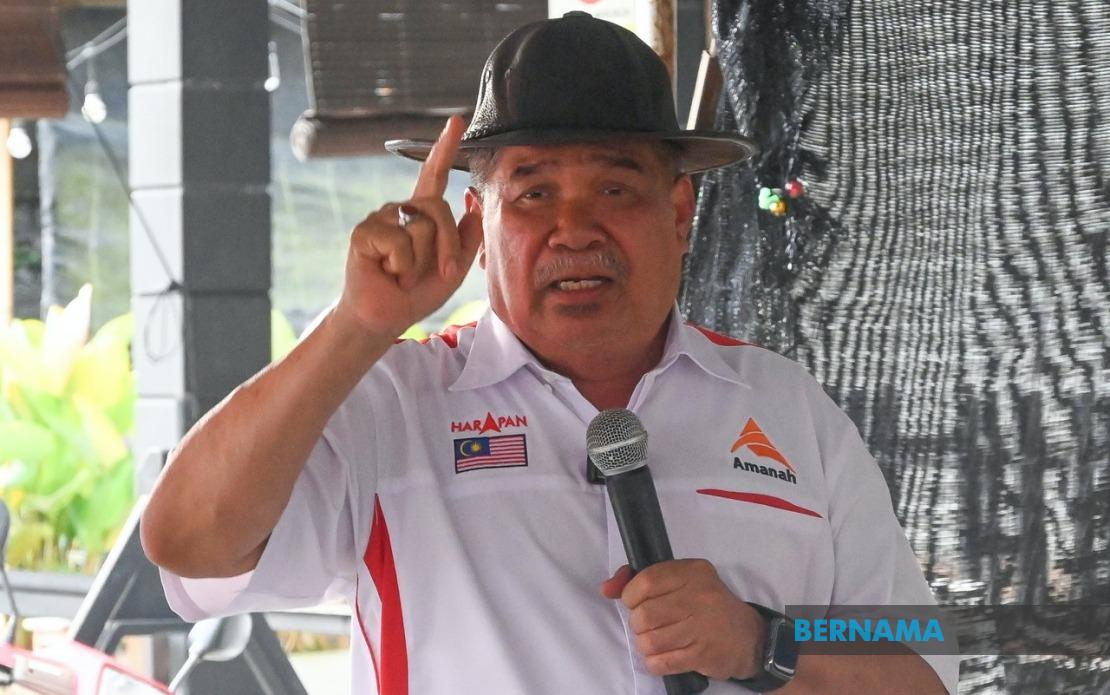
The leadership of Pakatan Harapan has signalled unwavering commitment to steering clear of the political turbulence created by emerging opposition alliances, with senior figures emphasising that the coalition's energy will be directed toward concrete governance outcomes rather than defensive manoeuvring. In remarks made through social media, Amanah President Datuk Seri Mohamad Sabu outlined a strategic posture that rejects both panic and complacency in the face of strengthened cooperation between Barisan Nasional and Perikatan Nasional, instead advocating for principled engagement with voters through substantive policy delivery.
The statement reflects growing anxieties within ruling circles about the political realignment occurring at the opposition end of the spectrum. The consolidation of BN and PN represents a potentially formidable counter-force to the current administration, particularly in mobilising constituencies that feel disconnected from the incumbent government's narrative. By framing this development as a test of maturity rather than a cause for alarm, Mohamad Sabu has attempted to recalibrate public expectations and demonstrate leadership confidence during a period of genuine political flux. This rhetorical choice carries significance for how Pakatan Harapan intends to campaign and justify its continued mandate to govern.
Central to Mohamad Sabu's remarks is an assertion that Prime Minister Datuk Seri Anwar Ibrahim remains steadfast in defending constitutional protections for Islam, the Malay language, the institution of the Malay Rulers, and Bumiputera entitlements. The inclusion of this affirmation underscores persistent anxieties within Malaysia's political discourse around questions of communal security and constitutional safeguards. By explicitly tying these commitments to concrete policy implementation rather than rhetorical flourish, the Amanah chief appears to be positioning the government as a custodian of foundational constitutional principles while simultaneously suggesting that opposition parties resort to inflammatory language on these matters.
A particularly notable dimension of Mohamad Sabu's intervention concerns his critique of what he characterises as narratives of perpetual Malay vulnerability. He argues that repeatedly depicting the Malay-Muslim community as beleaguered serves to erode national confidence and undermines long-term community development. This represents a departure from conventional Malaysian political messaging, which has historically relied on articulating community anxieties to mobilise electoral support. The Minister of Agriculture and Food Security instead advocates for what might be termed aspirational politics, wherein governance focuses on building capabilities, economic participation, and technological competence among Malays rather than reinforcing defensive postures.
The philosophical underpinning of this argument rests on a distinction between defensive protection and generative empowerment. Mohamad Sabu suggests that genuine strength emerges from knowledge acquisition, ethical conduct, self-reliance, and competitive capability rather than from institutional guarantees alone. This framing carries implications for how Pakatan Harapan might recalibrate its approach to Bumiputera policy, meritocratic advancement, and private sector engagement. It signals a potential willingness to move beyond zero-sum framing of communal advancement and toward models emphasising skill development and economic transformation.
The timing of these remarks warrants consideration within the broader political calendar and recent developments. The statement arrives amid intensifying regional political competition and represents an effort to reorient public discourse away from the negative dynamics of coalition formation and toward the positive case for continued PH governance. By emphasising mature political conduct and principled governance, the leadership appears to be attempting to claim the moral high ground while simultaneously acknowledging the real competitive threat posed by a consolidated opposition.
For Malaysian voters evaluating competing political offerings, Mohamad Sabu's message carries several implications. The statement suggests that Pakatan Harapan intends to differentiate itself through the substance of policy rather than through communal mobilisation tactics. Whether this represents a genuine strategic repositioning or a tactical response to specific opposition messaging remains subject to interpretation. The emphasis on building confidence and capability, however, does align with broader developmental narratives that resonate with increasingly educated and economically diversifying urban constituencies, particularly among younger voters.
The broader context of Malaysian politics reveals a complex competition for legitimacy among rival coalitions. Barisan Nasional and Perikatan Nasional have consolidated their partnership partly around narratives emphasising communal protection and institutional continuity. Pakatan Harapan's apparent counter-positioning around capability-building and policy-driven governance represents a fundamentally different electoral proposition. Whether Malaysian voters ultimately privilege the security-focused messaging of the opposition or the development-focused agenda of the ruling coalition will substantially determine the trajectory of national politics in coming electoral cycles.
Regionally, Malaysia's internal political dynamics carry implications for Southeast Asian stability and democratic practice. The evolution of Malaysian coalition politics, the nature of intra-party competition, and the rhetorical strategies deployed by major political actors influence broader regional patterns of governance, particularly around questions of communal representation and institutional legitimacy. The willingness of Pakatan Harapan leadership to advance arguments about moving beyond defensive politics suggests potential openness to more forward-looking governance frameworks, though translating such rhetoric into policy remains consistently challenging across the region.
Moving forward, the effectiveness of this strategic positioning will depend substantially on the government's ability to deliver tangible improvements in areas affecting voters' daily lives—economic opportunity, infrastructure quality, public service efficiency, and social stability. Mohamad Sabu's emphasis on building Malay economic participation and technological capacity will require sustained investment and institutional support. The gap between aspirational messaging and implementation capacity has historically constrained Malaysian governance, and this instance appears unlikely to prove an exception.

