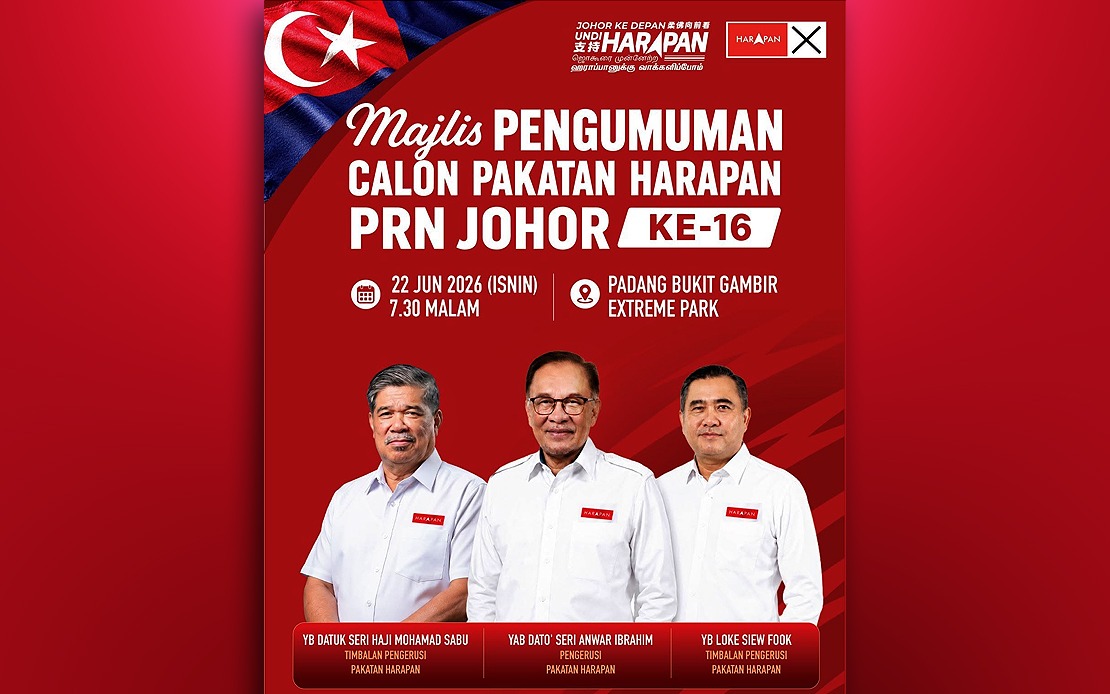
Pakatan Harapan will roll out its manifesto for the Johor state election in the days following the nomination process on June 27, according to PKR vice president Datuk Seri Amirudin Shari. Speaking at the coalition's candidate announcement ceremony in Tangkak, Amirudin outlined how the manifesto, titled 'Johor Ke Depan', would present a development roadmap grounded in the practical achievements of PH administrations currently managing three Malaysian states.
The timing of the manifesto launch reflects a strategic choice to allow PH candidates to formally enter the race before the coalition publishes its detailed policy platform. By releasing the document after nomination day on June 27, PH aims to build momentum heading into the early voting period on July 7 and the general election day on July 11. This approach gives the coalition's campaign machinery several days to mobilise grassroots support around the manifesto's core pledges while maintaining focus on candidate-centred mobilisation during the initial phase of the campaign.
According to Amirudin, the manifesto would distinguish itself by highlighting proven outcomes rather than unfulfilled promises. The PKR leader emphasised that 'Johor Ke Depan' represents not aspirational rhetoric but documented results from PH's governance in Selangor, Penang, and Negeri Sembilan. This framing positions the coalition as pragmatic administrators capable of translating electoral commitments into tangible improvements in public services, infrastructure, and economic management. For Johor voters, the underlying message is that PH's proposed policies carry weight backed by three years of implementation experience across different state contexts.
The high-level presence at the Padang Bukit Gambir Extreme Park event underscored the significance PH assigns to the Johor contest. PH chairman Datuk Seri Anwar Ibrahim, DAP secretary-general Anthony Loke, and Amanah president Datuk Seri Mohamad Sabu attended the candidate announcement alongside numerous other coalition figures. The convergence of top party brass signals both the electoral importance of Johor—historically a stronghold of competing coalitions—and the party's determination to project unity and organisational capability in the critical phase leading to polling day.
Johor's electoral significance extends beyond state-level politics. As one of Malaysia's most populous states and a consistent political battleground, the outcome carries implications for national coalition dynamics and the balance of power within Peninsular Malaysia's political landscape. A PH victory would consolidate the coalition's territorial footprint in the southern region and boost its negotiating position within the broader federal political architecture. Conversely, a setback would provide ammunition to rival coalitions and potentially reshape perceptions about PH's electoral viability outside its established strongholds.
The choice of manifesto theme, 'Johor Ke Depan', reflects PH's attempt to position itself as the architect of Johor's forward trajectory. The slogan carries forward-looking connotations while implicitly challenging incumbent administrations or rival coalitions as barriers to progress. By anchoring campaign messaging in development aspirations, PH seeks to reframe electoral competition around governance capacity and economic management rather than sectarian or communal divisions that have historically characterised Malaysian state politics.
Manifesto announcements in Malaysian electoral cycles typically synthesise party ideology with localised grievances and expectations. For PH in Johor, the document will likely address persistent concerns around cost of living, employment opportunities, education quality, and infrastructure development. The coalition's framing of the manifesto as evidence-based rather than speculative attempts to differentiate PH from competitors who may present more expansive or untested policy promises. This approach resonates particularly with voters fatigued by unfulfilled electoral commitments or concerned about fiscal prudence in state finances.
The election calendar compressed into roughly three weeks—from nomination on June 27 to polling on July 11—allows limited time for sustained campaign messaging. The manifesto thus becomes a crucial document for establishing PH's core narrative before intensive door-to-door and digital mobilisation phases. Early voting on July 7 means a significant portion of the electorate will cast ballots before the traditional final week campaign push, making the manifesto's timely release essential for reaching voters while they remain attentive to campaign communications.
For Malaysian observers monitoring broader political trends, the Johor election represents a test of whether PH can sustain and expand the coalition cohesion that delivered federal government in 2018. The joint participation of PKR, DAP, and Amanah in the Tangkak event, without prominent breakaway figures or factional tensions, suggests internal discipline heading into the campaign. Whether this unity translates into electoral momentum across Johor's diverse constituencies will become clearer once the manifesto sets the tone for PH's state-level messaging in the coming weeks.