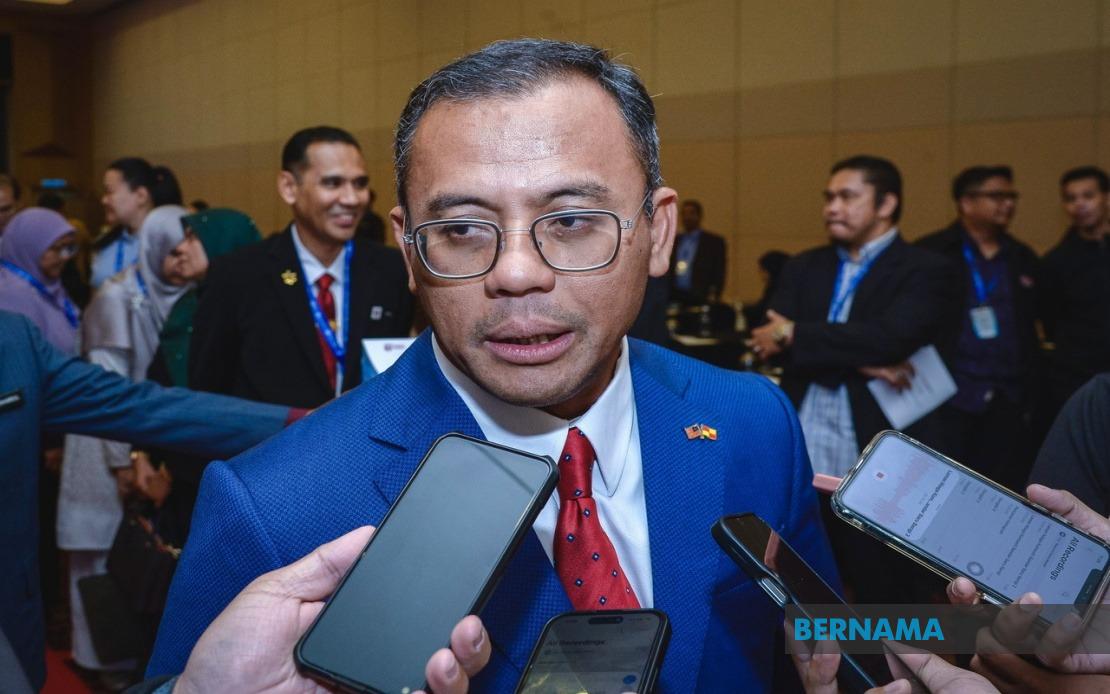
Pakatan Harapan has signalled its willingness to explore political cooperation with other parties and coalitions, provided any arrangement serves the dual objectives of ensuring political stability and advancing public interests. The statement from Datuk Seri Amirudin Shari, a PKR vice-president and member of PH's Presidential Council, reflects the coalition's pragmatic approach to the shifting political landscape ahead of critical electoral contests. Speaking after inaugurating the Ecology International Conference II (HEIC-II) 2026 in Bangi, Amirudin clarified that PH would entertain collaboration discussions with any political entity sharing these foundational principles, not merely those with existing formal alignments.
The remarks come against a backdrop of intense speculation about possible realignment between PH and Bersatu, particularly at state level. Recent media reports suggested that Selangor's PH component parties were considering closer ties with Bersatu, ostensibly to consolidate their respective positions before upcoming general and state elections. However, Amirudin moved quickly to temper such speculation, asserting that no formal discussions or commitments involving Selangor PH and Bersatu had materialised, and that speculation about cooperation remains confined to informal commentary rather than substantive negotiations.
The Selangor Menteri Besar emphasised that any consequential political arrangements would require careful deliberation at the national leadership level rather than being determined unilaterally at the state component level. He acknowledged his role as a contributor to decision-making while stressing that ultimate authority rests with PH's central leadership structure. This position underscores the coalition's commitment to maintaining coherent strategic direction across multiple governance levels, avoiding the fragmented decision-making that has historically undermined Malaysian political coalitions. Amirudin suggested that various proposals and ideas currently circulating may reflect broader national political realignments or state-specific electoral considerations rather than coordinated coalition strategy.
The timing of such cooperation discussions remains a critical variable in PH's calculus. Amirudin flagged that any evaluation of partnership opportunities must account for election schedules and prevailing political circumstances, indicating that PH is considering whether proposed arrangements would genuinely enhance electoral prospects or create complications. This tactical assessment reflects the reality that Malaysian politics operates within compressed electoral cycles at multiple governance levels simultaneously, requiring coalitions to manage complex timing challenges when pursuing cooperation.
For Malaysian observers and analysts, PH's conditional openness to cooperation signals both flexibility and underlying organisational confidence. The coalition retains the option to pursue various partnership configurations depending on state-specific and national circumstances, avoiding the rigid ideological or structural commitments that might limit tactical adaptation. Simultaneously, by emphasising non-negotiable principles of stability and public interest, PH establishes parameters that potential partners must respect, preventing opportunistic arrangements that serve narrow partisan interests at public expense.
The Bersatu dimension warrants particular attention within Southeast Asian political contexts where coalition volatility remains endemic. Bersatu, which originated as a PH breakaway faction, maintains complex relationships across Malaysian politics. PH's willingness to consider cooperation with Bersatu while remaining cautious about specific arrangements reflects pragmatic acknowledgement that former allies remain politically relevant and that circumstances can drive rapprochement despite historical ruptures. This approach contrasts sharply with rigidly adversarial postures that preclude future flexibility.
The broader implications extend to Malaysia's electoral competitiveness and democratic sustainability. Coalitions capable of adapting to changing circumstances while maintaining principled foundations tend to govern more effectively than those pursuing zero-sum confrontation. PH's framework—conditional cooperation based on stability and public welfare rather than narrow coalition interest—potentially elevates standards for legitimate political engagement beyond personalised competition between elites toward substantive outcomes affecting Malaysian citizens.
For regional observers monitoring Malaysian politics, PH's positioning suggests sophisticated strategic thinking about multiple electoral fronts. The general election remains the ultimate prize, but state elections including those in Selangor and Melaka represent significant intermediate contests that shape perceptions of momentum and viability. Cooperation frameworks that serve multiple electoral purposes simultaneously—strengthening state-level positioning while advancing national coalition interests—represent the kind of multidimensional strategy that sustains long-term competitive advantage in fragmented political systems.
Amirudin's carefully calibrated statements also reflect PH's internal political management challenges. The coalition comprises distinct parties with particular constituencies and leadership dynamics. Statements that preserve central authority while acknowledging state-level realities help maintain organisational coherence without suppressing necessary dialogue about partnership possibilities. This approach prevents either paralysis through excessive centralisation or fragmentation through uncontrolled devolution of decision-making authority.
Looking forward, PH's declared openness to cooperation creates both opportunities and risks. Opportunities emerge through potential partnerships that strengthen electoral performance and governance capacity across multiple jurisdictions. Risks include possible perception as opportunistically accommodating former rivals, or conversely, being seen as insufficiently flexible when genuine mutual interest exists. PH's articulated criteria—stability and public interest—provide reference points for evaluating specific proposals against general principles, though inevitable disputes will arise about whether particular arrangements genuinely serve these stated objectives.
The unfolding political dynamics will reveal whether PH's conditional openness translates into substantive arrangements or remains largely rhetorical positioning. The coalition's track record of coalition management, the specific electoral circumstances of forthcoming contests, and the willingness of other parties to accept PH's stated principles will ultimately determine whether cooperation materialises. For now, PH has signalled sufficient flexibility to maintain tactical options while retaining sufficient discipline to avoid arrangements that undermine its core interests.

