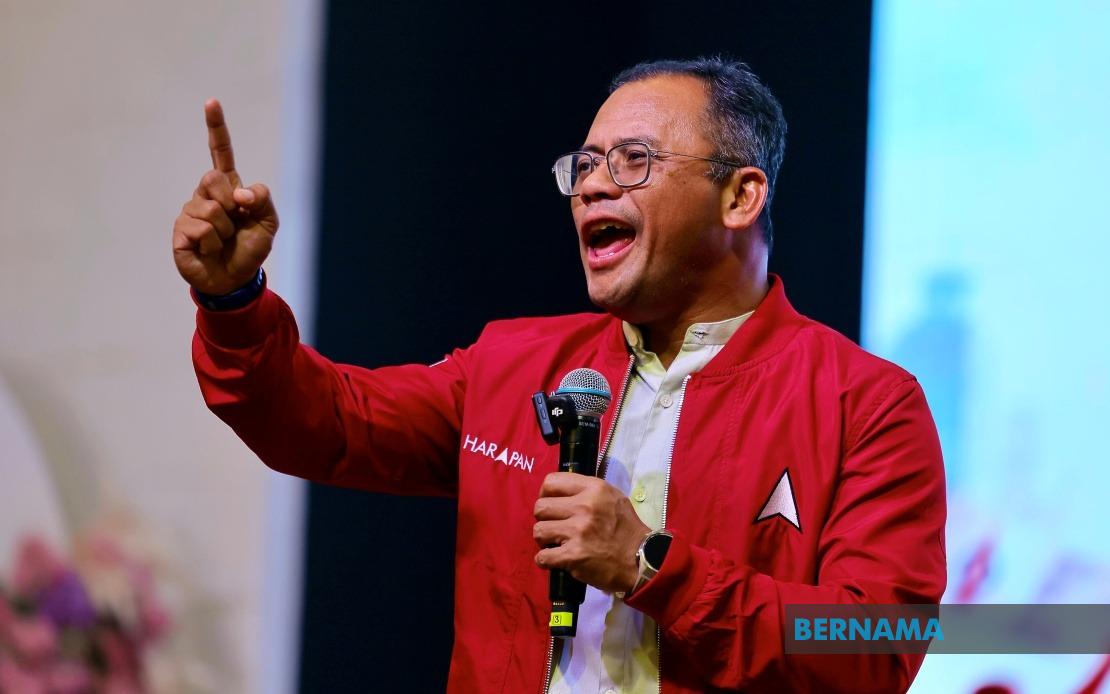
Pakatan Harapan has formally presented its electoral platform for the upcoming Johor state election, rolling out what the coalition terms the 'Johor for All' manifesto as a comprehensive statement of its priorities and commitments to state voters. The unveiling took place in Johor Bahru on July 3, marking a significant moment in the coalition's preparation for the 16th state election. The timing of the manifesto release demonstrates PH's strategy to establish its narrative early in the campaign cycle, allowing the coalition to frame the electoral conversation around its policy agenda rather than reactive messaging.
Datak Seri Amirudin Shari, who holds the dual position of Pakatan Harapan Presidential Council member and PKR's co-election director, presided over the manifesto launch ceremony. Amirudin's prominent role in unveiling the document underscores the importance PH places on the Johor contest, with his position within the coalition's central leadership suggesting that the manifesto reflects consensus thinking across PH's component parties. The selection of Amirudin to lead the presentation signals that the coalition has chosen a figure with significant institutional authority to deliver its message to Johor voters.
The event brought together representatives from across the coalition's structure in Johor, including Johor PH chairman Aminolhuda Hassan, reflecting the multi-party nature of the alliance. Johor DAP chairman Teo Nie Ching's participation highlighted the Democratic Action Party's role in shaping the coalition's approach to the state election. Johor PKR chairman Datuk Seri Dr Zaliha Mustafa's presence underscored the People's Justice Party's stake in the outcome. The gathering of candidates contesting the election alongside these senior figures created a unified front, presenting PH as a cohesive force rather than a collection of competing interests.
For Malaysian political observers, the manifesto launch represents a critical juncture in Johor's electoral dynamics. The state has historically been a Malaysian political battleground, and control of Johor carries symbolic weight beyond its parliamentary seats. Johor's economic significance as a major contributor to the nation's GDP makes policy commitments on development, investment, and infrastructure particularly consequential. The coalition's decision to brand its platform as 'Johor for All' suggests an appeal to inclusive governance that transcends traditional partisan divides, a messaging strategy that may resonate with voters fatigued by polarised politics.
The manifesto's framing carries implications for how Pakatan Harapan positions itself relative to other political forces in the state. By emphasising universality and inclusivity in the title, PH appears to be attempting to build a broader coalition of support that extends beyond its traditional voter base. This approach may be designed to appeal to swing voters and fence-sitters who remain undecided about their electoral choices. The 'for All' framing also suggests an attempt to counter narratives that might characterise PH as representing narrow interests or sectarian concerns, instead portraying the coalition as concerned with the welfare of all Johor residents.
The manifesto launch process itself reflects contemporary Malaysian campaign practices, where political parties increasingly invest in formal document releases and structured announcement events. This professionalisation of campaign mechanics suggests that Malaysian electoral competition has become more sophisticated in terms of messaging infrastructure. The coordination required to bring together multiple party chairs, senior leadership, and candidate slates indicates institutional capacity within Pakatan Harapan to execute coordinated campaign strategies across different levels of party organisation.
For Southeast Asian context, the Johor election holds significance beyond Malaysia's borders. The state's proximity to Singapore and its role as a major economic zone make regional stakeholders attentive to Johor's political direction. The coalition's commitment to specific policy areas would inevitably intersect with cross-border economic relationships, infrastructure development, and regional cooperation frameworks. The manifesto thus potentially carries implications for how Malaysia's political direction might influence bilateral relations and regional economic integration.
The presence of candidates at the manifesto launch event serves multiple political functions. It allows individual aspirants to position themselves within the coalition's broader narrative framework, potentially gaining credibility by association with institutional leadership. For voters evaluating candidates, the event provides an opportunity to assess how individual contenders align with and support their coalition's core platform commitments. This alignment messaging becomes particularly important in multi-party coalitions where coherence and unity can sometimes be questioned.
The 'Johor for All' framing also suggests that PH has identified inclusivity as a central campaign theme, possibly indicating strategic assessment that Johor voters are particularly responsive to messages emphasising unity and shared purpose. This thematic choice may reflect coalition internal discussions about what distinguishes their governance approach from competing political forces. Whether the manifesto contains specific policy commitments, resource allocations, or governance reforms remains to be seen, but the launch event itself communicates PH's seriousness about the contest and its determination to present itself as a credible governing alternative in Johor.

