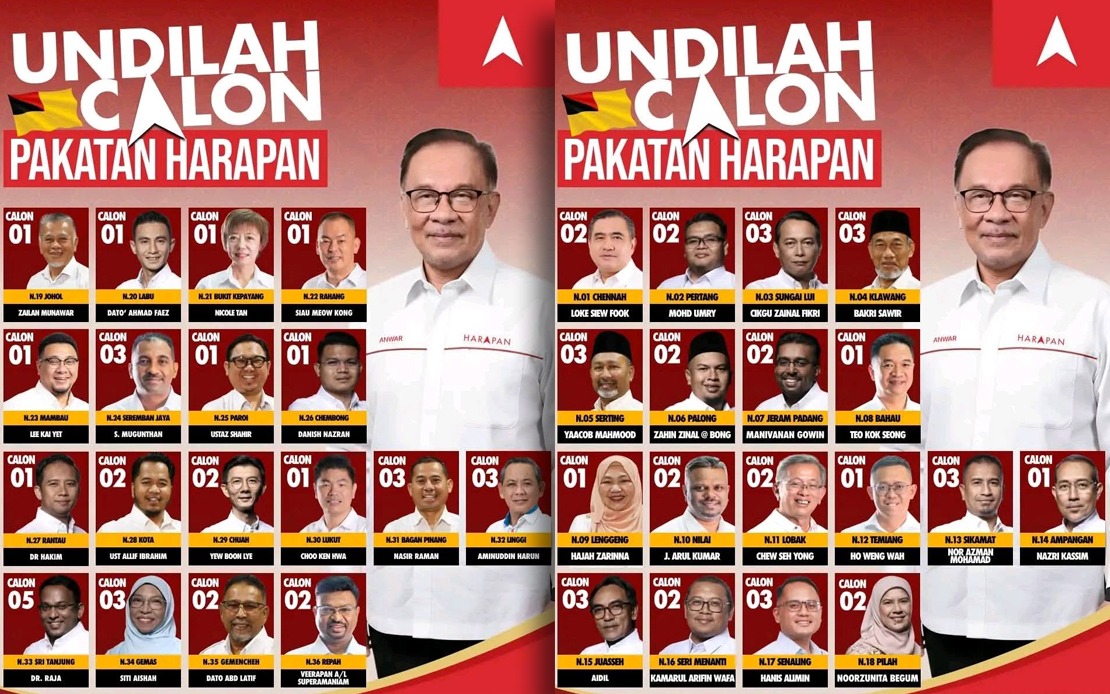
The opposition-backed Pakatan Harapan coalition has mapped out an ambitious target for the upcoming Negeri Sembilan state election on August 1, seeking to win a minimum of 23 seats from the 36-seat state assembly. The strategic objective, announced by PH deputy chairman Anthony Loke during a coalition gathering in Seremban on July 19, reflects the coalition's determination to establish what it considers a resilient governing foundation that can withstand the unpredictability of parliamentary politics.
Loke, who serves concurrently as DAP secretary-general and represents Seremban as both MP and state assemblyman for Chennah, explained the reasoning behind this threshold. While acknowledging that a simple majority requires only 19 seats, he argued that controlling 19 seats leaves the administration dangerously vulnerable to political fluctuations and defections that have plagued Malaysian state governments in recent years. The additional four seats beyond the minimum majority would provide what PH characterises as a stability buffer, insulating the state government from the constant threat of losing its narrow grip on power.
Pakatan Harapan currently holds 17 state assembly seats in Negeri Sembilan, meaning the coalition would need to capture six additional seats to reach its 23-seat target. Loke asserted that this goal is grounded in empirical analysis rather than wishful thinking, citing demographic studies and voter behaviour patterns across the state's various constituencies. The coalition has evidently invested in detailed research examining which seats represent realistic opportunities for PH to expand its presence in the Seremban assembly.
The coalition's push for a stronger mandate also reflects its commitment to retaining Datuk Seri Aminuddin Harun as Menteri Besar. Loke praised the incumbent state leader as honest and uncorrupted, someone who has resisted the temptations of power that have ensnared numerous Malaysian politicians. This framing positions the August 1 election not merely as a routine democratic exercise but as a referendum on Aminuddin's leadership credentials and the broader vision PH espouses for governing a multiethnic state.
Central to PH's electoral messaging is the concept of inclusive governance that transcends racial and religious boundaries. Loke repeatedly emphasised that the coalition seeks to govern on behalf of all Negeri Sembilan residents, regardless of their ethnic or religious background—Malays, Chinese, Indians, and other communities. This narrative attempts to position PH as a vehicle for cross-communal cooperation at a time when Malaysian politics frequently fragments along identity lines. For a state like Negeri Sembilan, with its demographic diversity, this framing carries particular weight in appealing to swing voters who may be fatigued by divisive politics.
The election campaign also spotlights developmental continuity as a governing priority. Loke highlighted ongoing efforts to improve transportation connectivity between Seremban and the federal capital Kuala Lumpur, suggesting that a stable PH government would provide the sustained focus necessary to complete such infrastructure initiatives. This emphasis on tangible improvements to residents' daily lives represents an attempt to shift the electoral conversation away from abstract political ideology toward concrete delivery of services and amenities.
Beyond state politics, Loke used the Seremban gathering to defend Prime Minister Datuk Seri Anwar Ibrahim's national stewardship. He called on Malaysians to assess Anwar's leadership with fairness and objectivity, contending that the Prime Minister has substantially elevated Malaysia's international standing through diplomatic engagement and economic partnership expansion. This broader framing connects the Negeri Sembilan state contest to the national political narrative, suggesting that supporting PH at state level represents an implicit endorsement of Anwar's federal administration.
The centrepiece of Loke's defence of the federal government focused on Malaysia's energy security and economic resilience. He argued that Malaysia has avoided fuel shortages that plague other nations because Anwar's government maintains robust diplomatic relationships with major oil-producing countries including Russia, Saudi Arabia, and other OPEC members. By highlighting this tangible benefit—stable petrol supplies—Loke attempted to translate abstract foreign policy achievements into voter-comprehensible terms that directly affect household economics.
The coalition's emphasis on maintaining relationships with diverse geopolitical players—naming China, the United States, India, Turkey, Brazil, and Russia—reflects Anwar's non-aligned positioning in an era of intensifying great-power competition. This approach theoretically allows Malaysia to capture economic benefits from multiple sources without being locked into any single strategic partnership. For Malaysian voters concerned about inflation and cost of living, the argument that effective diplomatic management has prevented fuel crises carries immediate resonance.
The presence of senior DAP figures including national chairman Gobind Singh Deo at the Seremban dinner underscored the national significance PH attaches to the Negeri Sembilan election. As the largest component party in the coalition, DAP's performance in peninsular state contests often signals broader electoral trends that could impact federal politics. A convincing PH victory with the targeted 23-seat majority would provide momentum heading into future electoral contests and validate the coalition's strategy of emphasising stability and good governance over more polarising appeals.
For Negeri Sembilan voters, the August 1 election presents a choice between continuing PH's current direction under Aminuddin or opening the door to alternative leadership. PH's 23-seat target suggests confidence in expanding its support base, yet achieving this ambition requires mobilising both existing supporters and persuading swing voters that the coalition offers superior governance and development outcomes compared to competing political forces. The emphasis on inclusive administration and developmental continuity reflects PH's assessment that these themes resonate most powerfully with the state's electorate.

