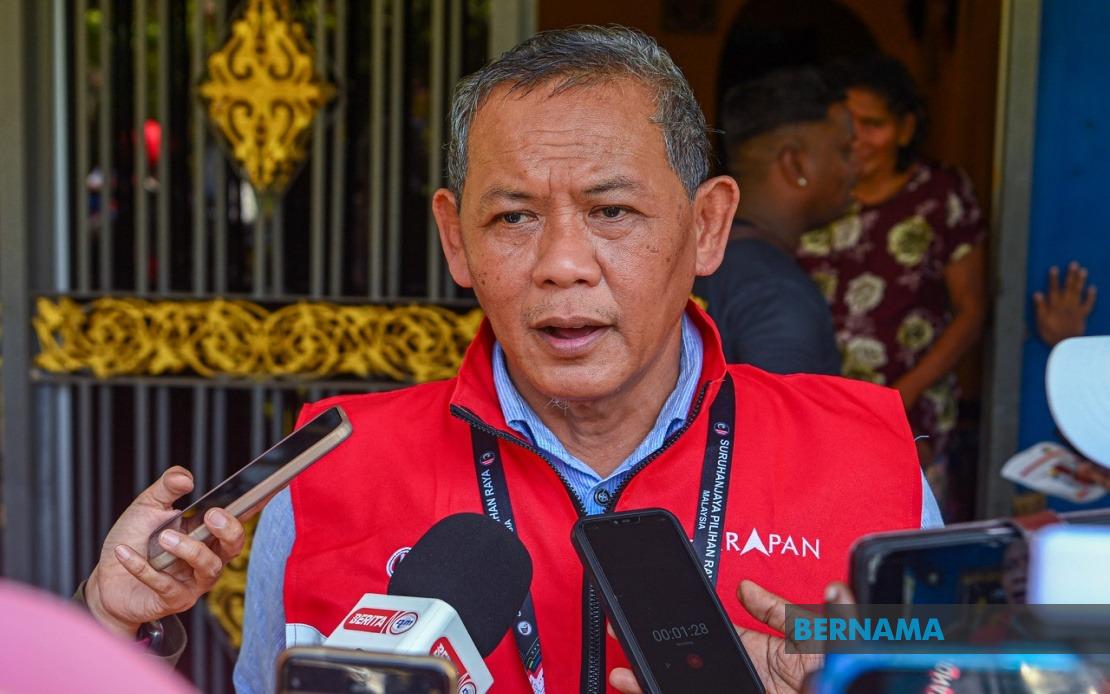
Pakatan Harapan has presented an expanded manifesto ahead of the 16th Negeri Sembilan state election, signalling a deliberate shift in its approach to household income brackets. The coalition's leadership argues that this broader focus represents a strategic evolution in addressing the economic needs of a wider segment of the state's population, rather than concentrating resources solely on the lowest-income earners.
Datak Seri Aminuddin Harun, the Menteri Besar and state PH chairman, disclosed that the manifesto, titled 'Negeri Sembilan Kekal Harapan', encompasses ten core policy commitments designed to improve living standards across income demographics. The decision to explicitly include M40 households—those earning between RM3,001 and RM6,000 monthly—reflects internal calculations that this middle-income segment constitutes a substantial voting bloc and faces genuine financial pressures that previous assistance programmes had not adequately addressed.
The move represents a departure from PH's earlier emphasis on B40 targeting, which had concentrated aid on households earning below RM3,000 monthly. By extending educational access, welfare schemes, and development initiatives across both income tiers, the coalition contends it can generate greater cumulative impact while addressing legitimate grievances from the swelling middle class. This approach mirrors similar tactical adjustments being made by political coalitions across Southeast Asia, where the shrinking B40 population and expanding middle-income workforce have forced parties to recalibrate their social spending strategies.
Aminuddin emphasised that the expansion reflects PH's governance experience since capturing Negeri Sembilan in 2018. He argued that the coalition has demonstrated capability in translating electoral promises into tangible outcomes, distinguishing itself from competitors who he suggested offer manifestos primarily as voting incentives. The distinction he drew—between making promises and fulfilling them—touches on a persistent challenge in Malaysian politics, where voter scepticism about manifesto delivery remains high across income groups.
The Menteri Besar faces a competitive three-cornered contest in the Linggi state seat, where he is challenged by Datuk Mohd Faizal Ramli of Barisan Nasional and Zamri Md Said of Bersatu. This personal electoral battle has particular significance given Aminuddin's dual roles as both state leader and Member of Parliament for Port Dickson. His performance in Linggi could meaningfully influence perceptions of PH's broader appeal and organisational strength in Negeri Sembilan.
The timing of the manifesto release proves strategic, arriving after the state assembly's dissolution on June 5 and with polling scheduled for August 1. Early voting commences on July 28, compressing the campaign window and making the initial manifesto presentation crucial for setting the campaign narrative. This compressed timeline means voters have limited opportunity to evaluate how competing parties justify their policy positions, placing additional weight on the clarity and credibility of initial messaging.
Aminuddin simultaneously called for a mature electoral campaign that avoids divisive issues, a plea that acknowledges underlying social tensions within the state. Such appeals become necessary in Malaysian electoral contexts where campaigns can quickly escalate into communal or religious disputes that polarise voting behaviour along non-economic lines. By attempting to establish early ground rules for respectful contestation, PH signals its preference for campaigns fought primarily over competence and programme delivery rather than identity politics.
The M40 targeting strategy carries implications extending beyond Negeri Sembilan. This income segment has grown substantially across Malaysia over the past decade, reflecting genuine economic expansion but also amplifying expectations for public services and economic security. Political parties that fail to address M40 anxieties—particularly around education, healthcare, and cost of living—risk losing constituencies where this demographic dominates. The expansion of PH's welfare framework therefore represents not merely tactical adjustment but acknowledgment of a structural shift in Malaysia's electorate.
From a governance perspective, broadening benefit eligibility creates both opportunities and constraints. While reaching more voters, expanded programmes demand greater fiscal allocation and administrative capacity to deliver consistently across dispersed beneficiary groups. The distinction between inclusive manifesto promises and sustainable implementation becomes especially acute when state budgets remain constrained and competing demands for resources intensify. PH's experience governing Negeri Sembilan since 2018 provides a concrete testing ground for whether expanded commitments can be honoured without compromising fiscal prudence.
The coalition's track record in state administration will significantly influence voter receptivity to these expanded promises. Aminuddin's assertion that PH has delivered on previous commitments carries credibility primarily among voters who perceive tangible improvements in their circumstances since 2018. For others unconvinced by PH's tenure or disappointed by outcomes, manifesto expansion may register as empty rhetoric. The August 1 polling day will ultimately reveal whether Negeri Sembilan voters view the broadened approach as genuine commitment or political repositioning.
The broader electoral landscape also matters. BN's countervailing strategy in Negeri Sembilan, combined with Bersatu's positioning as a third force, creates a genuinely contested environment. This triangular competition means no coalition can assume comfortable victory, forcing all parties toward more comprehensive policy positioning rather than narrow sectarian appeals. The result is a state election campaign likely to focus on comparative claims about governance competence, programme delivery, and economic management—the terrain on which PH has chosen to plant its manifesto.
Finally, the Negeri Sembilan contest offers a barometer for broader PH performance as Malaysian politics enters a more volatile phase. With federal politics in flux and state administrations increasingly serving as power bases for ambitious politicians, elections like Negeri Sembilan's take on significance beyond their immediate jurisdictional scope. How successfully PH executes its expanded M40 strategy here could influence the coalition's positioning in other upcoming state contests and shape calculations about the electoral coalition's long-term viability.

