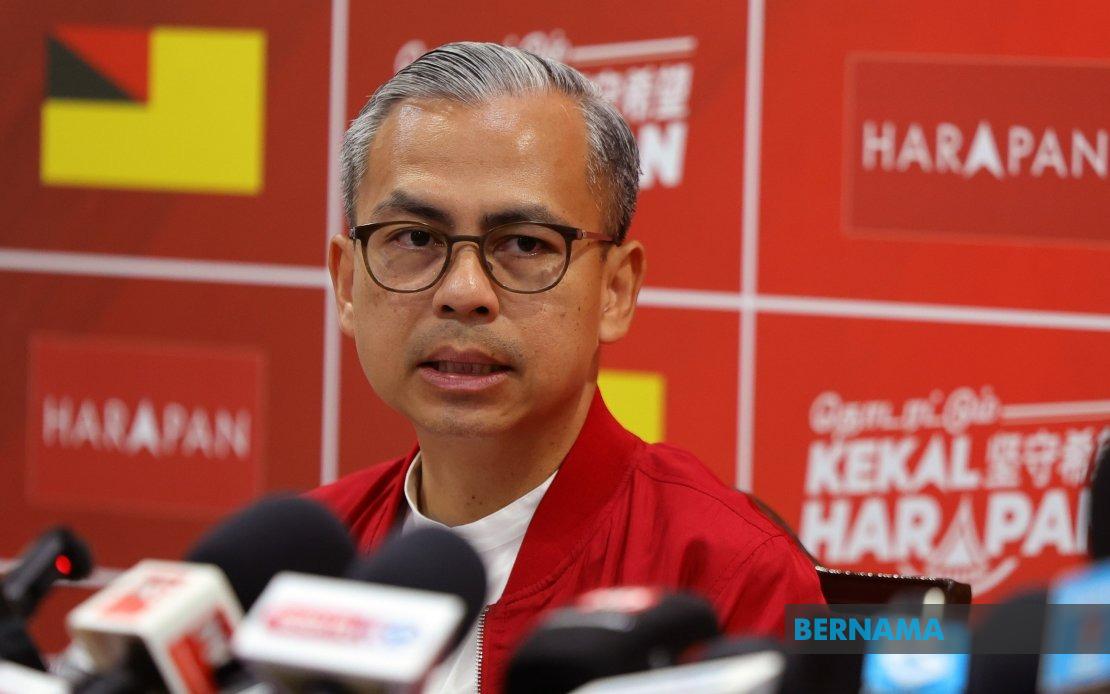
Pakatan Harapan leadership has firmly rejected suggestions that political representation of Malaysia's Malay-Muslim community should be confined to a single bloc, characterising such claims as fundamentally at odds with the country's multicultural fabric. Speaking during the Negeri Sembilan state election campaign in Seremban on July 23, senior coalition figures challenged what they described as a deliberate attempt to construct an artificial monopoly over community interests, arguing that the narrative misrepresents both the composition of the coalition and the values underlying Malaysia's democratic system.
Datuk Seri Fahmi Fadzil, who serves as both PH communications director and federal Communications Minister, articulated the coalition's position by highlighting the presence of prominent Malay-Muslim figures within the PH leadership structure itself. By invoking his own background and that of fellow panellist Khalid Abdul Samad, Amanah's communications director, Fahmi illustrated the internal diversity of the coalition and questioned the logical coherence of claims that Malay-Muslims are somehow inadequately represented or marginalised within PH ranks. The argument underscores a broader strategic point: that competent governance and policy outcomes for the Malay-Muslim community matter more than which political vehicle delivers them, and that community interests are not monolithic across Malaysia's political spectrum.
The communications strategy deployed by PH at this press conference signals awareness that questions about community representation and political inclusion remain deeply sensitive in Malaysian electoral contexts. Exclusive or sectarian political narratives—whether framed around ethnicity, religion, or both—have historically carried significant mobilising power in Malaysian politics, particularly during state and federal elections when local grievances intersect with national identity debates. PH's counter-messaging attempts to reframe the discussion away from zero-sum competition for community loyalty and towards a vision of inclusive governance that bridges rather than hardifies communal boundaries.
Fahmi's comments also reflected a tactical recognition that the coalition faces persistent challenges in convincing Malay-Muslim voters that their interests receive adequate attention and resources under PH administration. Such concerns, whether rooted in genuine policy gaps or amplified through opposition messaging, have proven difficult for the coalition to neutralise through rhetoric alone. In response, PH has attempted to anchor its credibility claims to tangible administrative achievements in Negeri Sembilan, where the state government operates under what Fahmi described as a Unity Government framework. The emphasis on infrastructure development for religious communities—specifically the expansion of mosque construction and the growth of zakat collection revenues—constitutes an effort to translate governance outcomes into electoral persuasion.
The Negeri Sembilan administration's reported increase in zakat collections by nearly two-and-a-half times compared with its predecessor represents the kind of quantifiable metric that PH hopes will resonate with voters concerned about community welfare and religious institutional development. Similarly, the expansion of mosque infrastructure serves both practical and symbolic purposes, demonstrating visible commitment to Islamic institutions while providing tangible evidence of resource allocation. These achievements become particularly significant when understood against the backdrop of broader Malaysian political discourse, where questions about the status and support for Islamic institutions frequently feature in electoral campaigns and party differentiation strategies.
However, PH's rebuttal extends beyond administrative metrics to articulate a more philosophical position about the appropriate foundations for political coalition-building in a diverse democracy. Fahmi's statement that the coalition advocates unity founded on shared values and the common good rather than ethnic chauvinism reflects an ideological challenge to what PH characterises as narrow sectarianism. This framing positions the coalition as defending a particular vision of Malaysian pluralism against what it portrays as divisive alternatives, though notably the source material does not specify which opponents or rival narratives PH was directly addressing.
The timing of these remarks, emerging during the Negeri Sembilan campaign with early voting scheduled for July 28 and polling day on August 1, indicates that community representation and inclusion have become central competitive issues in the state contest. For Malaysian voters and observers, the prominence of these discussions underscores ongoing tensions within Malaysia's political ecosystem regarding how identity-based interests should be understood, represented, and addressed through the democratic process. The fact that senior federal and state leaders felt compelled to address these themes publicly suggests that such narratives were gaining traction in campaign messaging.
Pakatan Harapan's strategy also carries implications for the broader Unity Government arrangement, which depends on maintaining sufficient Malay-Muslim voter support to sustain its parliamentary and state-level majorities. Concerns about whether PH adequately represents these communities' interests could threaten the coalition's electoral viability, particularly if opposition parties successfully position themselves as more authentic or committed defenders of Malay-Muslim concerns. By proactively addressing such claims during a state election campaign, PH seeks to contain potential damage before voting occurs and to establish narratives that might carry forward into subsequent electoral contests.
The presence of Negeri Sembilan DAP secretary Cha Kee Chin at the press conference, though noted briefly in the source material, also underscores PH's commitment to presenting itself as a genuinely multiracial coalition where leaders from different ethnic and political party backgrounds collaborate openly. This symbolic representation attempts to reinforce the coalition's self-portrayal as fundamentally inclusive in both governance philosophy and operational practice. For Malaysian readers, particularly those in competitive electoral battlegrounds like Negeri Sembilan, such visible demonstrations of cross-community leadership become important signals of how a given coalition actually functions beyond campaign rhetoric.
Fahmi's appeal for voters to examine both the practical governance record and the underlying principles of representation reflects PH's broader campaign strategy in Negeri Sembilan, which emphasises the tangible benefits that pluralistic governance can deliver while challenging the intellectual coherence of exclusive political narratives. The coalition's argument essentially holds that in a country as diverse as Malaysia, no single bloc can monopolise the representation of any community's interests, and that voters benefit from examining which coalition offers the most authentic commitment to community welfare across multiple dimensions—religious institutions, social services, economic opportunities, and inclusive governance.
As Malaysians prepare for voting in Negeri Sembilan, these competing narratives about political representation, community interests, and inclusive governance will likely continue shaping campaign discourse. PH's intervention in explicitly rejecting exclusive political framing demonstrates the coalition's recognition that electoral success in Malaysia's multicommunal society depends partly on convincing voters across demographic lines that their core concerns receive genuine attention regardless of which party or coalition they support. Whether such messaging successfully persuades the electorate will become clear when Negeri Sembilan voters cast their ballots on August 1.

