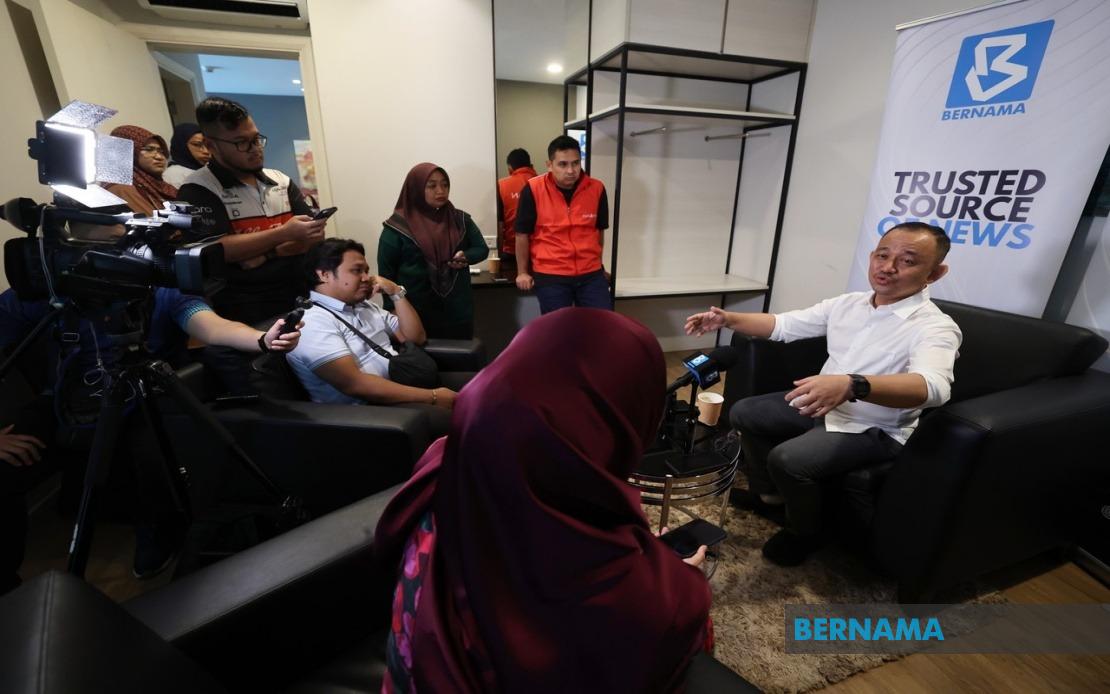
Pakatan Harapan has moved to clarify its position on the critical question of Menteri Besar selection in the forthcoming Johor state election, publicly deferring entirely to the Sultan of Johor's constitutional prerogative should the coalition achieve electoral victory. The statement came through Dr Maszlee Malik, PH's candidate for the Puteri Wangsa state seat, who sought to dispel mounting speculation that has swirled across social media platforms linking various party figures as leading contenders for the position.
Dr Maszlee's remarks underscore a strategic approach within Pakatan Harapan to sidestep the potentially divisive issue of succession planning ahead of polling day. Rather than engaging with the speculative narrative, the coalition has chosen to emphasise its commitment to constitutional propriety and institutional respect. By explicitly acknowledging that the state constitution vests the appointment authority solely with the Palace, PH signals both deference to Johor's monarchy and a desire to keep factional tensions within the coalition at bay during the critical campaign phase.
The timing of this clarification is significant. Election campaigns in Malaysia frequently become entangled with questions of post-victory power distribution, and such discussions can fragment coalition unity or alienate voters who view internal jockeying as unseemly. Pakatan Harapan's deliberate choice to avoid internal deliberations about the Menteri Besar role reflects lessons learned from previous electoral cycles, where premature designation of candidates for top positions sometimes invited unwanted scrutiny or created resentment among other aspiring leaders.
Social media speculation about potential Menteri Besar candidates has intensified as the election draws nearer, reflecting genuine interest among the Johor electorate in understanding what the coalition might deliver if victorious. Yet rather than feeding this speculation, PH has opted for a posture of institutional humility. Dr Maszlee emphasised that the coalition has consciously avoided making the Menteri Besar question a focal point of discussion, choosing instead to concentrate on substantive policy commitments and grassroots engagement aimed at delivering tangible improvements to the lives of Johor residents.
This approach also reflects a broader strategic reorientation within Pakatan Harapan. Following the coalition's recalibration after the 2022 general election results, there has been a noticeable emphasis on presenting a unified team rather than projecting individual personalities as the face of the coalition. By framing all 56 candidates standing for election in Johor as a cohesive unit—invoking the metaphor of Marvel's "Avengers"—PH seeks to distribute responsibility and legitimacy across its entire roster rather than concentrating them in the hands of a single figurehead.
The Sultan of Johor holds considerable institutional weight in the state's political economy. The constitutional arrangement granting the ruler the power to appoint the Menteri Besar reflects Malaysia's system of constitutional monarchy, where reigning sovereigns in each state retain meaningful prerogatives alongside elected government structures. In Johor's case, this dual authority has shaped political outcomes repeatedly over the decades, making the Sultan's preferences a genuine and consequential variable in determining who occupies the chief minister's office. Pakatan Harapan's explicit recognition of this reality demonstrates political maturity and an understanding of how power actually flows in Malaysia's federal and state systems.
From the perspective of the Johor electorate, PH's stance offers both clarity and ambiguity. Clarity exists in the acknowledgement of constitutional processes; ambiguity persists regarding which individuals within the coalition might be acceptable or preferred candidates from the Palace's vantage point. This calculated vagueness may actually work in PH's electoral favour, as it allows swing voters and undecided constituencies to focus on policy platforms and governance capacity rather than being distracted by personality-driven competition within the coalition leadership.
The election is scheduled for July 11, with early voting set for July 7. The 16th Johor state election represents a significant test for Pakatan Harapan's viability as a governing coalition across Malaysia's diverse state contexts. The state itself carries demographic and economic importance, with a substantial population and substantial economic output. How the coalition performs in Johor will send important signals about its electoral resilience and organisational capability, particularly given that state elections offer laboratories for testing campaign strategies and refining governance approaches before subsequent rounds of federal or other state contests.
The decision to emphasise team unity over individual leadership profiles also aligns with broader global trends in political communication, where younger voters and urban constituencies increasingly respond to messages focused on institutional competence and collective responsibility rather than personalised authority. By positioning all 56 candidates as equivalent contributors to a shared vision, PH attempts to appeal to this segment while avoiding the appearance of predetermined power-broking that often alienates reform-minded voters.
Looking ahead, the outcome in Johor will likely influence how other coalitions and individual parties calibrate their own approaches to candidate selection and succession planning in future electoral contests. If PH wins and the Sultan's appointment decision proves broadly acceptable to the coalition's grassroots and elected members, the model of constitutional deference combined with institutional team-building may become more widely emulated. Conversely, if the appointment creates tension or perceived unfairness within PH ranks, it could prompt future coalitions to invest more explicitly in pre-election negotiations with state rulers regarding acceptable candidates, though such overt discussions carry their own political risks and constitutional subtleties.

