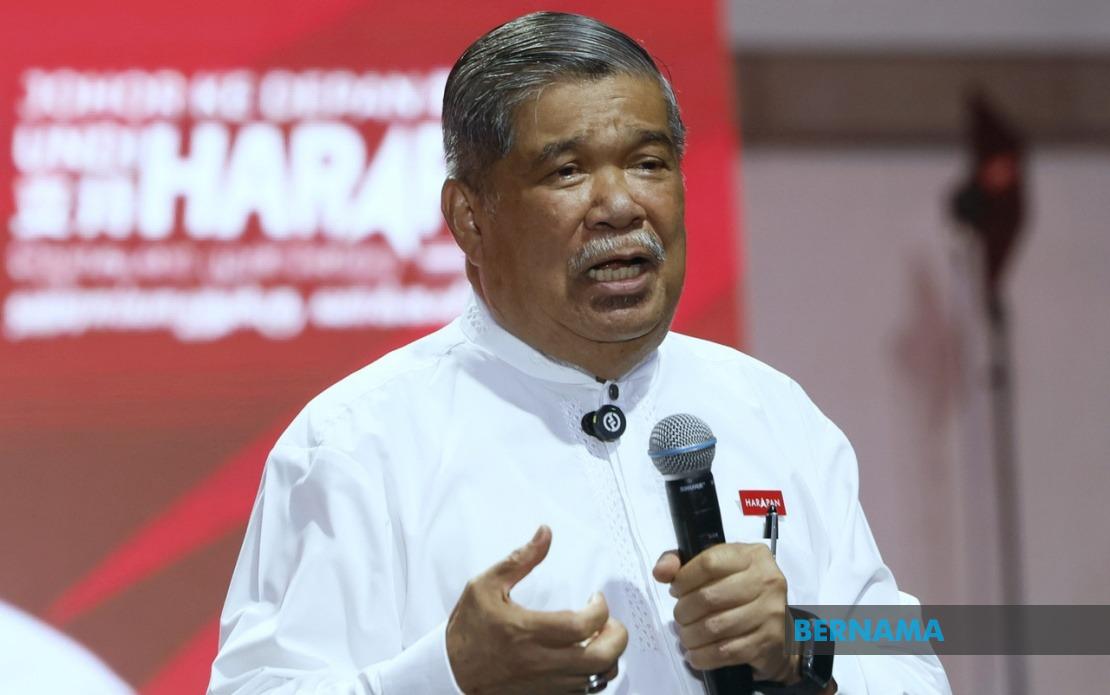
Pakatan Harapan's campaign machinery remains undeterred by PAS's recent instruction to its grassroots supporters to cast ballots for Barisan Nasional candidates in constituencies where the Islamic party is not running in the upcoming Johor state election. Amanah president Datuk Seri Mohamad Sabu, speaking at a PH rally in Permas Jaya, dismissed the rival coalition's tactical move as ineffective against the opposition's mobilization efforts ahead of the July 11 polling day.
The PAS directive, issued to consolidate Malay-Muslim votes around BN candidates in multi-cornered contests, represents a calculated political strategy to fragment opposition support in the state election. However, Mohamad Sabu's response underscores PH's confidence that its ground organization possesses sufficient momentum to weather such pressure tactics without losing stride. His insistence that the coalition would proceed with campaigning "as usual" signals that PH leadership views the directive more as a sign of competitor desperation than a credible threat to its electoral prospects.
The Amanah president and Agriculture Minister framed PH's core electoral proposition around multiracial and multi-religious cooperation, positioning this as the antidote to narrow sectarian appeals. In his view, such political cohesion underpins both long-term administrative stability and sustained economic growth. This messaging reflects PH's broader strategy to anchor its Johor campaign on technocratic competence and inclusive governance rather than allowing the contest to devolve into communal positioning. By emphasizing capability, service track record, and commitment to justice as voting criteria, PH is attempting to elevate the campaign above identity-based competition.
A central pillar of Mohamad Sabu's appeal to voters involved synchronizing state and federal government operations. He argued that administrative coherence between Kuala Lumpur and Johor Bahru would accelerate critical development initiatives. These include the modernization of public transportation networks, infrastructure enhancement at international border checkpoints, and efforts to attract foreign investment into the state. The implicit argument—that voters would gain tangible economic returns from installing a PH state government aligned with federal priorities—represents a pragmatic counter to BN's incumbency advantage.
DAP strategic director Liew Chin Tong, who also serves as Deputy Finance Minister, shifted focus to demographic dynamics and voter participation patterns. Liew identified youth turnout as potentially decisive in determining the election outcome, drawing on lessons from the 2022 Johor state poll where lower engagement among younger voters appeared to benefit BN. That earlier contest also saw geographical complications: many Johoreans employed across the border in Singapore faced travel obstacles due to COVID-19 restrictions, depressing participation among an opposition-leaning demographic segment. These structural factors, Liew suggested, merit careful attention as the campaign enters its concluding phase.
Liew's emphasis on policy substance over partisan rhetoric indicated PH's intent to reframe the campaign discourse. Rather than concentrating exclusively on BN criticism, he advocated prioritizing tangible welfare improvements that resonate with ordinary voters. Employment creation emerged as a central concern—specifically, the need to generate higher-quality positions with competitive remuneration to stem outward migration of Johorean talent to Singapore, which remains an economic rival drawing skilled workers from the southern state. This brain drain, if unchecked, weakens Johor's demographic and fiscal foundation.
Beyond employment, Liew enumerated social infrastructure deficits warranting urgent state attention. Flood management and maintenance of drainage systems represent chronic vulnerabilities for Johor residents, particularly in developed areas experiencing increased urbanization and water runoff. Preparations for an aging population, including healthcare planning and social support systems, reflect longer-term demographic challenges that state governments must anticipate. Childcare facility expansion addresses immediate family needs while enabling female labor force participation, a growth lever often overlooked in state-level policy discussions. This itemized approach suggested PH's strategy involves building voter confidence through specific, implementation-ready proposals rather than abstract promises.
The integration of federal-state cooperation into development acceleration formed another strategic thread throughout PH messaging. The Johor-Singapore Special Economic Zone, a flagship initiative bridging transnational commerce and investment, exemplified how coordinated governance structures could unlock opportunities. PH leaders contended that federal alignment would expedite such projects' execution, thereby generating sustainable employment and economic diversification. This framing positions voting for PH as an investment in practical governance rather than a protest vote or identity assertion.
The electoral stakes extend beyond Johor's domestic politics. As Malaysia's second-largest economy and a crucial federal election battleground, Johor's political composition influences national power equations. A PH state victory would deepen the opposition's geographic footprint and strengthen its federal negotiating position ahead of looming general elections. Conversely, a BN retention would consolidate the ruling coalition's command over Malaysia's wealthiest state and potentially signal momentum reversal. This broader significance explains the intense mobilization from both coalitions and the strategic intensity underlying PAS's intervention.
The timing of PAS's directive—occurring during campaign acceleration—reflects intra-coalition tensions within the BN-PAS partnership. While formally aligned at the federal level through the Perikatan Nasional framework, their Johor interests do not perfectly align. PAS contests selected constituencies where its Islamic base offers competitive advantages, while delegating other seats to BN components. This division, while potentially efficient, introduces vulnerabilities if either partner's support proves mobile or conditional. Mohamad Sabu's dismissal of the PAS directive implicitly exploited such fissures, suggesting to floating voters that the BN-PAS axis remains tactically choreographed rather than organically unified.
With both Pakatan Harapan and Barisan Nasional contesting all 56 state seats, voter choice between coherent platforms will determine outcomes. The early voting phase scheduled for July 7 immediately precedes main polling on July 11, compressing the final campaign window. DAP's focus on youth participation acknowledgment underscores awareness that generational engagement patterns have shifted since 2022, potentially favoring an opposition coalition perceived as reform-minded and less tainted by corruption scandals that damaged BN's image. Whether PH's emphasis on multiracial cooperation, policy substance, and administrative alignment can translate into electoral gains against an incumbent BN administration remains the central question determining Johor's political direction and, by extension, Malaysia's evolving national power structure.

