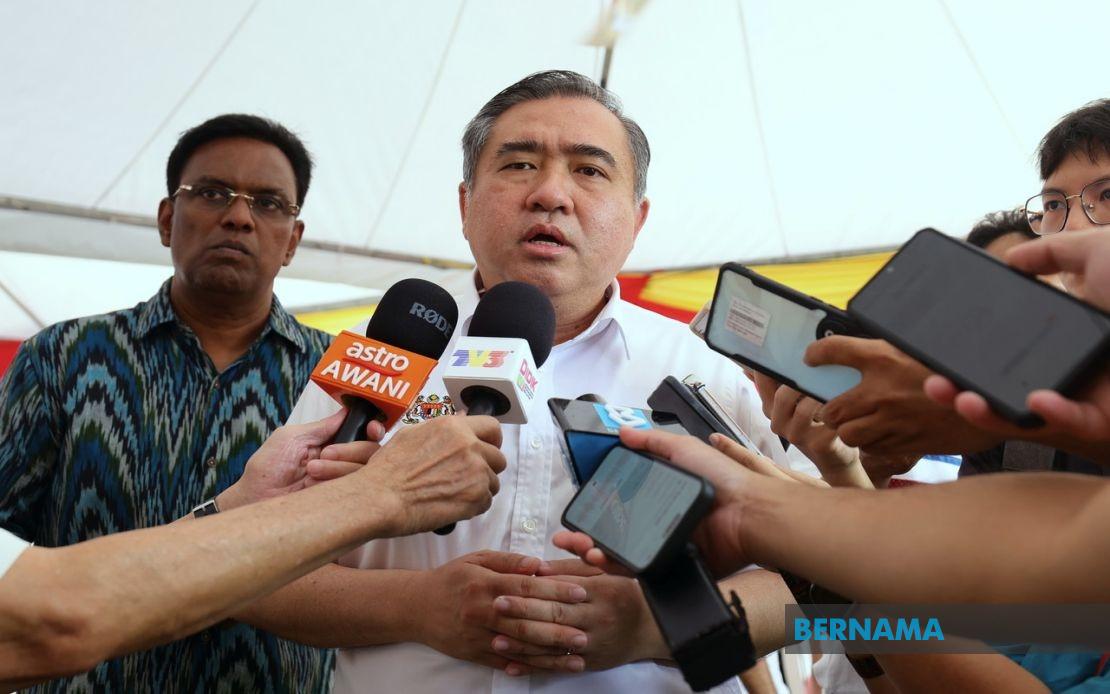
Pakatan Harapan has declared itself prepared to navigate whatever political combinations its adversaries might forge before voters go to the polls in Negeri Sembilan, even as speculation swirls around a possible alliance between Barisan Nasional and Perikatan Nasional. The ruling coalition's message, delivered by DAP secretary-general Anthony Loke during a government programme in Seremban on July 16, reflects confidence tempered by strategic realism as the state election looms.
Loke's remarks came in response to growing indications that BN and PN may coordinate their campaign efforts and negotiate seat distributions to maximise their combined electoral reach. Such tactical alliances have become commonplace in Malaysia's fractured political landscape, where no single coalition can take voter loyalty for granted. The DAP leader framed PH's response as one of disciplined focus rather than reactive alarm, drawing on lessons from the closely contested Johor state election that preceded it.
The opposition's seat-sharing negotiations represent a calculated attempt to consolidate anti-PH votes and prevent vote-splitting that might otherwise benefit the incumbent coalition. This strategy holds particular significance in Negeri Sembilan, where ethnic composition and voter demographics create varying competitive dynamics across different constituencies. By coordinating their efforts, BN and PN aim to present a more unified front to voters who might otherwise scatter their support across multiple opposition parties.
Yet Loke's primary message to PH's own ranks emphasised that external political manoeuvres matter less than the coalition's internal coherence. He underscored that component parties—DAP, PKR, Amanah, and others—must project unity and demonstrate why voters should entrust them with continued governance. This appeal to solidarity signals concern within PH about potential fractures, particularly given previous tensions between alliance members that have occasionally surfaced publicly. The emphasis on "strengthening its own election machinery" suggests PH recognises that ground-level organisation and voter mobilisation will ultimately determine outcomes more than high-level political posturing.
The Transport Minister addressed head-on concerns that Chinese voters, traditionally a PH stronghold, might drift toward the Malaysian Chinese Association or other opposition alternatives. Loke acknowledged the reality that such shifts are theoretically possible but argued that voters will render their verdict on polling day rather than through pre-election declarations of support. This stance reflects confidence in PH's track record, though it sidesteps the deeper anxieties within the coalition about demographic shifts and changing voter preferences that have emerged in recent elections.
Central to PH's campaign narrative is the performance record of the Negeri Sembilan government under Menteri Besar Datuk Seri Aminuddin Harun, who has led the state since 2018. Loke identified this administrative track record as PH's primary electoral asset—a concrete foundation of governance achievements that transcends abstract political appeals. This strategy implicitly frames the election as a referendum on incumbent performance rather than a choice between competing ideological visions, a tactic that historically favours governments with tangible development initiatives to showcase.
The conversation also touched on the ongoing political turbulence in neighbouring Melaka, where DAP's withdrawal from the state government over disputes about appointed assembly members has created administrative complications. Loke characterised this decision as final and irreversible, with the state government already restructuring its legislative seating arrangements to accommodate the departure. The Melaka situation serves as a cautionary tale about coalition instability, underscoring why Loke's emphasis on component-party unity in Negeri Sembilan carries such urgency.
Loke's defence of the Ministry of Transport's MADANI Adopted Village initiative—which was being launched during his comments—signals PH's awareness that opposition parties frequently dismiss government development programmes as election-season theatrics. By insisting that the initiative represents ongoing policy rather than cyclical electioneering, Loke attempted to reframe development assistance as evidence of steady governance rather than desperate campaigning. The selection of villages and schools in Mantin demonstrates PH's intent to distribute visible improvements across rural constituencies that have historically proven challenging for the coalition.
The political landscape heading into the Negeri Sembilan election thus reflects Malaysia's current reality: a competitive environment where no coalition can rely on automatic voter loyalty, where opposition coordination poses genuine challenges, and where incumbent advantages—measured in development projects and administrative performance—become critical differentiators. PH's posture, as articulated by Loke, suggests confidence tempered by awareness of genuine competitive threats.
For Malaysian observers, the Negeri Sembilan election functions as a significant bellwether. The state's mixed urban-rural character, its diverse ethnic composition, and its intermediate size make it broadly representative of national political trends. Results here will provide early indicators of how voters across different demographics are responding to both PH's governance record and opposition alternatives, potentially shaping calculations for the next general election cycle.
The coming weeks will test whether PH's strategy of emphasising internal cohesion and development achievements proves sufficient to counter whatever alliance configuration opposition parties ultimately settle upon. The outcome will depend not merely on political strategies articulated by party leaders, but on the daily calculus of voters weighing their experiences against competing visions for the state's future.

