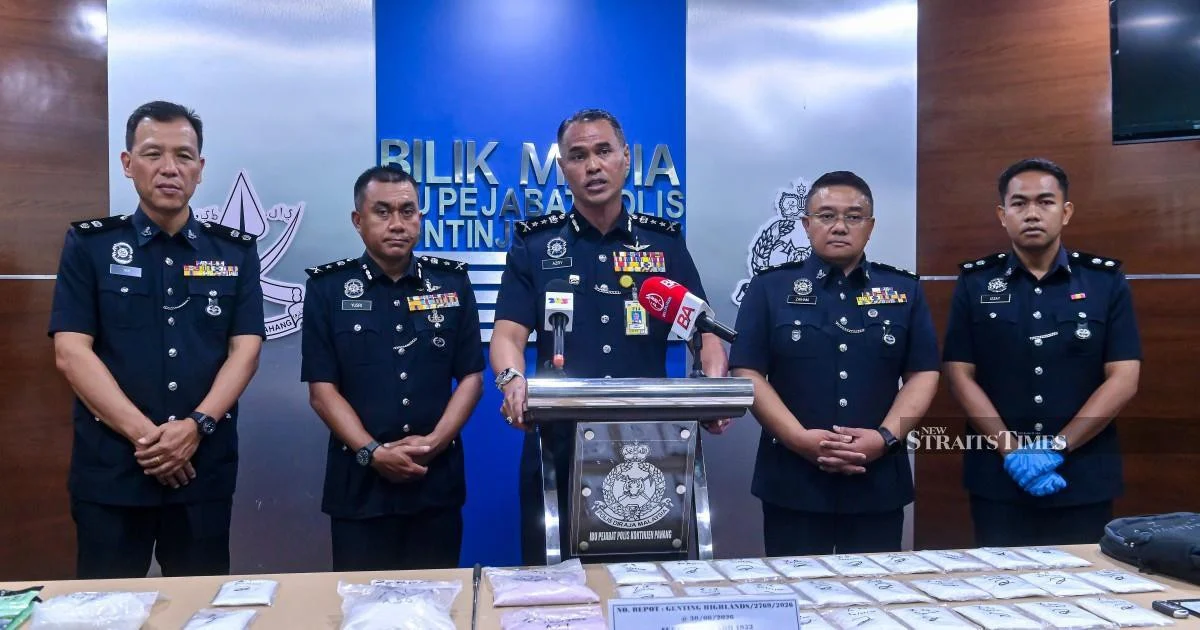
Pahang's largest coordinated anti-drug initiative in recent months has culminated in the arrest of 333 suspects and the confiscation of contraband worth more than RM500,000, according to state law enforcement officials. The statewide operation, which swept through all 11 districts in the east coast state, was mounted specifically to dismantle trafficking networks operating from identified high-risk locations, marking a significant intensification of counter-narcotics efforts in the region.
The three-day enforcement campaign demonstrated the strategic approach adopted by Pahang authorities to combat substance abuse through simultaneous raids across multiple geographical zones. By coordinating simultaneous sweeps rather than sequential operations, police maximised the element of surprise and prevented drug networks from relocating their operations to unpoliced areas. This tactical shift reflects a growing recognition among regional law enforcement that traditional sequential raids often allow suspects to flee or transfer inventory before apprehension.
The scale of the operation underscores the persistent challenge that narcotics trafficking poses to Pahang, one of Malaysia's largest states by area and home to extensive inland and coastal regions vulnerable to drug smuggling. The breadth of the sweep—touching every district from Kuantan in the centre to Raub in the west and Kuala Terengganu's border regions—suggests that drug activity has become dispersed rather than concentrated, requiring more comprehensive enforcement strategies than localised crackdowns can provide.
Confiscated materials included processed narcotics, cash suspected of being proceeds from drug sales, and vehicles used in distribution networks. The recovery of vehicles is particularly significant as it indicates authorities are dismantling the logistical infrastructure supporting trafficking operations. Cars, motorcycles and commercial vehicles are essential to regional drug distribution, allowing suppliers to maintain multiple distribution points while remaining mobile. The seizure of these assets therefore disrupts not just immediate supply chains but the operational capacity of trafficking organisations to function efficiently across the state.
The RM500,000 valuation encompasses the street value of seized drugs alongside cash assets and vehicle inventory, reflecting the comprehensive approach to dismantling the financial ecosystem sustaining drug enterprises. In Malaysia's context, where underground markets typically operate on thin margins and high volume, the removal of this quantity of merchandise represents a significant disruption to inventory. When multiplied across all 11 districts simultaneously, the accumulated impact severely constrains trafficking organisations' ability to meet demand during the immediate post-operation period.
The selection of hotspot locations as primary targets indicates that Pahang authorities had conducted intelligence gathering to identify where trafficking activity concentrated. This intelligence-led approach contrasts with indiscriminate sweeps and suggests improved information-sharing between federal and state agencies. Understanding where networks operate—whether in urban centres, industrial zones, or residential neighbourhoods—allows enforcement to focus resources where they will generate maximum disruption.
The arrest figure of 333 individuals reflects the large number of people engaged in the drug economy at various levels, from major suppliers and wholesalers down to street-level dealers and couriers. Typically, such large operations result in a pyramid of arrests where a small number of high-level organisers are apprehended alongside many lower-ranking participants. The challenge for subsequent prosecution will be distinguishing between organisers deserving harsher penalties and participants caught in the orbit of organised trafficking who might benefit from rehabilitation initiatives.
For Malaysian readers, the implications of such operations extend beyond the immediate impact on Pahang. As a major transit point for narcotics moving between Thailand and other regional markets, Pahang's drug situation affects broader Southeast Asian trafficking patterns. Disruptions in Pahang ripple outward, forcing trafficking organisations to reroute through alternative corridors, potentially increasing pressure on neighbouring Kelantan, Terengganu and Perak. This geographical displacement effect requires sustained cross-state coordination to remain effective.
The operation also highlights the resource intensity demanded by comprehensive anti-drug enforcement. The deployment required to simultaneously raid 11 districts, arrest over 300 individuals, and process seized materials represents a substantial commitment of personnel and equipment. Sustaining such efforts requires continued political will and adequate funding, both of which have sometimes proven inconsistent in Malaysian law enforcement.
Recent years have seen increasing emphasis on demand reduction alongside supply-side enforcement. While operations like this three-day sweep address the supply of narcotics, addressing Malaysia's broader drug problem requires parallel investment in rehabilitation, community engagement and prevention education. Some regional authorities have found that treatment-focused approaches reduce both drug-related crime and recidivism more effectively than arrest-heavy strategies alone.
The arrests will now move into the judicial pipeline, where outcomes will depend on evidence quality, prosecutorial resources, and court capacity. Malaysia's drug courts and specialised narcotics units have improved in recent years, yet backlogs remain a significant challenge. Ensuring that these 333 cases progress expeditiously will be important for maintaining public confidence in enforcement efforts.
Authorities indicated no timeline for similar operations, suggesting that the frequency and intensity of such state-wide sweeps remain contingent on intelligence and tactical assessment rather than routine scheduling. Neighbouring states and federal agencies will likely assess whether Pahang's model offers replicable lessons for their own anti-drug strategies, potentially standardising the simultaneous multi-district approach across Malaysia if outcomes justify the resource investment.

