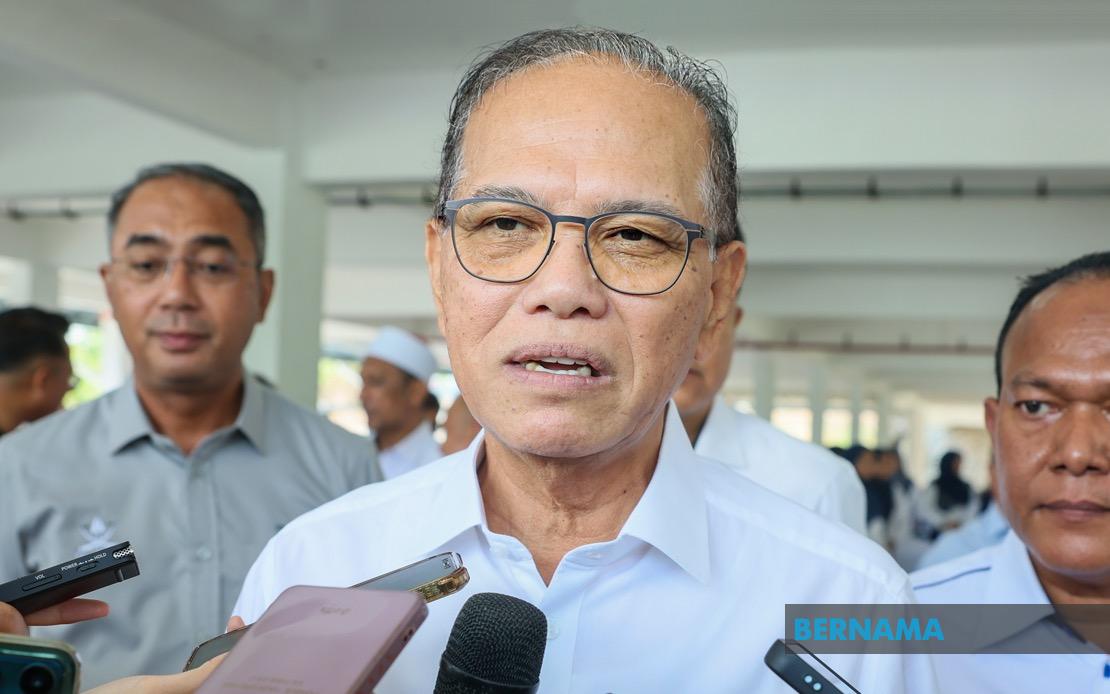
The Pahang state government is making a significant financial push to establish itself as a meaningful competitor in Malaysia's national sports landscape, announcing a RM3.5 million fund directed at three traditional sports disciplines. This strategic allocation, unveiled during the closing ceremony of the Pahang 1st Netball League Championship at the state's primary sports facility, represents an attempt to systematically build competitive advantage in sports where neighbouring states have historically enjoyed stronger track records.
Menteri Besar Datuk Seri Wan Rosdy Wan Ismail articulated the initiative as part of a broader vision to position Pahang alongside established powerhouses in Malaysian sports. The funding breakdown reflects careful strategic prioritisation: football receives the lion's share at RM2 million, underscoring its prominence in grassroots participation and national competitions. Netball, a sport where regional dynasties have been built, receives RM1 million, while sepak takraw—Malaysia's indigenous sport with significant Southeast Asian presence—receives RM500,000. This tiered approach suggests administrators recognise different developmental costs and market realities across sports disciplines.
The state government's emphasis on grassroots development reveals an understanding that sustainable sporting success requires building robust talent pipelines at community level. Rather than seeking quick victories through importing established athletes, Pahang's strategy prioritises early identification and systematic nurturing of young talent within existing school and community structures. This approach acknowledges that championship success at national level depends on thousands of young people having access to quality coaching, facilities, and competitive opportunities at the fundamental stage.
A critical dimension of this initiative is its recognition that sports serves purposes beyond trophy collection. State officials framed the investment as fostering unity, cooperation and discipline across Pahang's diverse population. In a state characterised by varied ethnic, cultural and socioeconomic backgrounds, organised sports programmes function as integrative platforms where shared objectives transcend traditional divisions. This social dimension often receives less attention in sports funding discussions but represents genuine value in building cohesive communities.
The commitment extended beyond the immediate three-year allocation, with the state government already pledging an additional RM500,000 for netball beginning next year, raising that sport's total annual investment to RM1.5 million. This forward commitment signals genuine institutional dedication rather than a one-off gesture, though observers will monitor whether subsequent state budgets honour these pledges during economic fluctuations or competing political priorities. Long-term funding consistency proves essential for developing elite athletes, as coaching recruitment and facility maintenance require sustained investment.
Pahang's sporting ambitions must be contextualised within Malaysia's competitive state-level sports ecosystem. Established powerhouses like Selangor and Penang have accumulated decades of institutional expertise, established training facilities, and successful athlete development pipelines. Pahang's investment, while substantial in relative terms, reflects a deliberate catch-up strategy requiring patience and sustained commitment. Success metrics should encompass not immediate national medal counts but measurable increases in grassroots participation, improved retention of young athletes, and incremental advancement in championship rankings across the targeted sports.
The netball championship itself, attracting 42 teams to compete for national recognition and cash prizes, demonstrates existing grassroots enthusiasm awaiting strategic nurturing. Semambu's victory and RM10,000 prize reward high achievement while the tournament structure itself provides the competitive experience essential for developing competitive maturity. Such organised domestic competitions function as laboratories for talent identification and development, allowing coaches to assess emerging players across diverse matchups.
Football, receiving the largest allocation, carries particular significance in Malaysian sporting culture and national pride. The investment targets a sport where community enthusiasm translates readily into participation opportunities, though converting that participation into competitive excellence requires professional coaching standards, legitimate academy systems, and consistent competition opportunities. Pahang's football initiative must demonstrate how RM2 million translates into tangible improvements in training quality and athlete development rather than dispersed funding producing minimal systemic impact.
Sepak takraw represents a culturally resonant choice for investment, reflecting Malaysia's stake in preserving and developing a sport deeply rooted in Southeast Asian identity. Thailand has dominated regional competition for years, presenting both challenge and opportunity for Malaysian states to reassert traditional sporting excellence. Pahang's allocation, modest though it appears, signals commitment to maintaining regional competitiveness in a distinctly Southeast Asian discipline where national and state honour intersect.
For Malaysian readers, Pahang's initiative illustrates broader trends in how state governments approach sporting development amid fiscal constraints. The strategic focus on three sports rather than spreading resources thinly across numerous disciplines reflects pragmatic recognition that meaningful impact requires concentrated investment. Other states, particularly those with less established sporting infrastructure, might study this prioritisation model as they develop their own sports development strategies.
The implementation approach emphasised by Menteri Besar—serious, wholehearted commitment avoiding half-measures—sets expectations for accountability in fund deployment. How these resources translate into visible improvements in athlete development, facility quality, and competitive outcomes will determine whether this represents transformative investment or bureaucratic budget allocation. Pahang's sports administrators face the challenge of converting financial commitment into systemic excellence, requiring not merely funding but sophisticated management of talent pathways, coaching standards, and competitive structures.

