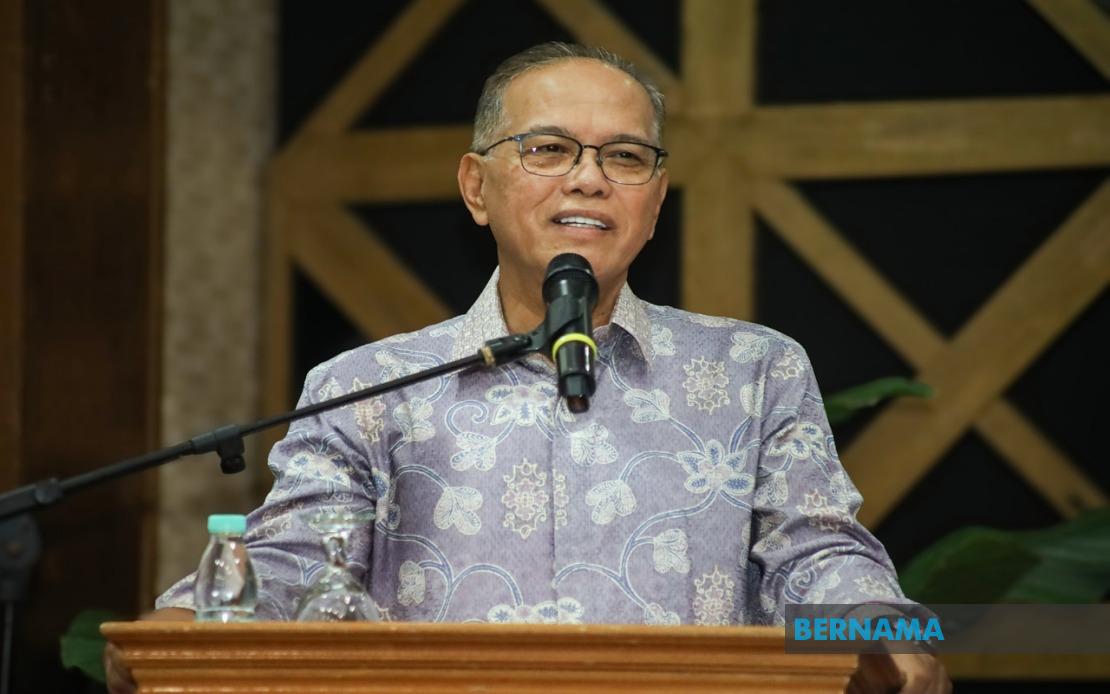
Menteri Besar Datuk Seri Wan Rosdy Wan Ismail has signalled Pahang's strategic pivot towards workforce readiness by dedicating over RM5 million in annual funding to bolster the state's Technical and Vocational Education and Training sector. Announced during the golden jubilee of Politeknik Sultan Haji Ahmad Shah (POLISAS) in Kuantan on August 13, the initiative reflects a philosophy that counties must cultivate skilled talent before economic opportunities materialise, rather than scrambling to fill vacancies once industries arrive.
The allocation represents more than administrative budgeting—it reflects an understanding that Malaysia's regions must compete globally for foreign direct investment and domestic enterprise growth. Rather than passively waiting for multinational corporations or large-scale manufacturers to establish operations in Pahang, the state government is engineering the conditions that make such investment attractive. By pre-positioning a trained workforce equipped with relevant technical skills, Pahang aims to reduce the lag time between industrial arrival and productive employment, a challenge that has historically plagued lagging regions across Southeast Asia.
Wan Rosdy outlined how the RM5 million will flow through multiple channels within the TVET ecosystem. Funds will support physical infrastructure expansion—facilities and equipment that students require for hands-on learning in fields ranging from engineering to hospitality. Beyond bricks and mortar, investment also targets Pahang Skills, an apparent initiative to certify competencies aligned with regional labour market demands. The Pahang Talent Development programme suggests a structured pipeline for identifying and nurturing promising technical students. Most notably, the Pahang Rail Academy represents a deliberate bet on the transport and logistics sector, positioning the state to capture opportunities in this rapidly expanding domain.
The timing of this announcement carries particular weight. POLISAS itself, established in 1976, has produced 60,000 graduates over nearly five decades—a sizable cohort that demonstrates both the institution's scale and its long track record. By honouring the polytechnic's milestone while committing fresh resources, Wan Rosdy positioned the state government as an institution-building partner rather than a distant bureaucracy. This matters in motivating faculty retention and student enrolment, both critical to TVET sector vitality.
The Menteri Besar explicitly framed the state's TVET strategy around industry partnership. Classroom learning divorced from commercial reality produces graduates mismatched to employer needs—a persistent problem in developing economies where educational curricula lag sectoral evolution. By strengthening ties between polytechnics, training institutes, and private enterprise, Pahang attempts to close this gap. When manufacturers, construction firms, and service companies co-design curriculum and provide apprenticeship placements, graduates enter employment with practical familiarity rather than theoretical knowledge alone.
This approach addresses a regional challenge. Across Southeast Asia, TVET sectors struggle with perception and resourcing. Many families prioritise university degrees, viewing technical qualifications as second-tier pathways. Yet skilled trades—welding, electrical work, computer networking, automotive maintenance—command wages often exceeding those of generalist graduates. By publicly championing TVET and channelling substantial funds toward it, Pahang's leadership sends a cultural signal that technical expertise merits equal respect and investment.
Beyond Pahang's borders, the state's TVET push carries implications for Malaysia's broader positioning. As China, Vietnam, and Thailand strengthen technical education capacity, Malaysian states risk falling behind in the competition for manufacturing and logistics investment. Regions that produce graduates immediately deployable in production facilities and distribution centres become magnets for foreign investors seeking to minimise ramp-up delays. Pahang's initiative, if executed effectively, could differentiate the state within Malaysia's industrial landscape and contribute to national competitiveness.
Wan Rosdy's comments regarding Budget 2027 underscore another dimension of this push. The Menteri Besar appealed to the federal government for special consideration toward Pahang, citing the state's vast geographical size and corresponding infrastructure demands. This positioning strategically links TVET investment to broader development fairness. Infrastructure alone—roads, ports, healthcare—means little without a skilled populace to operate them and fill jobs they create. By framing TVET as integral to comprehensive state development, Pahang makes a case for federal support grounded in national economic logic.
The state government's budgetary priorities further illustrate this integrated vision. Education, economic development, welfare, and infrastructure feature prominently alongside religious promotion. Rather than treating these domains as competing priorities, the framework suggests they reinforce one another. Better-educated citizens secure economic opportunities and reduce welfare dependency; developed infrastructure attracts business; religious and social cohesion support long-term stability. TVET sits at the intersection, converting educational investment into employment outcomes.
For Malaysian readers, particularly those in East Coast states grappling with economic diversification, Pahang's model offers instructive lessons. Small and medium enterprises dominate Malaysia's economic base outside major urban centres, yet many operators struggle to fill vacancies for skilled roles. A robust regional TVET system can supply this missing talent pool. Whether Pahang successfully executes this ambitious blueprint remains uncertain—implementation gaps plague many development initiatives across the region—but the strategic thinking is sound.
The symbolic significance of marking POLISAS's 50th anniversary while announcing fresh TVET investment deserves note. Institutions endure through cycles of neglect and support; POLISAS has survived decades through institutional resilience and educator commitment. The government's reaffirmation of partnership signals that technical education, often starved of resources during periods of economic constraint, will receive sustained backing. This consistency matters for long-term planning within colleges and schools.
Looking ahead, success hinges on execution discipline and stakeholder alignment. The RM5 million represents a meaningful but not lavish investment—roughly one million ringgit per major initiative category. Impact will depend on efficient deployment, ongoing top-up funding, and genuine industry engagement. If the state government treats TVET as a cyclical budget line subject to annual whims, momentum will dissipate. Conversely, if commitment deepens across political cycles and government levels, Pahang could establish competitive advantage in an increasingly skills-conscious regional economy. The November state budget presentation will offer early indicators of whether this moment portends sustained transformation or passing political gesture.

