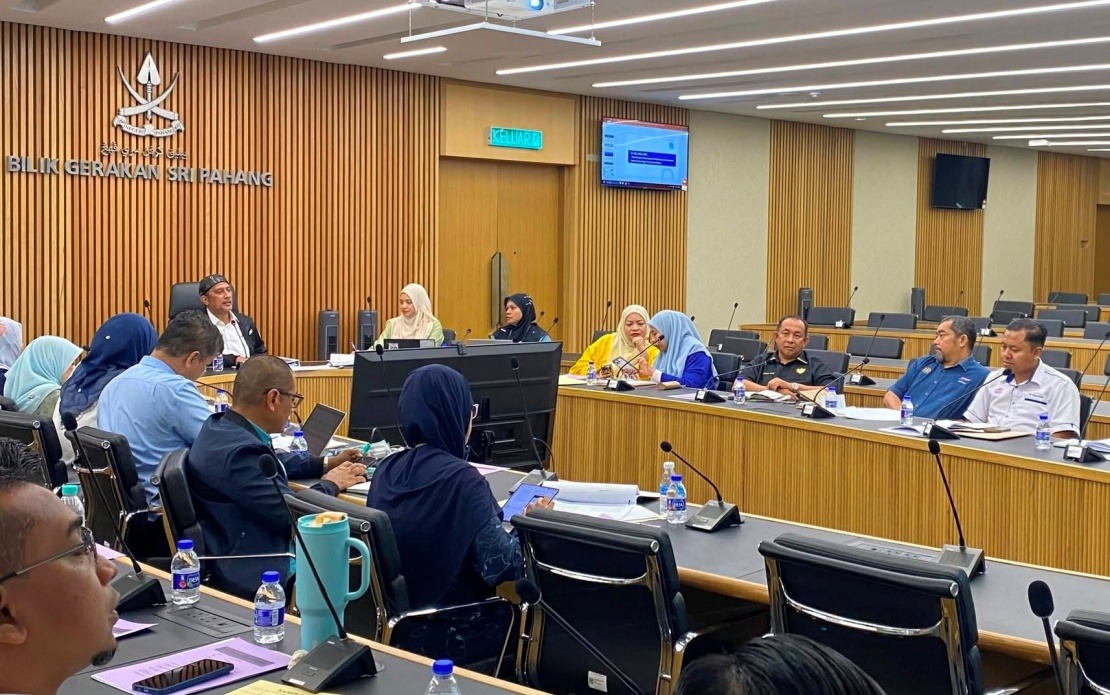
The Pahang state government has committed to requesting assistance from three key agencies to help resolve a contentious land dispute involving the Orang Asli community in Kampung Sungai Cot, Maran. The state will engage the Department of Orang Asli Development (JAKOA), the Pahang Land and Mines Office (PTG), and the Land and District Office to jointly examine potential solutions that balance the interests of all stakeholders while adhering strictly to existing legal frameworks and established administrative procedures.
Datuk Seri Syed Ibrahim Syed Ahmad, who chairs the Pahang state government's committee overseeing Islamic religious affairs, rural development, and Orang Asli matters, outlined the government's intention to approach the matter through careful deliberation and community consultation. He emphasised that the state administration remains committed to finding outcomes that serve the greater good, rather than favouring any single party in the dispute. This declaration suggests official acknowledgement of the complexity surrounding the case and recognition that multiple legitimate claims may exist simultaneously.
The core of the dispute centres on overlapping land claims. According to government records, twelve members of the Orang Asli community had submitted written applications to JAKOA indicating their cultivation of the land based on traditional usage patterns. Simultaneously, however, the same land parcel received formal approval for commercial development by a private company through a decision made during the 32nd State Executive Council meeting on November 4, 2015. This temporal overlap, with indigenous claims existing alongside official corporate approval, has created a legally complex situation requiring careful untangling.
Syed Ibrahim clarified that the state government disputes characterisations of the situation made by various external commentators, suggesting that public understanding may be incomplete or skewed. He stated that the facts underlying the dispute differ from depictions circulating in certain quarters, though he did not elaborate extensively on these specific disagreements. This defensive posture indicates sensitivity around how the case is perceived nationally and potentially internationally within indigenous rights circles.
Progress on the matter has been incremental, with JAKOA having conducted multiple discussions with Orang Asli representatives to identify workable resolutions. These consultations revealed that the active claimants have narrowed significantly, with only six named individuals continuing to pursue their claims through the proper channels. During these discussions, the remaining claimants asserted that the disputed territory represents their ancestral homeland with deep historical and cultural significance. However, government authorities conducted searches through existing administrative records and historical documentation but found no verifiable evidence supporting these ancestral claims under current legal definitions and evidentiary standards.
This evidentiary gap represents a critical juncture in indigenous land rights disputes throughout Malaysia. The Orang Asli communities often possess oral histories and cultural knowledge spanning generations, yet contemporary land administration systems rely heavily on documented records, surveys, and formal registrations established during the colonial period and afterwards. The disconnect between indigenous claims rooted in ancestral occupation and the absence of supporting documentation within state archives presents a recurring challenge across Peninsular Malaysia and highlights the tension between customary land rights and formal legal systems.
Pahang's broader Orang Asli landscape provides important context for understanding the Kampung Sungai Cot situation. The state currently administers 264 officially recognised Orang Asli villages with more than 90,000 registered residents. Among these, 30 villages have achieved official status through gazettement under the relevant provisions of the Orang Asli Act 1954 and the National Land Code. Additionally, the state government has approved outright land ownership transfers to the Orang Asli community across 16 villages, representing a concrete commitment to indigenous land security in select areas.
The state's pipeline of pending applications demonstrates ongoing efforts to formalise Orang Asli land rights. Currently, 75 applications for village gazettement are progressing through various stages of the review process. Among these, 31 applications have completed initial assessment and await consideration during upcoming State Executive Council meetings. A substantial cohort of 44 applications remains enmeshed in disputes involving land overlaps with other claimants or approved uses, while 143 additional applications have only just entered the preliminary measurement phase conducted by JAKOA staff.
These figures reveal that land formalization for Orang Asli communities, while proceeding, faces significant institutional bottlenecks and competing claim complications. The large number of applications in early stages, combined with the substantial subset dealing with overlapping claims, underscores why disputes like Kampung Sungai Cot emerge regularly. The gaps between the formal administrative system and the lived reality of indigenous land use create situations where multiple parties legitimately believe they possess rights to the same territory.
For Malaysian policymakers and Southeast Asian observers, the Pahang case exemplifies broader challenges facing indigenous peoples throughout the region. Rapid economic development, formal land administration systems rooted in colonial legacies, and the documentation requirements of modern governance often collide with indigenous communities' customary tenure systems and oral historical records. The decision by Pahang's state government to involve multiple agencies suggests recognition that technical expertise alone cannot resolve what are ultimately questions involving historical justice, cultural rights, and equitable resource distribution.
The involvement of JAKOA specifically carries particular significance, as the federal department holds primary responsibility for Orang Asli development and represents indigenous interests within the bureaucracy. By formalising JAKOA's role in reviewing the Kampung Sungai Cot matter, the state government signals that federal oversight and expertise will shape the resolution. This layering of state and federal involvement may facilitate finding solutions that satisfy both local governance concerns and national indigenous policy objectives, though it also introduces additional institutional complexity to an already intricate situation.
The consultative approach promised by the state government offers potential pathways beyond adversarial legal proceedings. Community mediation, alternative benefit-sharing arrangements, or phased land allocation solutions might emerge from collaborative discussions between government agencies, Orang Asli representatives, and the company holding the commercial approval. The willingness to invest time in consultative processes rather than simply enforcing the 2015 corporate approval suggests official recognition that indigenous grievances merit substantive engagement rather than dismissal. However, whether these discussions can bridge the gap between indigenous claims lacking documentary support and corporate rights granted through formal state decision-making remains uncertain.

