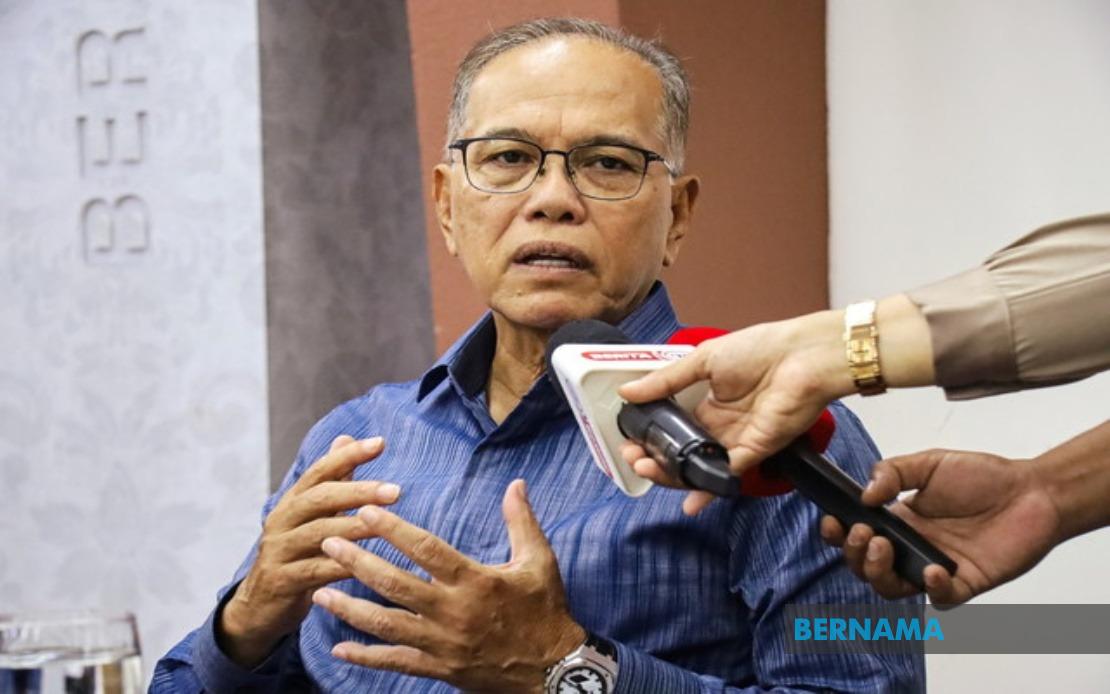
Datuk Seri Wan Rosdy Wan Ismail, chairman of Pahang Barisan Nasional and the state's Menteri Besar, has reaffirmed his administration's determination to preserve the Unity Government partnership with Pakatan Harapan through the next national election cycle. Speaking in Kuantan during the launch of an overseas scholarship programme, Wan Rosdy indicated that the ruling coalition remains steadfast in its commitment to work collaboratively until GE16, despite the shifting landscape of Malaysian politics and occasional tensions within the broader national alliance.
The Pahang state government emerged from the 2022 election with a precarious configuration that necessitated cross-coalition cooperation. When the state assembly was constituted following GE15, Barisan Nasional and Perikatan Nasional each secured 17 seats, while Pakatan Harapan obtained eight of the 42 available positions. Rather than allowing this fragmented outcome to paralyse governance, the Pahang Regent Tengku Hassanal Ibrahim Alam Shah Al-Sultan Abdullah Ri'ayatuddin Al-Mustafa Billah Shah facilitated the formation of a unity administration on November 27, 2022, appointing Wan Rosdy to lead the executive branch. This arrangement has now endured for nearly two years, demonstrating that regional-level coalitions can function effectively even when national patterns appear volatile.
Wan Rosdy's public declaration carries significance beyond ceremonial endorsement. By explicitly stating that the administration hopes the Unity Government will "remain together until GE16," he is signalling to both state constituencies and federal leadership that Pahang will not experience the instability that has occasionally disrupted other state governments. This message proves particularly important for investor confidence and the continuity of development projects, which can suffer when administrations are uncertain about their longevity or locked in internal power struggles.
The Menteri Besar also indicated flexibility regarding future coalition arrangements. While emphasizing the current unity framework, he acknowledged that Pahang BN remains "open to forming cooperation with any party in preparation for GE16." This diplomatic formulation suggests that while the present arrangement is valued, the state's leadership recognises the fluid nature of electoral politics and is not foreclosing options should circumstances shift. Such pragmatism reflects the reality that Malaysian politics at state level often requires tactical realignment based on electoral outcomes and shifting parliamentary arithmetic.
Beyond the immediate political messaging, Wan Rosdy's comments emerged during his officiating of the 2026 Makmur Pahang Initiative Presentation Ceremony, which distributed scholarships to students pursuing higher education abroad. The allocation of RM118,000 across 118 recipients for studies in Egypt and New Zealand, combined with additional USD1,000 disbursements through Yayasan Pahang to students in Jordan and Morocco, underscores the state administration's investment in human capital development. This investment strategy carries long-term implications for Pahang's economic competitiveness and talent retention.
The Makmur Pahang Initiative exemplifies how state governments can differentiate themselves through targeted development programmes, particularly in education and scholarship provision. By explicitly considering factors such as Islamic curricula and fields of study relevant to broader economic priorities, the administration demonstrates a strategic approach to human resource development rather than merely distributing funds universally. This selectivity suggests a vision of how Pahang's graduates might contribute to state development upon their return.
The choice of study destinations itself reflects deliberate positioning. Egypt and New Zealand represent contrasting destinations—one offering proximity and cultural affinity, the other representing advanced educational systems and Western employment networks. Morocco and Jordan similarly provide balanced geographic and cultural exposure. For Malaysian students, such diversity in study environments enhances the knowledge transfer and network-building that can subsequently benefit home-state development.
Wan Rosdy's exhortation to scholars emphasises both academic excellence and psychological preparedness for the challenges of overseas study. His remarks about strengthening oneself mentally and physically acknowledge that international education involves profound personal adjustment beyond academic demands. This holistic perspective on student development reflects understanding that successful returnees must possess not merely credentials but resilience, adaptability, and cosmopolitan perspective.
The Pahang leadership's emphasis on the Makmur Pahang Initiative's continued expansion signals confidence in resource availability and political stability. Plans to regularly review syllabuses and courses offered, adjusting to evolving labour market demands and societal needs, indicate a dynamic rather than static approach to scholarship administration. This iterative improvement cycle requires sustained political commitment and budgetary allocation across multiple electoral cycles.
The unity government framework in Pahang has enabled coherent policy implementation across multiple state-level portfolios without the administrative paralysis that can result from unstable coalitions. The visible success of scholarship programmes, combined with ongoing infrastructure and economic initiatives, provides tangible evidence of what collaborative governance can deliver. For other states navigating similar post-2022 electoral complexity, Pahang's experience offers both model and cautionary tales about sustaining multi-party cooperation.
Wan Rosdy's confirmation of continued commitment to the unity framework until GE16 also carries implications for national coalition stability. If Pahang successfully maintains this arrangement through the next general election, it could provide a template for other regions where BN and PH have collaborated. Conversely, any breakdown in the Pahang arrangement would signal risks to similar coalitions elsewhere, potentially influencing how federal leadership manages multi-party cooperation.
The Menteri Besar's framing of partnership maintenance as dependent on mutual discussion and continued benefit suggests that the unity arrangement is not merely imposed from above but requires ongoing consensus. This consensual approach may prove more durable than purely transactional coalitions, as it invests all partners in the framework's success. For Pahang's citizens and investors, such stability provides the predictability necessary for long-term planning and confidence in governmental continuity.

