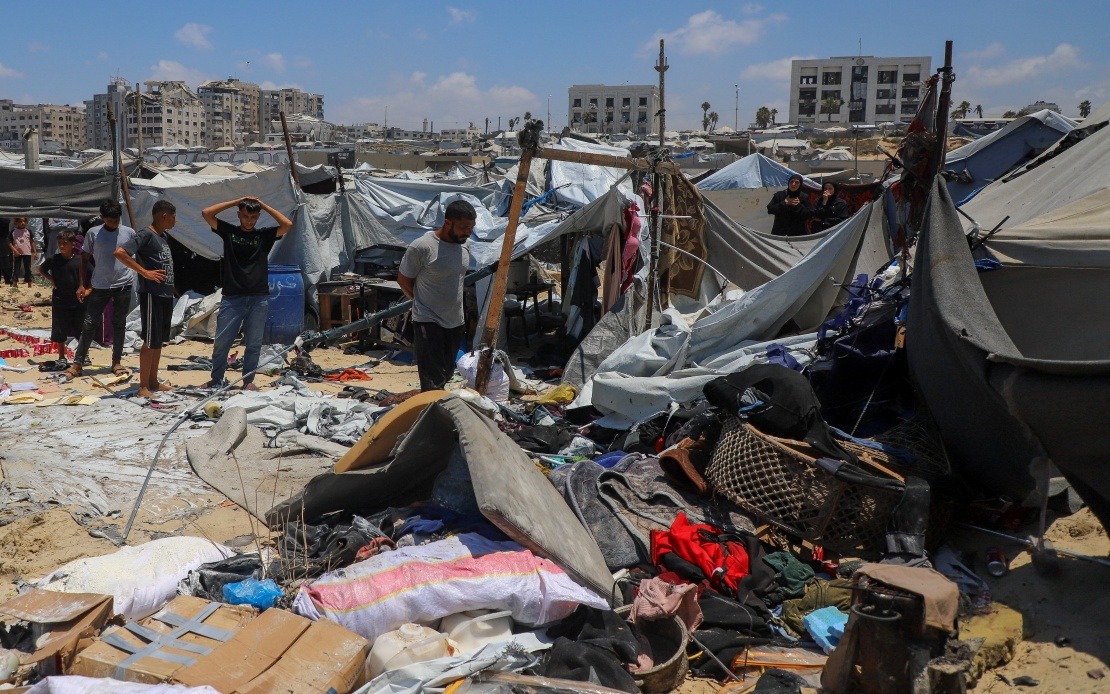
The extent of destruction in the Gaza Strip has reached catastrophic levels, with the Israeli military responsible for destroying more than 90 per cent of the enclave, according to a situation report issued by the Palestinian Government Communication Centre. The assessment, released on Monday and drawing on local sources, reveals that occupation forces now maintain control over approximately 80 per cent of the territory, underscoring the scale of military operations and territorial consolidation in the war-ravaged region.
During the week spanning June 29 to July 6, military operations intensified markedly across key population centres including Khan Younis, Rafah, and Gaza City. Medical sources documented eight Palestinian deaths resulting from these intensified operations, though the broader impact extends far beyond combat casualties to encompass systematic destruction of civilian infrastructure and displacement of entire communities. The targeting of residential areas and demolition of homes has accelerated population movements within the already densely populated enclave, creating compounding humanitarian challenges.
The residential destruction constitutes one dimension of a broader operational strategy. According to the Palestinian government assessment, Israeli occupation forces have engaged in extensive shelling campaigns deliberately targeting civilian neighbourhoods, with subsequent home demolitions displacing Palestinian families en masse. This pattern of destruction has rendered significant portions of the Gaza Strip uninhabitable, forcing populations into increasingly constrained areas and overwhelming already inadequate shelter and services.
Beyond the Gaza Strip, military activities across the occupied West Bank have similarly escalated during the same reporting period. Israeli occupation forces conducted widespread raids throughout Palestinian population centres, including Ramallah, Nablus, Hebron, Bethlehem, Jenin, Qalqilya, Tulkarem, and occupied Jerusalem. These operations have involved home invasions, arbitrary detention of Palestinians, severe restrictions on freedom of movement through road closures and checkpoints, and systematic disruption of daily governance and commerce.
A parallel and disturbing dimension involves Israeli settler militias, which have conducted coordinated attacks against Palestinian civilians and their property across multiple locations in the West Bank. These incidents have included arson targeting civilian facilities, such as the burning of a cafeteria in al-Lubban ash-Sharqiya village, physical assaults on Palestinian shepherds grazing livestock east of Bethlehem, theft and attempted theft of animals, and deliberate obstruction of access routes to Palestinian communities such as Burqa village. Such actions, often characterised as settler violence, represent a systematic pattern of intimidation and dispossession.
The agricultural sector has emerged as a particularly vulnerable target within the broader conflict dynamics. The Palestinian Ministry of Agriculture documented a significant escalation in actions specifically targeting the rural economy and food security across the West Bank. Between the period covered in the report, a total of 2,559 olive trees were either uprooted, burned, or otherwise damaged across multiple governorates. The Salfit, Jenin, and Nablus regions experienced the most severe impacts, areas historically central to Palestinian agricultural production and rural livelihoods.
The agricultural destruction carries profound implications beyond immediate economic loss. Olive cultivation represents a cornerstone of Palestinian rural identity and subsistence, with trees often representing multigenerational family assets. At least 125 farmers directly experienced documented losses, though the number of families and communities affected through supply chain disruption extends considerably higher. The Ministry's assessment valued these documented direct losses at approximately US$11.78 million, a figure reflecting only the most immediate material destruction rather than broader economic ripple effects through rural communities.
For Malaysian observers and policymakers, these developments underscore the humanitarian dimensions of the Gaza-West Bank conflict that extend well beyond immediate military confrontation. The systematic destruction of civilian infrastructure, deliberate targeting of agricultural resources, and widespread displacement patterns align with concerns regularly raised within regional forums and international humanitarian organisations. The scale of destruction documented—with over 90 per cent of Gaza Strip infrastructure affected—represents an unprecedented challenge for post-conflict reconstruction and humanitarian response.
The reports emerging from Palestinian government sources provide a counterpoint to other assessments of the conflict and contribute to the broader international record of events. For Southeast Asian nations maintaining diplomatic relations across the region, such documentation becomes relevant to understanding humanitarian consequences and formulating positions within multilateral organisations. Malaysia's traditionally vocal stance on Palestinian issues means such reports receive particular attention within domestic political discourse and foreign policy considerations.
The dual nature of the conflict—encompassing both large-scale military operations in Gaza and sustained settler violence alongside military incursions in the West Bank—presents a complex humanitarian picture. The destruction of agricultural capacity particularly affects food security and economic resilience in an already resource-constrained region. Palestinian communities face not only immediate displacement and loss of shelter but also erosion of long-term livelihood capacity, creating compounding challenges for eventual recovery and reconstruction efforts that will require sustained international attention and resources.

