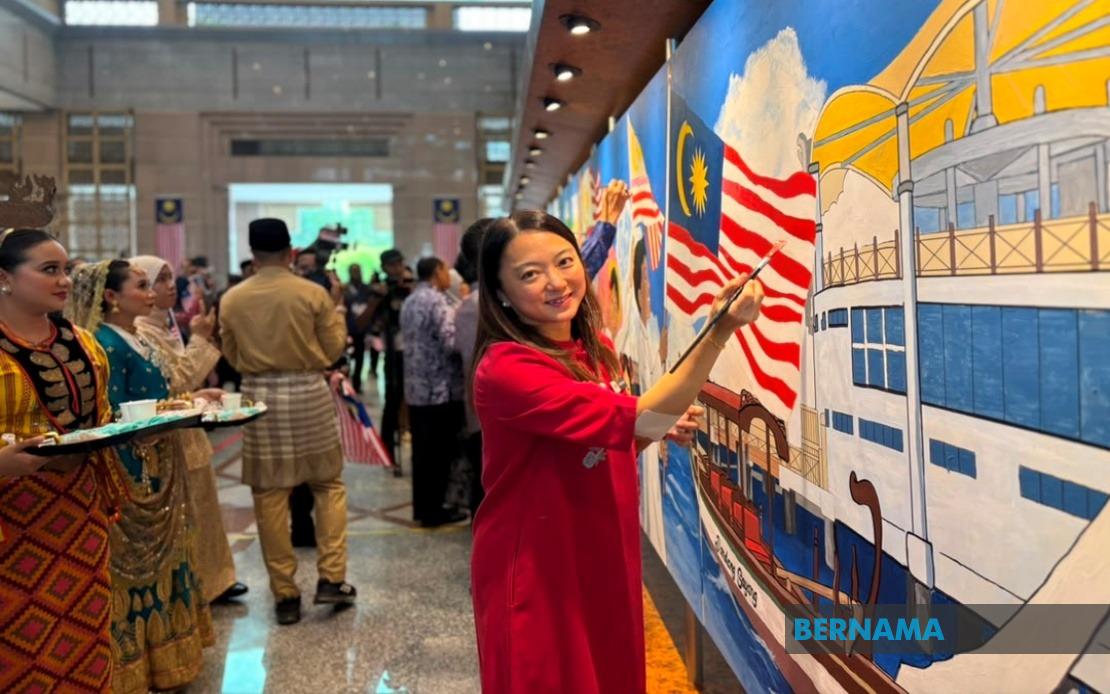
Federal authorities have rolled out an extensive flag distribution programme across the nation's three Federal Territories in preparation for the 2026 National Day and Malaysia Day celebrations. Since early August, a total of 62,386 Jalur Gemilang flags have been placed throughout Kuala Lumpur, Putrajaya, and Labuan, with installations along protocol roads, public spaces, and residential neighbourhoods forming a visible display of national pride ahead of the upcoming festivities.
The large-scale initiative reflects government efforts to foster patriotic sentiment and ensure widespread participation in Malaysia's independence commemorations. Hannah Yeoh, Minister in the Prime Minister's Department overseeing the Federal Territories, emphasised that the flag distribution represents far more than mere symbolic gesture. Speaking after the Aspirasi Jalur Gemilang mural dedication ceremony in Putrajaya, she encouraged Malaysians to celebrate their national identity by displaying the flag not only in physical spaces but also across digital platforms and social media channels.
A central theme of the 2026 campaign is promoting proper flag etiquette, an area where confusion and inadvertent mistakes have previously occurred among the public and some government agencies. Yeoh stressed the importance of correct flag display procedures, noting that many individuals remain hesitant to fly the Jalur Gemilang due to uncertainty about proper protocol. This concern, while understandable, reflects a concerning gap between national aspiration and practical knowledge among citizens. The minister's message sought to remove such barriers by directing people toward readily available online resources detailing appropriate flag-flying guidelines.
Recognising that businesses and organisations play a crucial role in maintaining flag standards, Yeoh advised company owners and managers to ensure their employees understand correct display procedures. She advocated for internal verification systems whereby management regularly inspects flag installations to catch and correct any errors before they become problematic. This practical approach acknowledges that responsibility for proper flag presentation extends beyond government agencies to private sector stakeholders who display the national symbol on their premises.
The underlying philosophy guiding this year's campaign represents a shift toward encouragement rather than prohibition. Rather than deterring people through warnings about violations, authorities are positioning flag display as an accessible, inclusive expression of patriotism. Yeoh articulated a vision where the spirit of flag-flying becomes embedded in Malaysian culture from childhood onwards, integrated into school curricula and family practices. Such cultural embedding would transform the Jalur Gemilang from an occasional ceremonial object into an everyday symbol that citizens feel naturally motivated to display.
The Federal Territories Department, represented by director-general Datuk Muhammad Azmi Mohd Zain, and Putrajaya Corporation, led by president Datuk Mohd Sakeri Abdul Kadir, collaborated on the initiative alongside the minister's office. This coordination between multiple government entities underscores the comprehensive nature of the 2026 celebrations planning, ensuring coherent messaging and execution across the Federal Territories.
A centerpiece of the campaign emerged with the completion of a 25.40-metre Independence Mural at Menara Seri Wilayah, painted in collaboration between government personnel and the JWP during the Aspirasi Jalur Gemilang programme. The mural serves as an artistic manifestation of the celebration's central themes, incorporating iconic landmarks that represent Kuala Lumpur, Putrajaya, and Labuan alongside the national flag. This visual narrative connects Malaysia's geographic identity with its sovereignty and independence, creating a powerful symbol of unity across the three Federal Territories.
The architectural landmarks featured in the mural carry particular significance for Malaysian identity. By prominently displaying recognisable structures that anchor each Federal Territory's distinct character while framing them within the context of national sovereignty, the artwork communicates a sophisticated message about diversity within unity. For regional observers, such initiatives demonstrate how Malaysia approaches nation-building through inclusive symbolism rather than homogenising rhetoric.
For Southeast Asian nations grappling with similar questions about national identity and patriotic expression, Malaysia's approach offers a relevant case study. The emphasis on removing barriers to flag display while simultaneously raising standards for proper presentation suggests a nuanced understanding that patriotism functions most effectively when citizens feel genuinely encouraged rather than coerced. This philosophy may resonate with other ASEAN members developing their own national cohesion strategies.
The scale of the flag distribution programme—exceeding 62,000 units across just three Federal Territories—indicates substantial government investment in visible displays of national identity during the 2026 commemorations. For Malaysian residents and visitors, this saturation of Jalur Gemilang imagery will create an unmistakable atmosphere of national celebration during the August period. The campaign's reach extends to digital spaces through social media encouragement, reflecting recognition that contemporary patriotic expression encompasses both physical and virtual domains.
Looking toward August 2026, the foundation laid by current preparatory efforts suggests a particularly prominent National Day and Malaysia Day season. With over 62,000 flags already distributed and a comprehensive cultural messaging campaign underway, the Federal Territories appear positioned for visually striking celebrations. Whether this extensive preparation translates into sustained engagement with patriotic practices beyond the commemorative period remains a question for observers to monitor in subsequent years.

