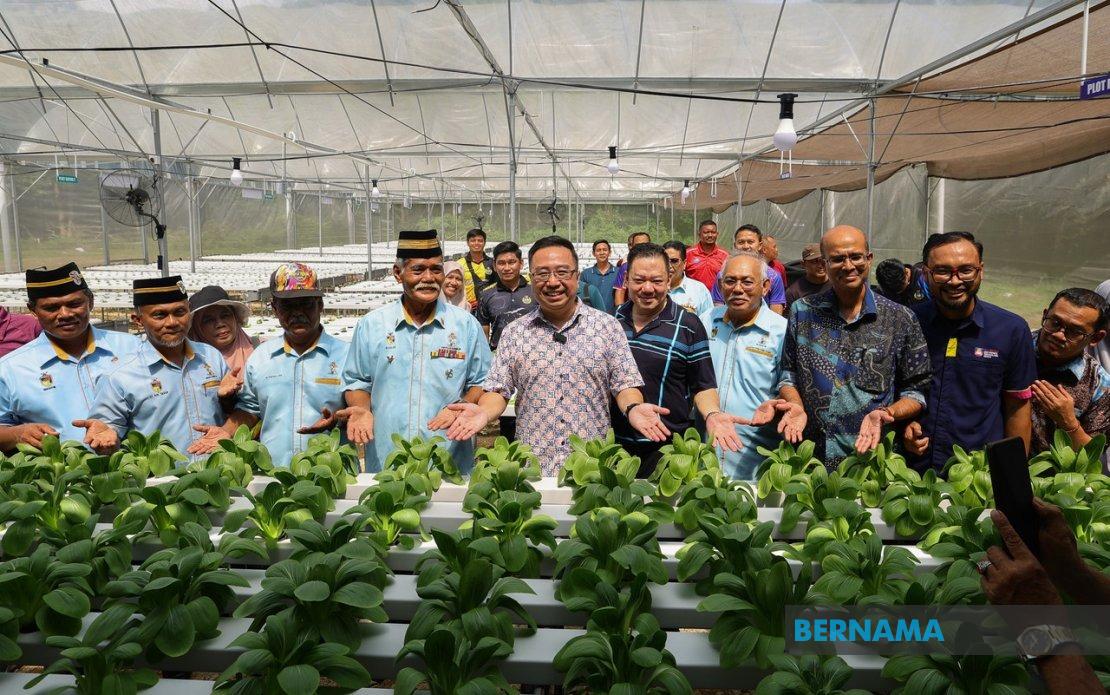
More than 6,700 people across Malaysia have gained direct benefits from community-based innovation projects supported by the Malaysia Social Innovation Programme (MyIS Komuniti), which has mobilised RM13.97 million in funding since 2021. The initiative, overseen by Yayasan Inovasi Malaysia (YIM) since its establishment in 2015, represents a structured effort to weave advanced technology into grassroots community development, addressing immediate needs while building sustainable livelihoods for underserved populations across the country.
The programme's impact extends beyond simple technology transfer. Science, Technology and Innovation Minister Datuk Chang Lih Kang emphasised at the launch of a new aquaponics project site in Pasir Panjang, Port Dickson, that these interventions fundamentally reshape how communities approach food security and economic resilience. By equipping local groups with integrated farming systems and digital monitoring capabilities, MyIS Komuniti bridges the gap between cutting-edge innovation and practical rural application—a challenge that has long hindered technology adoption in Malaysia's peripheral communities.
The flagship aquaponics demonstration at Pasir Panjang illustrates this philosophy in action. The system merges fish farming with hydroponic vegetable cultivation, channelling nutrient-rich water from aquaculture tanks to nourish plants before cycling it back into a closed-loop ecosystem. This approach dramatically reduces water consumption and spatial requirements compared to conventional agriculture, critical advantages in a densely populated nation where arable land and freshwater availability are increasingly constrained. The RM251,616 investment in this particular site represents not merely infrastructure spending but a deliberate allocation toward building community capacity for autonomous, long-term operation.
Technology integration distinguishes MyIS Komuniti projects from traditional agricultural development schemes. Solar-powered systems equipped with Internet of Things (IoT) sensors enable real-time monitoring of water quality, temperature fluctuations, and operational parameters. Community members can intervene immediately when system metrics drift from optimal ranges, minimising crop losses and fish mortality while progressively building technical expertise among participants. This intelligent monitoring infrastructure transforms farming from labour-intensive guesswork into data-informed practice, an evolution particularly valuable for communities lacking prior technological exposure.
The Pasir Panjang initiative has already demonstrated measurable productivity. Vegetable output reached over 800,000 kilogrammes this year alone, with aquaculture components still ramping toward full production capacity. Universitii Teknologi MARA (UiTM) provided technical expertise in system design and optimisation, while the Federal Agricultural Marketing Authority (FAMA) facilitates direct-to-consumer sales channels. This multi-stakeholder architecture ensures projects remain operationally sound whilst securing viable market pathways for produce—a critical safeguard against the common pitfall of technically successful ventures that fail commercially.
Community ownership and benefit-sharing mechanisms lie at the programme's core. More than 100 members of the Negeri Sembilan JLJD Veterans Association have emerged as both direct beneficiaries and strategic partners in the Pasir Panjang operation. Positioning military personnel associations as project anchors proves strategically astute, leveraging their organisational discipline, community trust, and collective purchasing power to sustain initiatives beyond their pilot phases. This approach demonstrates recognition that technological solutions succeed only when embedded within functioning social structures that command local legitimacy.
The broader significance of MyIS Komuniti extends beyond individual project metrics. Across its 67 initiatives since 2021, the programme reflects a deliberate policy pivot toward innovation-driven community development. Rather than relying solely on direct cash transfers or traditional subsidies, the Malaysian government through YIM is building community capacity for autonomous value creation. Technology adoption becomes a pathway not just to improved living standards but to dignity through productive participation—an approach that resonates across Southeast Asia's developmental imperatives.
For Malaysian communities, particularly those in semi-rural areas, the programme addresses structural barriers to economic advancement. Young people in Port Dickson and similar localities often migrate toward urban centres seeking skill-building opportunities and employment prospects unavailable locally. Projects like the aquaponics initiative create localized skill development pathways, potentially anchoring younger members within their home communities. The combination of technical training in system management, business skills in marketing and supply-chain coordination, and income generation through produce sales offers genuine economic alternatives to migration.
The sustainability dividend deserves particular emphasis. Integrated aquaponics systems embody circular economy principles—minimising waste, optimising resource cycling, and reducing dependency on external chemical inputs. In an era of climate volatility and supply-chain uncertainty, communities mastering such technologies gain buffers against environmental shocks and market disruptions. The aquaculture component independently generates protein and income, while the hydroponic fraction produces nutrient-dense vegetables year-round, largely independent of seasonal constraints that traditionally govern Malaysian agriculture.
Scaling MyIS Komuniti's model across Malaysia's 28,000-plus villages presents both opportunity and challenge. The programme's current reach, benefiting over 6,700 people through 67 projects, suggests a per-project community size averaging roughly 100 participants. While manageable and effective, this scale remains relatively modest against Malaysia's broader development objectives. Future expansion would require substantial increases in funding, technical capacity, and local partner networks—particularly in Sabah and Sarawak, where rural communities face disproportionate development deficits.
The programme's reliance on partner organisations like UiTM and FAMA underscores an important institutional dimension. Successful technology-driven community development rarely succeeds through top-down deployment alone; it requires embedding initiatives within existing academic research networks, agricultural extension systems, and market infrastructure. By positioning universities and agricultural marketing authorities as equal partners rather than consultants, MyIS Komuniti creates institutional buy-in that can sustain projects across government transitions and shifting political priorities.
For Southeast Asian policymakers observing Malaysia's experience, MyIS Komuniti illustrates how targeted innovation investment can simultaneously address food security, environmental sustainability, and equitable economic growth. The programme moves beyond the false binary of development-versus-conservation, demonstrating that advanced technology—properly localised and community-managed—can advance both simultaneously. As the region confronts climate change, urbanisation, and resource scarcity, similar programmes merit serious consideration across Thailand, Vietnam, Indonesia, and beyond.

