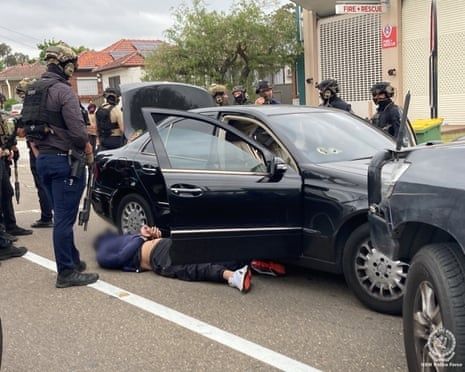
Australian law enforcement has intensified its response to crime on public transport in New South Wales, with police announcing the arrest of 356 individuals during the latest phase of a coordinated enforcement drive. The operation, which concluded on Saturday, represents the sixth iteration of Operation Waratah and underscores the state's determination to make its rail, bus and ferry networks safer for commuters.
The NSW Police Force deployed more than 400 officers each day over the three-day period between Thursday and Saturday to blanket the state's public transport corridors. This substantial mobilisation of resources reflects the scale of the challenge authorities face in maintaining order across one of Australia's most heavily utilised transit systems. Officers prioritised areas where violent offences and sexual assaults have been reported, concentrating their efforts on locations where commuter vulnerability is greatest.
Operation Waratah was established in 2024 specifically to combat a troubling trend of violent and sexual offences aboard trains, light rail trams, buses and ferries in NSW. The operation's existence signals that state authorities recognised the need for a sustained, dedicated response rather than ad-hoc policing. With more than 1,800 arrests now recorded across all phases of the operation, the initiative has become a centrepiece of NSW's public transport safety strategy. This cumulative figure suggests that the problem remains significant despite ongoing enforcement efforts.
During the latest three-day operation, police seized 28 knives and other weapons from individuals across the transport network. These confiscations highlight a persistent concern that some passengers or persons on transit infrastructure are armed, creating additional danger for commuters and workers. The weapon seizures also indicate that police intelligence and targeted deployment strategies are succeeding in intercepting dangerous individuals before incidents occur. Such preventative action is crucial in crowded transit environments where a single violent incident can affect dozens of people.
Drug-related offences constituted another major focus of the operation. Officers made 137 drug detections throughout the three-day period, suggesting that substance abuse and drug trading represent significant issues within NSW's public transport ecosystem. The connection between drug possession and violent behaviour on public transport is well-documented, making these detections particularly relevant to overall safety objectives. The high number of drug discoveries indicates that law enforcement is identifying a genuine problem rather than arresting individuals for minor infractions.
The 356 arrests resulted in charges encompassing 645 separate offences, indicating that the individuals arrested were involved in multiple criminal acts or that police gathered evidence of accumulated misconduct. This ratio demonstrates that those apprehended were not merely first-time offenders or individuals involved in single incidents, but rather persistent perpetrators of crime. For prosecutors and the courts, this volume of charges will require substantial resources to process through the justice system over coming months.
Police activity during the operation was geographically extensive and methodical. Officers patrolled 539 trains across the NSW rail network, 127 buses throughout the state's urban and regional areas, and 29 light rail trams operating in central Sydney and surrounding zones. This deployment pattern reveals the scope of NSW's public transport infrastructure and highlights why sustained enforcement requires such heavy police resourcing. The coverage also suggests that police identified and prioritised certain routes and times where offences were more likely to occur.
For Malaysian readers and Southeast Asian observers, the NSW operation offers insights into how developed democracies approach public transport safety. Many regional cities face similar challenges with violence and criminal behaviour on transit systems, yet police resourcing and coordination capabilities vary significantly across Southeast Asia. The NSW model demonstrates the effectiveness of dedicated, intensive operations, though questions remain about whether such efforts can be sustained long-term without becoming prohibitively expensive.
The operation's success in terms of arrests and confiscations may mask deeper complexities. Enforcement alone typically cannot solve underlying drivers of public transport crime, such as substance abuse, mental health challenges, or socioeconomic factors that push individuals toward criminal behaviour. Authorities acknowledge this reality, though Operation Waratah's publicly stated focus remains on enforcement rather than social intervention. The six phases conducted thus far suggest that police view this as an ongoing necessity rather than a temporary measure, implying that the problem shows no signs of resolution.
For commuters in NSW, the visible police presence during such operations may provide reassurance, though sustained safety gains depend on whether enforcement deters future offending or merely displaces crime to different times and locations. The high number of arrests in a single three-day period raises questions about whether the transit system has become increasingly dangerous or whether intensive policing simply reveals the true scale of an enduring problem previously underestimated. Public transport agencies will likely use data from these operations to refine their own security measures and station designs.
The operation also has implications for policing resource allocation more broadly. The deployment of over 400 officers daily suggests that public transport safety has become a significant budget priority for NSW police, potentially drawing resources from other enforcement areas. This strategic choice reflects political and community pressure to make transit networks safer, even if empirical evidence about whether such operations generate lasting improvements remains limited. Future iterations of Operation Waratah will provide indicators about whether the enforcement approach is yielding sustained reductions in public transport crime or whether the problem continues to regenerate despite regular crackdowns.

