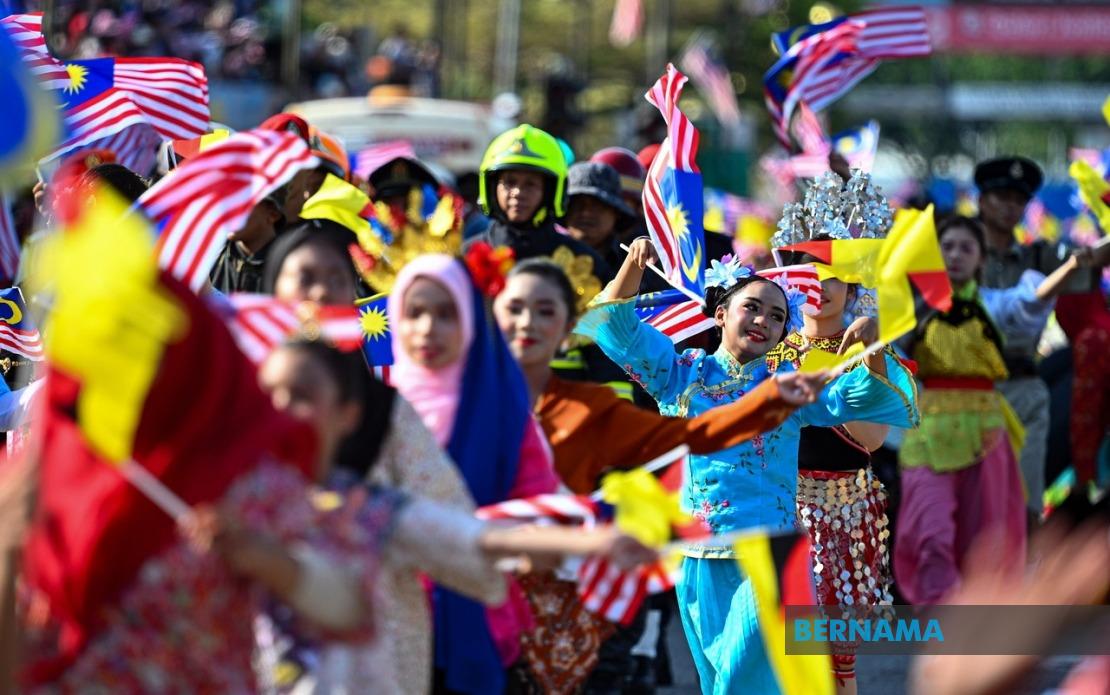
The streets of Seremban came alive on National Day as more than 30,000 residents and visitors from diverse ethnic and social backgrounds converged on Dataran Majlis Bandaraya Seremban to mark the nation's independence. The impressive turnout underscored the enduring sense of patriotic commitment among Negeri Sembilan's community, with many attendees arriving hours before proceedings commenced to secure vantage points along the parade route.
Menteri Besar Datuk Ismail Lasim attributed the substantial attendance to widespread enthusiasm for the national occasion and a deep-rooted love of country. Speaking to journalists after the event, he highlighted that numerous participants had mentioned arriving as early as 5.30 am, demonstrating their keenness to be part of the festivities. This early mobilisation reflected not merely casual interest but genuine civic engagement with the values underpinning Malaysia's independence narrative.
The Yang Dipertuan Besar of Negeri Sembilan, Tuanku Muhriz Tuanku Munawir, along with Tunku Ampuan Besar Tuanku Aishah Rohani Tengku Besar Mahmud, graced the occasion by arriving at approximately 8.20 am, formally receiving a warm reception from the Menteri Besar. This royal presence added ceremonial weight to the celebration and reinforced the significance of the national commemoration within the state's official calendar.
Organisers fielded a parade comprising 82 contingents that mobilised more than 4,000 participants representing a broad cross-section of Malaysian society. Government departments, statutory bodies, district administrations, non-governmental organisations, educational institutions from primary school to university level, and private companies all contributed to the procession. This inclusive composition reflected efforts to position National Day as a unifying occasion transcending organisational and sectoral boundaries.
The ceremonial dimension of the parade was anchored by a Main Guard of Honour drawn from the 15th Battalion Royal Malay Regiment (RAMD) stationed in Senawang. Led by Major Dr Muhammad Hazim Abdul Qhalib, the contingent consisted of three officers and 103 other ranks, with Lieutenant Ahmad Izzudin Abdul Kadir serving as the unit's Colours officer. The solemnity of these traditional military protocols was complemented by a combined musical ensemble from the 24th Battalion RAMD and the Malaysian Army Basic Training Centre Brass Band, under the direction of Warrant Officer 2 Azwan Zakaria. The band performed traditional military marches including Sembah Tari, Aladom, Seruan Tentera and Tentera Benteng, providing the ceremonial soundtrack to proceedings.
One strategic decision by organisers merits attention: the deliberate reduction in the number of parade contingents and military assets compared to previous years, motivated by concern regarding the haze phenomenon. Though atmospheric conditions proved favourable on the day, this precautionary approach acknowledged the health risks posed by regional air quality issues, a consideration particularly relevant given Southeast Asia's recurring battles with transboundary haze pollution. The decision reflected a pragmatic balancing of celebratory ambitions with public welfare concerns.
Despite these constraints, the parade maintained spectator interest through displays of defence and security agency assets, a collection of decorated and vintage vehicles ranging from classic automobiles to restored bicycles. Personnel from the Malaysian Armed Forces, Royal Malaysia Police, Immigration Department, Fire and Rescue Department, Health Ministry, Malaysian Civil Defence Force and Seremban City Council all participated, creating a visible representation of the institutional apparatus supporting national sovereignty and internal security.
Family participation emerged as a notable feature of the celebration, with attendees spanning generations. Housewife Siti Ruayiza Rebin, aged 42, articulated a deliberate parenting philosophy whereby she has consistently brought her three children—now aged 19, 15 and 12—to National Day events since infancy. She described this practice as foundational to instilling historical consciousness and appreciation for the sacrifices undergirding national independence. This intergenerational transmission of patriotic values suggested that such celebrations function not merely as one-off festivities but as pedagogical occasions embedding national consciousness within family structures.
Similarly, private-sector employee Mohd Khairul Azmi, 45, emphasised educational dimensions when explaining his decision to bring his five and seven-year-old children. He noted their particular fascination with military assets and vintage vehicles rarely made available to public viewing, and deliberately arrived at 6 am to facilitate their proximity to the parade. His commentary stressed that National Day celebrations serve instrumental purposes in cultivating historical awareness and encouraging younger citizens to recognise and honour the contributions of preceding generations to Malaysia's independence journey.
The convergence of official ceremonial protocols, broad institutional representation, and authentic family engagement at Negeri Sembilan's National Day celebration illustrates how such occasions function across multiple registers. They simultaneously affirm state sovereignty through military and administrative display, provide platforms for civil society and private organisations to signal commitment to national narratives, and create opportunities for families to transmit patriotic values and historical understanding to younger generations. The substantial attendance, despite precautions regarding environmental conditions, suggests that these functions retain resonance for Malaysian communities seeking occasions for collective affirmation of shared national identity.
For a state like Negeri Sembilan, positioning itself within Malaysia's federal structure, such celebrations carry particular weight. They represent moments when local populations actively participate in reproducing the nation through visible, embodied engagement—marching, attending, witnessing, and bringing children. In an era of increasing transnational connectivity and competing identity claims, the persistence of such events and their capacity to mobilise tens of thousands speaks to the continuing relevance of national commemoration in Malaysian civic life. The demographic diversity evident in attendance, coupled with the cross-sectoral participation in the parade, further suggested that National Day retains broad legitimacy as an occasion for transcending particular interests and affirming a common Malaysian belonging.

