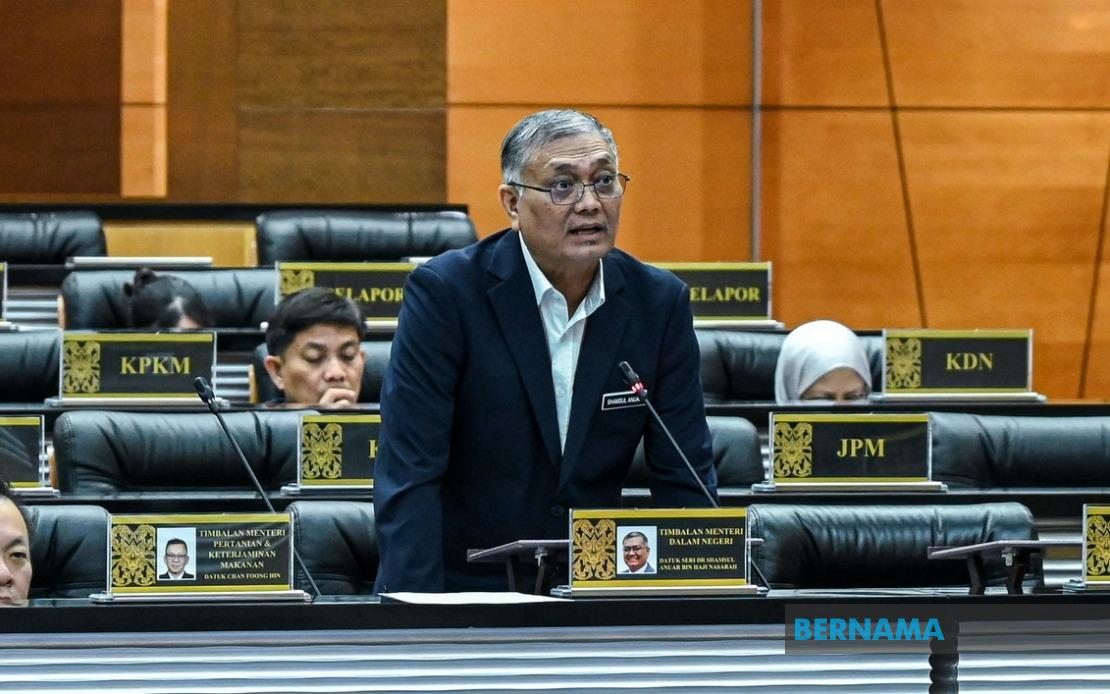
Malaysia's Home Ministry has revealed a substantial backlog in citizenship applications affecting Sabah, with 3,640 cases still awaiting resolution as of May 31, 2024. Deputy Home Minister Datuk Seri Dr Shamsul Anuar Nasarah disclosed the figure during parliamentary proceedings, indicating that only ten applications had received approval and resulted in the issuance of citizenship certificates to successful applicants. The disclosure underscores persistent administrative challenges in processing what remains one of the most critical documents for Malaysian residents seeking formal recognition and legal status.
The situation is particularly acute when examined through the lens of late birth registration applications, which represent a significant portion of citizenship-related cases in the state. Among such applications, the ministry reported that 2,659 had been successfully processed and approved, while a further 611 cases were still under active review. This distinction between citizenship applications and late birth registration matters reflects the complexity of Malaysia's immigration bureaucracy, where different pathways and legal provisions govern how individuals can establish their status as citizens. The disproportionate number of pending cases compared to approvals suggests that while some categories of applications move through the system more efficiently, fundamental bottlenecks persist in converting applications into finalized citizenship status.
In response to parliamentary questioning from Vivian Wong Shir Yee, the Sandakan MP representing Pakatan Harapan, the Deputy Home Minister outlined several institutional reforms designed to accelerate decision-making. The Home Ministry has revised its standard operating procedures governing citizenship applications under Article 15A, Article 15(2), and Article 19(1) of the Federal Constitution, establishing a formal processing timeline of twelve months from the date all required documents are received until a definitive determination is made. This commitment to time-bound adjudication represents an attempt to inject predictability into what has historically been a drawn-out and uncertain process for applicants.
Accessibility improvements have also formed part of the ministry's reform agenda. Applications for late birth registration, previously concentrated at specific locations, can now be submitted at any National Registration Department office throughout the country. Beyond this decentralization, the Home Ministry has expanded the Menyemai Kasih Rakyat (MEKAR) programme, which facilitates citizenship documentation acquisition, with particular emphasis on rural and remote communities where citizens traditionally faced greater logistical hurdles in accessing government services. These operational changes seek to address the practical obstacles that have historically constrained application submission and document processing.
A further institutional mechanism intended to expedite resolution involves the Sabah Special Committee on Citizenship Status, which the Deputy Home Minister indicated would convene towards the end of July or in early August to evaluate 1,018 pending applications. The establishment of such specialized committees reflects an acknowledgment that Sabah's citizenship challenges warrant dedicated governmental attention separate from nationwide administrative processes. The state has historically confronted distinctive demographic and documentation complexities arising from its geographic position and historical circumstances, necessitating tailored administrative responses.
Shamsul Anuar emphasized that decision-making authority for late birth registration applications has been decentralized to National Registration Department offices within Sabah itself, a structural change intended to reduce processing delays by removing intermediary approval layers. This devolution of power to state-level offices represents a significant departure from more centralized administrative models, potentially enabling faster case resolution by allowing local officials to exercise final determination rather than routing decisions through federal headquarters. The accompanying expansion of the MEKAR programme into underserved areas further attempts to ensure that geographical remoteness does not preclude access to citizenship documentation services.
Underlying these procedural reforms is a broader institutional partnership that the Home Ministry has cultivated to strengthen identification and documentation efforts. The ministry has forged collaborative arrangements encompassing the National Registration Department, the Sabah state government, community leaders, hospitals, schools, welfare organizations, and non-governmental bodies. This multi-stakeholder approach recognizes that identifying individuals lacking formal identity documents and assembling their supporting materials requires coordination across multiple sectors and institutions. By leveraging community connections and institutional touchpoints, officials aim to identify eligible candidates who may not independently navigate the citizenship application process.
The ministry offered clarification regarding how applications are categorized within the National Registration Department system, an explanation that illuminates apparent discrepancies in reported figures. Applications classified as 'approved' denote cases in which citizenship certificates have been physically produced, verified, and handed to applicants. By contrast, applications that have received ministerial approval but whose certificates remain in the production pipeline are recorded as 'being processed' within departmental tracking systems. This distinction between formal approval and completed issuance explains why the number of approved cases may appear modest relative to the scale of processing activity, as printing and distribution operations create a lag between ministerial decision and application closure.
When addressing supplementary parliamentary questions concerning late birth registration delays, the Deputy Home Minister identified several contributing factors extending beyond administrative capacity constraints. Inadequate awareness among parents and guardians regarding the statutory requirement to register births within prescribed timeframes has perpetuated documentation gaps. Family-related complications, financial constraints limiting applicants' capacity to gather supporting materials, and incomplete documentation submissions further hamper processing velocity. These obstacles are particularly pronounced in rural areas where institutional presence is limited and public awareness campaigns have achieved less penetration, explaining why the MEKAR programme specifically targets such communities.
For Malaysian policymakers and regional observers, the Sabah citizenship application backlog exemplifies broader governance challenges facing the country's administrative apparatus. The processing bottleneck, notwithstanding recent reforms, reflects systemic inefficiencies that constrain individuals' ability to formalize their legal status. Beyond the specific statistics, the situation highlights how citizenship documentation remains inaccessible to thousands of residents, with implications for their ability to access employment, education, and public services. The ministry's reform trajectory, while representing meaningful progress through decentralization and streamlined procedures, will require sustained implementation and adequate resource allocation to translate institutional commitments into tangible improvements for citizenship applicants throughout Sabah and beyond.

