Singapore's experimental approach to funding grassroots social initiatives is gaining traction, with more than 200 community projects competing for support under the newly launched SG Partnerships Fund. The S$50 million scheme, which became operational in April 2026, represents a significant shift in how the government channels resources to citizen-led solutions tackling social challenges across the island-state. First announced by Prime Minister Lawrence Wong during his Budget speech in February 2026, the fund reflects a growing recognition that some of Singapore's most pressing community needs are best addressed by those living and working within affected populations.
The fund's three-tiered structure creates distinct pathways for initiatives at different stages of maturity and scale. The seed tier, which has emerged as the most popular category among applicants, offers grants of up to S$5,000 to individuals, ground-up organisations and Singapore-registered nonprofits with pilot concepts. The sprout tier supports established organisations aiming for sector-wide impact with funding of up to S$50,000, while the newly launched scale tier, introduced in July 2026, provides grants reaching S$1 million for mature organisations seeking to transform their sectors. This tiered approach ensures that nascent ideas receive nurturing support without requiring extensive infrastructure, while mature initiatives can access resources for systemic change.
Senior Minister of State for Culture, Community and Youth Low Yen Ling unveiled the fund's progress at the Singapore Government Partnerships Office inaugural community exchange event on July 4, addressing approximately 100 attendees at the Common Ground Civic Centre in Bedok North. Her remarks highlighted how the fund's architecture deliberately encourages citizens to initiate change without needing to embark on large-scale operations from inception. The emphasis on starting small has resonated particularly strongly with first-time applicants, suggesting that ordinary Singaporeans perceive meaningful entry points into social entrepreneurship and community organising.
The overwhelming popularity of the seed tier reveals important insights into community capacity and appetite for civic participation in Singapore. According to SGPO director Hasliza Ahmad, the smallest grant category attracted disproportionate interest precisely because it lowers barriers to entry and eliminates the perception that meaningful social contribution requires substantial institutional backing. By funding ideas that might otherwise remain conversations over dinner or sketches on notepaper, the scheme transforms latent community energy into tangible action. This democratisation of funding reflects a pragmatic recognition that innovation and responsiveness to local needs often emerge from those embedded in communities, rather than from centralised planning alone.
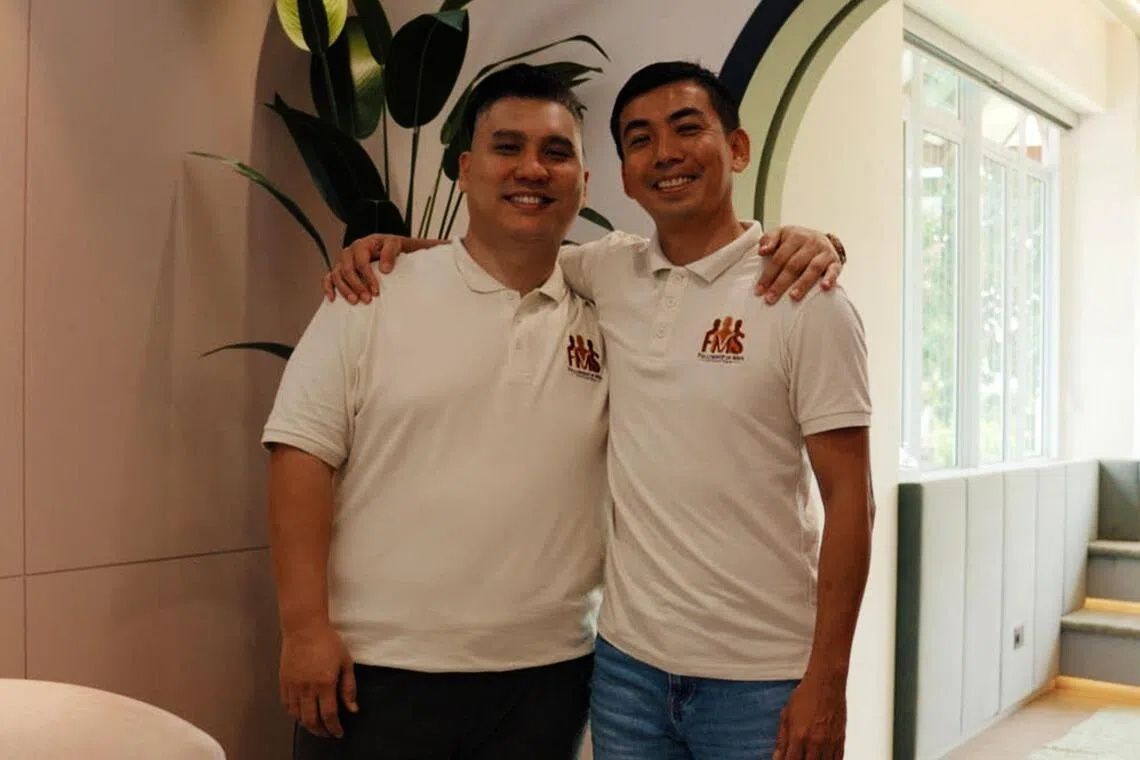
Fellows for Movement Singapore exemplifies how the seed tier enables creative social responses to entrenched problems. Ben Ang, 45, and Ismail Didih Ibrahim, 41, met five years ago while working at a family service centre, where they observed men struggling with violence and aggression issues. Rather than focusing exclusively on crisis intervention, they recognised that prevention and early help-seeking represented a more sustainable approach. This insight prompted them to leave stable employment and establish a nonprofit in January 2026 dedicated to encouraging men to seek emotional support and explore masculinity beyond traditional provider and protector roles. Their strategy combines community engagement, peer mentoring and group activities that provide accessible entry points for men hesitant about formal therapeutic intervention.
The S$5,000 seed grant enabled Ang and Didih to conduct a three-hour engagement session at a professional kitchen in a culinary school in Geylang, an initiative that would have otherwise been constrained to Ang's home kitchen and funded entirely from personal resources. The session brought together 24 men and their families, with wives and children observing the men cook whilst participating in guided conversations about self-care, relationship dynamics and the importance of seeking help. This innovative fusion of practical cooking activity with emotional learning demonstrates how modest funding can unlock creative programming that conventional social services might not readily provide. The initiative has inspired Ang and Didih to pursue larger grants that would enable them to scale their movement and reach more men uncomfortable with traditional help-seeking pathways.
Another compelling application of the seed tier comes from Loke Wai Yee, a 21-year-old LASALLE College of the Arts student who identified a gap in Singapore's charitable giving ecosystem during the annual angel tree season. Observing that Christmas gift wish trees were confined to shopping malls in affluent areas and that expensive gift requirements excluded younger and budget-conscious donors, Loke and 12 collaborators created Little Wishes, an online platform designed to democratise charitable giving to disadvantaged children. The S$5,000 grant enabled them to engage professional website developers rather than attempting the technical setup themselves, ensuring a user-friendly interface that could accommodate multiple donation levels and effectively match gifts to beneficiaries.
The Little Wishes platform, scheduled to launch in August, will allow donors to select gifts within their financial capacity from a curated collection, addressing the inequitable distribution of charitable support across Singapore's geography. By August, the initiative is projected to benefit 80 children, representing meaningful direct impact from a modest investment in youth-led social entrepreneurship. Loke's experience underscores how seed funding functions not merely as financial capital but as an enabling mechanism that permits young people to translate passion projects into professionally executed initiatives capable of sustained impact.
Beyond financial grants, the SGPO provides critical ecosystem support that multiplies the value of monetary investment. For Fellows for Movement Singapore and Little Wishes alike, the office facilitated connections with relevant social service agencies, identified complementary funding opportunities, and offered ongoing mentorship and guidance. This wraparound support reflects an understanding that grassroots initiatives often falter not from lack of good intentions but from isolation, incomplete information and absent professional networks. By positioning itself as a connector and guide rather than merely a funding administrator, the SGPO demonstrates how government can catalyse community action without mandating or controlling its form.
The S$50 million allocation and the enthusiastic response from applicants signal important shifts in Singapore's social policy architecture. Rather than designing interventions centrally and implementing them across diverse communities, policymakers increasingly recognise that community members themselves often possess superior insight into local needs and culturally appropriate solutions. This approach aligns with broader international trends toward participatory governance and locally led development, whilst remaining distinctly tailored to Singapore's context of high civic literacy, strong institutional capacity and significant wealth available for social investment. The fund's success will likely influence how other Southeast Asian governments structure their engagement with civil society and community initiatives.
For Malaysian observers and policymakers, Singapore's SG Partnerships Fund offers instructive lessons about designing funding mechanisms that genuinely empower grassroots action rather than simply distributing resources through existing institutional channels. The tiered structure permits incremental scaling of initiatives based on demonstrated impact and capacity, reducing the risk of funding failures whilst allowing successful pilots to grow. The emphasis on government support extending beyond finance to encompass networks, mentorship and information access reflects a sophisticated understanding of what community initiatives actually require to succeed. As Malaysia develops its own mechanisms for engaging citizens in social problem-solving, the Singapore experience suggests that creating accessible entry points for small-scale initiatives can unlock considerable community energy and innovation currently constrained by funding barriers and institutional gatekeeping.
The applications processing for the SG Partnerships Fund continues, with approvals expected throughout 2026. Beyond the individual initiatives already supported, the fund represents a systemic investment in community capacity and social entrepreneurship, planting seeds that may yield innovations in addressing aging, mental health, family violence, digital inclusion and countless other challenges. Whether through men's emotional wellbeing, charitable giving to disadvantaged children, or other initiatives yet to emerge, the fund embodies a philosophy that communities contain the answers to their own challenges—they require only modest financial support and meaningful structural facilitation to activate their solutions.

