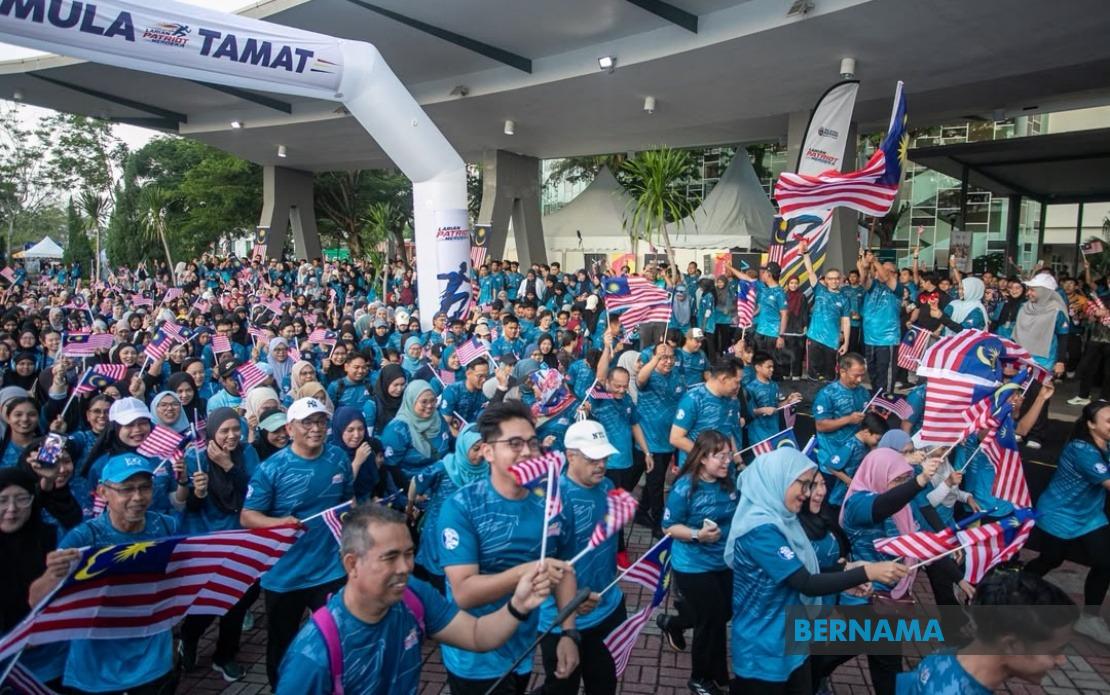
The grounds of the Sultan Azlan Shah Ministry of Health Training Institute in Ipoh became a sea of national colours early on July 19 as approximately 2,000 Malaysians from diverse backgrounds assembled for the Patriot Merdeka Run. Families brought their children to participate in the 2.5-kilometre fun run, which served as one of the opening events for the 2026 National Day and Malaysia Day celebrations. The gathering underscored the government's push to foster patriotism through accessible community programmes that appeal across generational and socioeconomic divides.
By 7 am, the training institute's grounds were already crowded with runners and walkers, many adorned in outfits featuring the iconic red and yellow of the Jalur Gemilang. The visible enthusiasm suggested strong public interest in national celebrations, a significant indicator as Malaysia approaches its independence commemorations. Such turnout reflects the enduring appeal of grassroots civic engagement, particularly when framed around recognisable national symbols and family-oriented activities.
The event commenced with a mass aerobics session that energised participants before the formal commencement. This opening activity served a dual purpose: it physically warmed up the crowd while establishing a festive, communal atmosphere that transcended the typical competitive nature of organised runs. Participants then gathered to collectively wave the Jalur Gemilang, transforming the moment into a symbolic gesture of national unity and patriotic sentiment.
At 7.30 am, Datuk Abdul Halim Hamzah, secretary-general of the Communications Ministry, officially flagged off the runners. His presence highlighted the government's active role in orchestrating and validating these patriotic initiatives. The deployment of national flags throughout the 2.5-kilometre route ensured that patriotic symbolism remained prominent and visible, reinforcing the event's thematic focus on national identity.
The atmosphere throughout the run captured multiple dimensions of contemporary Malaysian civic life. Parents shepherded young children through the course, suggesting successful intergenerational engagement. Participants cheered one another enthusiastically, creating a supportive rather than competitive environment. The sight of individuals dressed in patriotic attire—whether formally or creatively interpreting the national colours—demonstrated diverse personal expressions of national pride. These organic interactions highlighted how structured patriotic exercises can naturally foster community goodwill.
Organisers explicitly positioned the Patriot Merdeka Run as a vehicle for promoting healthy lifestyles alongside nation-building objectives. This dual messaging reflects broader government health initiatives whilst simultaneously embedding patriotic education within everyday activities. By making patriotism accessible through familiar community exercise formats, the programme democratised national sentiment rather than positioning it as an exclusive or élite concern.
The run formed part of a broader calendar of activities marking the 2026 National Month and the associated Fly the Jalur Gemilang Campaign. These initiatives represent coordinated efforts to sustain national consciousness throughout the year-long commemoration period. For Malaysian policymakers, such decentralised, community-based celebrations offer advantages over centralised state ceremonies: they generate grassroots participation, reduce organisational complexity, and create multiple touchpoints for public engagement with national identity.
Prime Minister Datuk Seri Anwar Ibrahim was scheduled to officiate the main launch of 2026 celebrations later that morning, signalling the highest levels of political endorsement for the year's commemorative agenda. His participation connected the Ipoh community event to the broader national narrative, emphasising that such grassroots initiatives enjoyed executive legitimacy and support. This hierarchical endorsement can amplify local participation by positioning community involvement as nationally significant.
The Patriot Merdeka Run in Ipoh carried particular resonance for Perak state, where civic engagement and local pride intersect with national sentiment. Ipoh's historical significance as a regional commercial and administrative centre meant that the training institute's location conveyed symbolic weight. For Southeast Asian observers, the event demonstrated how Malaysian authorities leverage sports and community health initiatives as platforms for civic education and patriotic reinforcement—a strategy increasingly adopted across the region.
Looking forward, the success of this opening event—measured by participation numbers and apparent public enthusiasm—will likely influence how subsequent 2026 celebrations are structured. Organisers may replicate the community-run format across other states and municipalities, creating a distributed network of patriotic engagements rather than concentration around major urban centres. This inclusive approach could strengthen national cohesion by ensuring that citizens beyond major cities participate meaningfully in commemorative activities.
The intergenerational appeal of the Ipoh run suggested that Malaysian authorities have effectively designed patriotic engagement for contemporary audiences. Unlike formal ceremonies that may alienate younger demographics, community runs combine physical activity with symbolic national expression, creating organic contexts for patriotic sentiment. This model may inform how Malaysia sustains public engagement with national identity beyond traditional commemoration periods, embedding patriotism within regular community practices.

