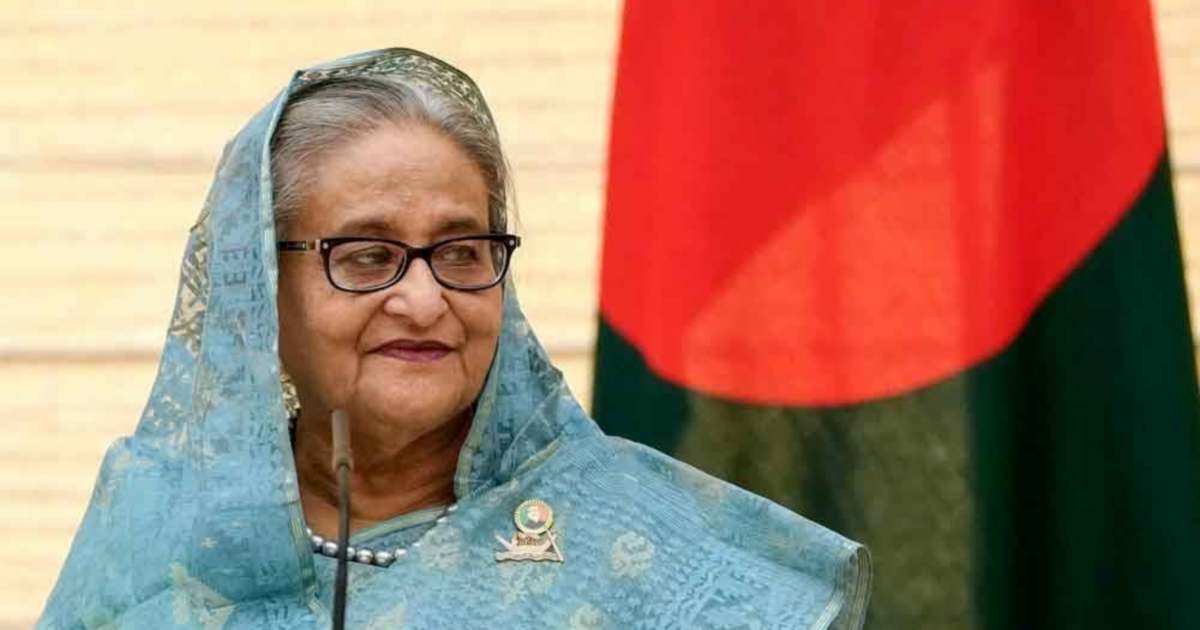
Sheikh Hasina, the ousted former Prime Minister of Bangladesh, has declared her intention to return to the country within the current year, demonstrating defiance against judicial proceedings that have resulted in capital punishment levied against her in absentia. Her declaration represents a significant escalation in the political tensions that have gripped the nation following her removal from power, signalling that the former leader remains determined to challenge the legitimacy of the current administration despite extraordinary legal jeopardy.
The death sentence imposed on Hasina has become a central flashpoint in Bangladesh's ongoing political crisis. She has forcefully rejected the validity of the verdict, characterising it as lacking legal foundation and constitutional authority. Her dismissal of the sentence as "illegal, unconstitutional and politically motivated" reflects her view that the judicial system has been weaponised by her political opponents rather than serving as an impartial arbiter of justice. This framing attempts to portray the proceedings as a persecution rather than a legitimate legal process.
Hashina's background as a dominant political figure in Bangladesh cannot be understated when evaluating the significance of her vow. Her Awami League party has long competed with the Bangladesh Nationalist Party for control of the nation's governance, and her tenure as Prime Minister shaped policy across multiple domains including economic development, security, and regional relations. Her current exile and the capital punishment ruling have injected considerable uncertainty into Bangladesh's political trajectory, as observers question whether any reconciliation between competing factions remains possible.
The implications of her potential return would extend far beyond personal political rehabilitation. A return by Hasina could trigger severe instability, potentially inciting confrontation between her supporters and the current authorities. The security apparatus would face immense pressure, and the nation's already fragile political equilibrium could fracture further. Bangladesh's neighbours and international partners have watched developments closely, concerned about regional stability and the precedent being set for how political transitions occur in South Asia.
For Malaysian readers, the Bangladesh situation offers instructive parallels regarding the fragility of democratic institutions when political competition becomes personalised and when the losing side refuses to accept electoral verdicts. The cycle of power transfers followed by legal persecution of predecessors—a pattern increasingly evident in the region—undermines institutional trust and complicates efforts to build stable, rules-based systems of governance. Malaysia itself has navigated contentious political transitions, making the Bangladesh case analytically relevant for understanding how democracies in Southeast Asia manage alternations of power.
International observers have struggled to determine whether Hasina's announcement represents genuine conviction that she can return safely or whether it functions primarily as a rhetorical gesture aimed at maintaining her political relevance and encouraging her supporters. The former interpretation suggests considerable miscalculation regarding the resolve of Bangladesh's current rulers, while the latter suggests a purely tactical statement designed to prevent her political base from fragmenting during her absence. The truth likely contains elements of both motivations.
The death sentence, rather than silencing Hasina's voice, appears to have intensified her public engagement with Bangladeshi politics. From her location outside the country, she has continued to issue statements and maintain contact with supporters, demonstrating that physical exile has not eliminated her capacity to influence domestic political discourse. Her assertion that she will return within the calendar year represents an unusually specific temporal commitment that may force reckonings with her current location and the machinery through which she maintains communication with allies inside Bangladesh.
Regional actors throughout South and Southeast Asia have varying stakes in how Bangladesh's political crisis resolves. India, as Bangladesh's largest neighbour and economic partner, has expressed concern about instability. China has also cultivated significant relationships with Bangladeshi institutions and infrastructure projects. Myanmar and other neighbours monitor developments, cognisant that internal disorder in Bangladesh could generate refugee flows or regional security complications. The international dimension adds layers of complexity to what might otherwise be construed as a purely domestic matter.
The death sentence itself was delivered in a trial conducted without Hasina's physical presence, raising substantive questions about procedural legitimacy that extend beyond Hasina's own partisan claims. International legal standards and human rights frameworks emphasise the importance of defendants' presence at proceedings and the right to mount a defence directly. Whether the current Bangladesh authorities can withstand international scrutiny regarding these procedures remains uncertain, though such considerations may carry limited weight in contexts where political consolidation takes priority over conformity with international norms.
Hashina's determination to return, whether rhetorical or substantive, ensures that Bangladesh's political crisis will not quietly resolve into a stable new equilibrium under current leadership. Her supporters within the country retain organisational capacity and ideological commitment, making any claim that her removal has decisively settled political competition premature. The coming months will clarify whether her vow materialises into action or remains a statement of political principle separated from operational reality.
The consequences of her return, should it occur, would likely prove enormously disruptive to Bangladesh's immediate future. Law enforcement authorities would face decisions about apprehending a former leader commanding significant popular support, potentially generating confrontations with her security force. The judiciary would confront questions about whether to enforce the death sentence, withdraw it, or operate in a legal grey zone. These scenarios underscore how deeply personal political rivalries have become institutionalised within Bangladesh's governance structures, complicating efforts to establish neutral, predictable rules for managing power transfers and political competition.

