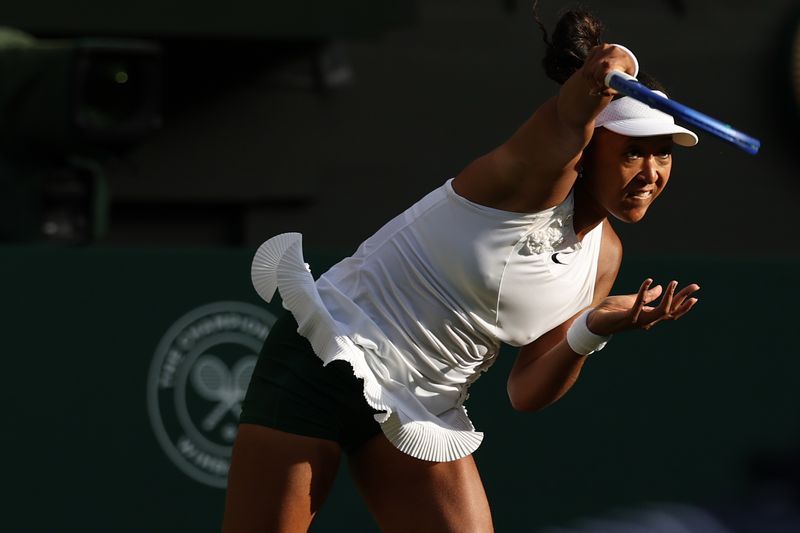
Naomi Osaka began her Wimbledon campaign in theatrical style, donning a kimono-inspired outfit reminiscent of the iconic protagonist from Quentin Tarantino's 'Kill Bill' film. By the conclusion of the second week, the 14th-seeded Japanese player had matched that dramatic flair with her tennis, dismantling top seed Aryna Sabalenka in a display of controlled aggression that brought her to the quarter-finals for the first time at the venue.
Osaka's 6-2, 7-6(2) victory showcased the calibre of play that earned her four Grand Slam titles, demonstrating why she remains a force despite her comeback from maternity leave during 2024. The performance carried particular significance given her recent competitive history—Sabalenka had defeated her three consecutive times earlier this season, suggesting a psychological barrier that Osaka needed to overcome. Instead, the Japanese champion played with composure and authority, leaving her opponent visibly frustrated throughout their Centre Court clash.
The magnitude of Osaka's win extends beyond the individual match. Her triumph follows recent eliminations of defending champion Iga Swiatek and 2022 titlist Elena Rybakina in earlier rounds, creating an unprecedented situation where all three top seeds have departed. This upheaval guarantees that Wimbledon will crown its ninth successive first-time champion, a remarkable statistic that reflects the unpredictability now characterising women's tennis at the highest level. When combined with Barbora Krejcikova's fourth-round loss to fellow Czech Karolina Muchova on Sunday, the women's draw has become wide open.
For Malaysian tennis enthusiasts, Osaka's resurgence holds particular resonance. Her journey back to competitive tennis and her ability to produce championship-level performances after such an extended absence offers an instructive narrative about resilience and preparation. The 26-year-old's victory against the top seed demonstrates that returning players can still contend at the absolute pinnacle of the sport, provided they maintain the technical foundation and mental fortitude required.
While the women's draw produced dramatic upsets, the men's competition saw established power consolidate. Novak Djokovic advanced to his 17th Wimbledon quarter-final in a four-set victory over Russian qualifier Roman Safiullin, capturing the encounter 7-6(6), 6-3, 3-6, 6-3. The 39-year-old Serbian champion achieved a notable milestone by recording his 106th Wimbledon match victory, surpassing the previous record held by Roger Federer. Yet Djokovic himself acknowledged the quality of his performance fell short of championship standards. He described feeling neither satisfied nor energised by the win, emphasising that relief rather than confidence characterised his emotional response to progression.
Djokovic's admission of subpar form raises questions about his trajectory toward capturing a record-equalling eighth Wimbledon title. Should he overcome Canadian third seed Felix Auger-Aliassime in the quarter-finals, a potential semi-final confrontation with defending champion Jannik Sinner awaits—a prospect that would test whether Djokovic possesses the reserves to sustain such a demanding run. The path remains mathematically possible, but the Serbian's candid comments suggest physical or mental fatigue may complicate his challenge during the tournament's closing stages.
Auger-Aliassime earned his quarter-final berth through a gruelling five-set encounter against Spain's Alejandro Davidovich Fokina, claiming a 6-7(4), 7-6(6), 6-3, 6-7(2), 6-1 victory after four hours and twenty-six minutes of intense competition. The Canadian's victory came with considerable tension, as acrimonious words were exchanged at the net following the conclusion, suggesting both players had pushed each other to emotional limits during their protracted contest. Such demanding matches raise durability concerns for Auger-Aliassime heading into his quarter-final challenge.
An emotional subplot emerged when Polish player Hubert Hurkacz was forced to retire during the fifth set of his fourth-round match against German veteran Jan-Lennard Struff. At 36 years old, Struff has finally reached a Grand Slam quarter-final, a remarkable achievement that comes remarkably late in his professional career. Hurkacz's departure represents a significant disappointment, as injuries and physical limitations continue to shape the men's draw alongside talent and skill.
The women's draw produced additional notable results beyond Osaka's dominance. American fourth seed Jessica Pegula demonstrated the value of experience by dispatching 18-year-old rising star Iva Jovic 4-6, 6-3, 6-1 on Court One, providing a masterclass in match management and tactical nous. Pegula, who has now equalled her best Wimbledon performance by reaching the quarter-finals, positioned herself for a potential meeting with fellow American Coco Gauff, should the latter overcome Switzerland's Belinda Bencic. The concentration of American representation in the latter stages—five women reaching the final sixteen, the highest number since 2002—underscores the current strength of American tennis, particularly among female players.
Osaka herself downplayed theatrical elements of her early-round presentation following the Sabalenka victory, suggesting she intends to channel her focus entirely toward tennis performance. She acknowledged that her Centre Court entrance outfit represented a deliberately restrained approach, indicating her priorities have shifted toward practical achievement over visual spectacle. Her next opponent, Muchova, awaits after the Czech player's gutsy 7-5, 5-7, 6-3 victory over Krejcikova demonstrated her competitive resilience and shot-making prowess.
The Wimbledon narrative increasingly centres on whether established champions can maintain their status against emerging challengers. Osaka's elimination of Sabalenka, combined with the departures of Swiatek and Rybakina, suggests that predictability has surrendered to genuine competition across the women's draw. Meanwhile, Djokovic's mechanical, uninspired victory maintains the possibility of traditional dominance in the men's competition, yet his comments betray underlying uncertainty about whether his ageing body retains sufficient resources for a sustained challenge at this level. The tournament's closing week promises compelling contests that will determine whether experience or vitality ultimately prevails.

