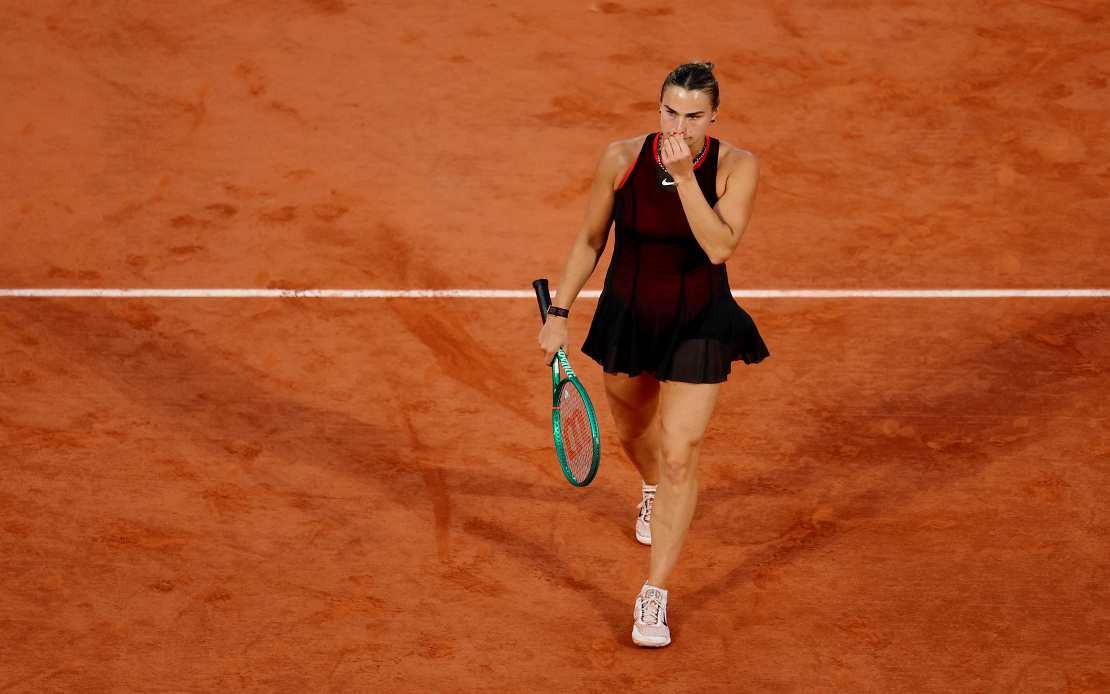
Japan's former world number one Naomi Osaka has engineered a significant upset at the All England Club, dismantling Belarus's Aryna Sabalenka, the tournament's top seed, with a commanding 6-2, 7-6(2) scoreline in the fourth round. The 14th-seeded Japanese star's triumph propels her into the quarterfinals for the first time at Wimbledon, marking a career milestone at one of tennis's most prestigious venues. This breakthrough represents more than just another tournament achievement for Osaka, whose recent seasons have been marked by a rebuilding process following her absence from competitive play.
Osaka's quarterfinal berth places her alongside an exclusive group of Japanese women who have reached this stage at Wimbledon. She becomes the first Japanese female competitor to accomplish this feat since Ai Sugiyama achieved it in 2004, nearly two decades ago. The lengthy gap underscores how difficult it has been for Japanese players to penetrate the latter stages of the grass-court championship, where different playing conditions and tactical approaches diverge significantly from the clay and hard courts where Japanese players often excel. Osaka's ability to adapt her game on the demanding surface suggests renewed versatility in her arsenal.
The significance of this victory extends beyond the tournament itself, particularly given the personal narrative surrounding Osaka's head-to-head record against Sabalenka. The Belarusian had dominated their recent encounters, claiming three consecutive victories against the Japanese player, including a fourth-round meeting at the French Open earlier this season. That streak of defeats appeared to compound Osaka's challenges as she entered the Wimbledon encounter. However, the psychological weight of those previous losses seemingly galvanised rather than intimidated Osaka, who approached Sunday's match with renewed determination.
In her on-court interview following the victory, Osaka articulated the emotional resonance of performing at such elevated levels on grass. She reflected that the experience represented her most enjoyable tennis in an extended period, highlighting how the weight of recent struggles had affected her relationship with the sport. The pleasure she derived from executing her game against one of the circuit's most formidable competitors suggested a player rediscovering her competitive joy—a crucial element for sustained success at the highest levels of professional tennis.
Osaka's path to this quarterfinal appearance occurred despite carrying the 14th seed designation, a ranking that reflected ongoing questions about her current form relative to her four Grand Slam titles. The ranking distribution at Wimbledon illustrated how her recent trajectory placed her outside the elite tier, yet her performance against the number one seed demonstrated that seeding rankings capture only partial snapshots of competitive capability. On any given tournament week, particularly on grass where movement patterns and serve effectiveness become magnified factors, players can transcend their nominal rankings through tactical execution and mental fortitude.
The upset assumes additional context when considering Sabalenka's position as the reigning world number one and overwhelming favourite for the title. Her explosive baseline game and dominant serve have proven devastatingly effective on most surfaces, particularly hard courts where she has achieved her greatest success. Grass, however, presents unique technical demands that favour players with refined touch, precise net play, and the ability to construct points with precision rather than exclusively relying on power. Osaka's superior court sense and technical sophistication in these areas provided the foundation for her upset victory.
Osaka's quarterfinal opponent will be Karolina Muchova of the Czech Republic, the tournament's 10th seed, in what promises to be an engaging stylistic contrast. Muchova's all-court capabilities and innovative shot-making offer a distinct challenge from Sabalenka's power-based approach. The Czech player's ability to construct varied points and adapt tactics mid-match could present different strategic puzzles for Osaka to solve. This progression toward the later stages of Wimbledon represents a tangible demonstration of Osaka's continued recovery and refinement as she seeks to reestablish herself among tennis's elite performers.
The broader implications for Japanese tennis cannot be overlooked. Osaka's advancement provides renewed inspiration for the next generation of players emerging from Japan, demonstrating that the gap between Japanese competitors and the sport's upper echelon remains bridgeable through combination of talent, dedication, and tactical sophistication. Her success on grass—historically one of the more challenging surfaces for Japanese players—particularly carries symbolic weight for national tennis development.
Meanwhile, Japan's male contingent experienced disappointment on the same day. Qualifier Shintaro Mochizuki, ranked 151st globally, concluded his improbable tournament run in the fourth round when he fell to defending champion and top seed Jannik Sinner of Italy. The Italian's 6-3, 7-6(0), 6-3 victory highlighted the gulf in consistency and execution that typically separates top-ranked players from qualifiers, despite Mochizuki's commendable achievement in reaching the fourth round. His campaign nonetheless represented a significant accomplishment for a player outside the established world rankings, showcasing the opportunities that emerge through the qualifying process at Grand Slam tournaments.

