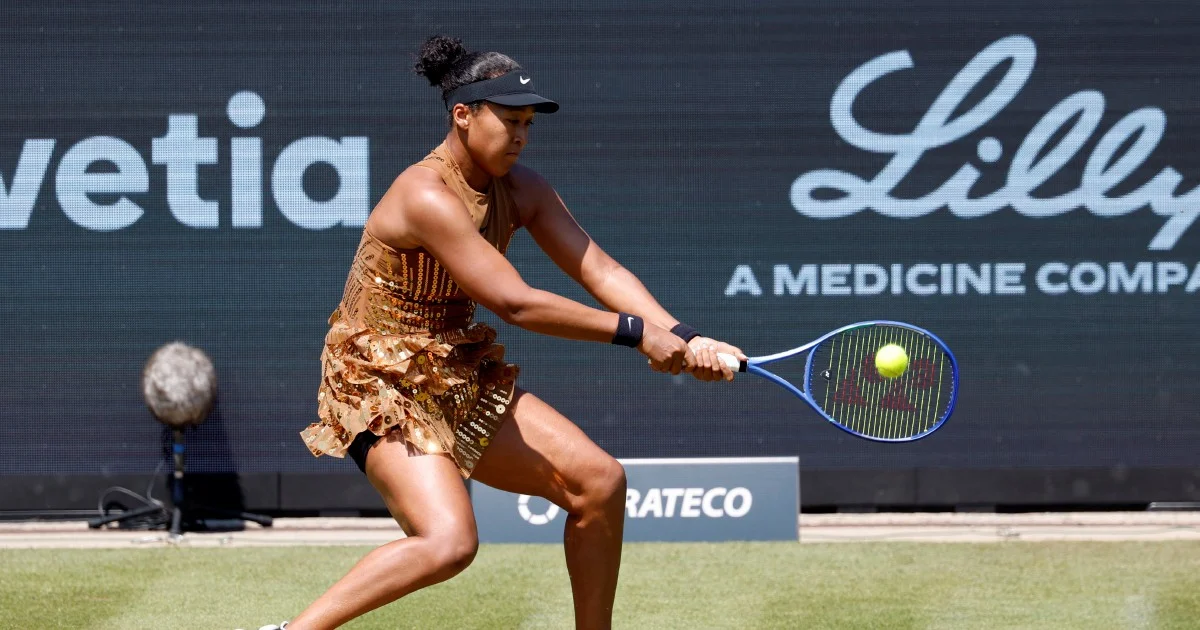
Four-time Grand Slam champion Naomi Osaka will contest her maiden grass court final after a commanding performance against China's Wang Xinyu at Bad Homburg, marking a significant milestone in the Japanese star's journey across different court surfaces.
Osaka's progression to the championship match represents a breakthrough moment in her grass court career. Despite her extraordinary success on hard courts and clay, the three-time Australian Open and French Open winner, along with her two US Open titles, has never previously reached a final on the grass surface. This achievement at Bad Homburg underscores her growing adaptability and willingness to develop her game beyond the court types where she has traditionally dominated.
The victory over Wang demonstrated the precision and intensity that has defined Osaka's best performances throughout her professional career. Her ability to neutralise Wang's game and control the tempo of the match showcased why she remains one of tennis's most formidable competitors when operating at full capacity. The comprehensive nature of the win suggests Osaka has made meaningful adjustments to her grass court technique ahead of the upcoming grass season.
Bad Homburg, officially known as the Sparkassen Boss Open, has served as an important warm-up tournament for players preparing for Wimbledon. The German venue offers valuable grass court experience in the weeks before the All England Club's championship, making it an ideal platform for players seeking to build momentum and confidence on a surface they may encounter less frequently during the regular season.
For Malaysian and Southeast Asian tennis followers, Osaka's presence at grass court events carries particular significance given her marketability and influence in the Asian sports landscape. Her achievement in reaching this final could inspire younger players across the region who aspire to develop their games across multiple court surfaces, challenging the notion that specialisation in single surfaces is essential for top-level success.
Wang Xinyu's run to the semi-finals at Bad Homburg nevertheless represents solid progress for the Chinese player, who continues to establish herself among tennis's rising talents. Her presence in the latter stages of the tournament demonstrated that Chinese tennis maintains competitive depth beyond the nation's established stars, a development closely watched across Asia's professional tennis circuits.
Osaka's trajectory this season reflects her careful approach to tournament selection and preparation. Rather than pursuing a relentless schedule, she has chosen quality events that align with her development goals, a strategy that appears to be yielding dividends as evidenced by her breakthrough on grass. This measured approach contrasts with some contemporaries who prioritise volume over selectivity, and the results suggest her methodology warrants attention from other players and coaching teams.
The grass court environment presents unique technical challenges that differ markedly from the conditions where Osaka has built her legacy. Lower bounce heights, faster court speeds, and the demands of serve-and-volley play require different tactical frameworks and footwork patterns. Her success at Bad Homburg indicates she has successfully translated her fundamental strengths in power and precision to accommodate these environmental differences.
Reaching a grass court final also carries broader implications for Osaka's preparation heading into the Wimbledon Championships, where consistency and comfort on grass courts becomes paramount. This final appearance provides invaluable match play experience and psychological confidence entering the sport's most prestigious tournament, potentially positioning her as a more serious contender at SW19 than in previous seasons.
The Bad Homburg tournament itself has evolved into an increasingly competitive women's event, attracting quality players from across the professional circuit. The tournament's elevation in stature reflects broader efforts to develop grass court tennis outside the traditional established venues, creating more opportunities for players to refine their skills on this demanding surface before the Grand Slam season.
Looking ahead, Osaka's proven capacity to evolve her game across different court surfaces reinforces her position among tennis's elite players. While injuries have periodically interrupted her career momentum, performances like the victory over Wang demonstrate her enduring competitive hunger and technical versatility. Her maiden grass court final represents not merely a statistical achievement but evidence of a mature competitor continuing to expand her capabilities at the sport's highest level.

